Toyota Key Types by Year: Which Key Your Toyota Actually Takes
The three Toyota immobilizer generations, the truck chip that needs its own cable, and how to work out which one your Camry, RAV4 or Tacoma uses before you get quoted.
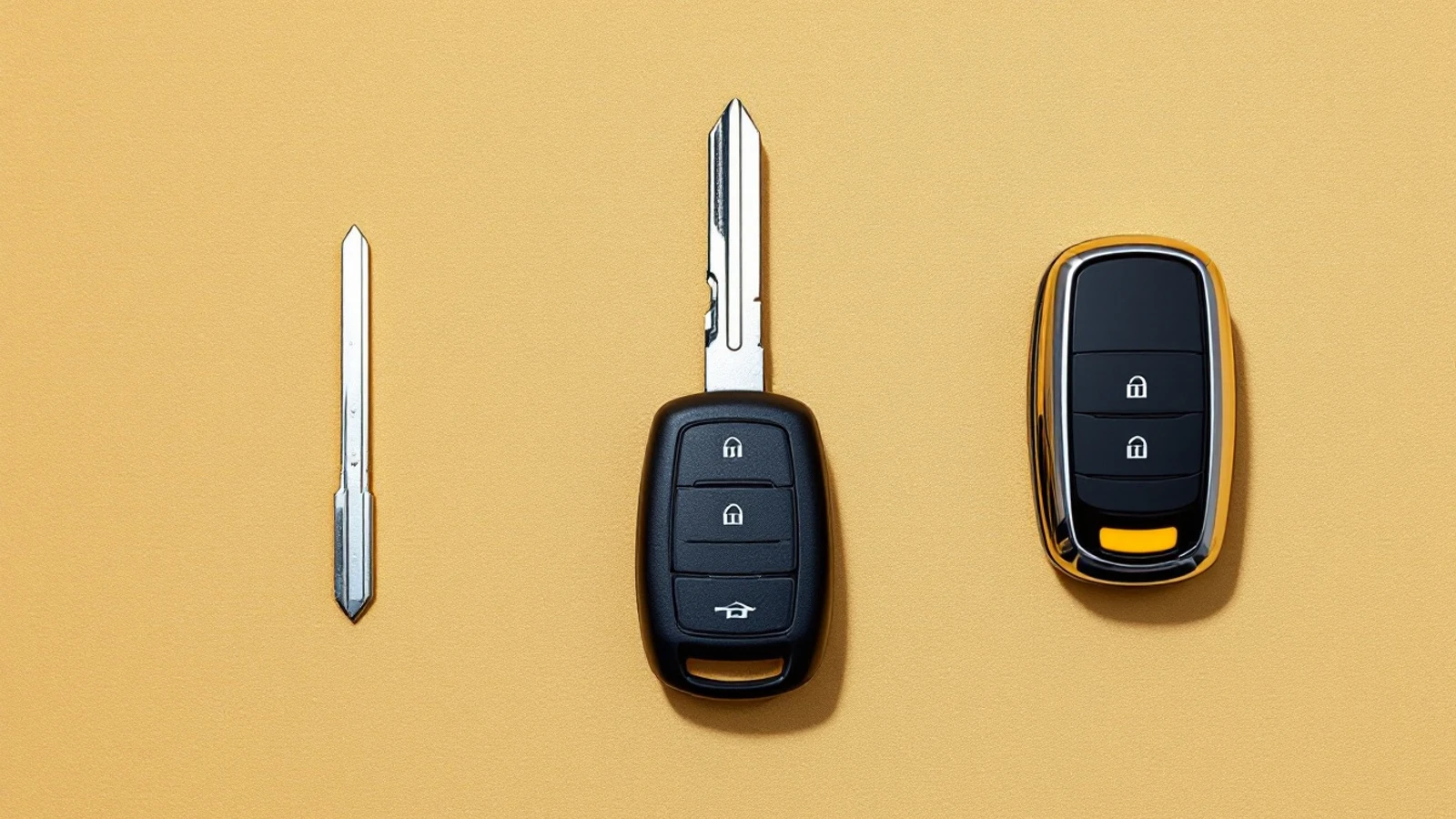
Toyota is the highest-volume make on American roads, and it runs three immobilizer generations plus one truck-specific variant. Working out which one your vehicle uses takes about ten seconds and changes the price by a factor of two, which makes it the most valuable ten seconds available to you before asking anyone for a number.
This guide is the identification step. It does not require you to know anything about your car beyond the year, the model, and whether you turn a key or press a button.
The three generations at a glance
| Generation | Typical years | How you start the car | Spare, all-in | All keys lost |
|---|---|---|---|---|
| DST40 transponder | ~1998 – 2009 | Bladed key, turned in the ignition | $150 – $210 | $190 – $260 |
| DST80 transponder | ~2010 – 2017 | Bladed key, turned in the ignition | $150 – $210 | $190 – $260 |
| DST80 H chip, trucks | ~2010 – 2017 trucks and truck SUVs | Bladed key, turned in the ignition | $175 – $245 | $245 – $345 |
| DST-AES Smart Key | 2018 onward | Proximity fob, push-button start | $220 – $310 | $295 – $425 |
| Toyota dealer, Smart Key all keys lost | comparison | — | — | $375 – $625, plus tow |
Those are the bands published on our Toyota make page, quoted as total on-site prices covering the blank, the cut, the programming and the visit.
Two observations before the detail. The first two rows carry identical pricing despite being different chip families, because from a service standpoint they are comparable work on well-supported tooling. And the dealer comparison row is there because on an all-keys-lost Smart Key vehicle, the gap is wide and the tow is real: a car with no working key cannot drive itself to a service bay.
DST40: roughly 1998 to 2009
Toyota's immobilizer story starts in 1998 with a Texas Instruments transponder licensed across most of the passenger range. It was strong for its era and was publicly analysed by researchers at Johns Hopkins University in work presented at the USENIX Security Symposium in 2005, which is part of why Toyota moved on.
For an owner today, the practical points are short. These are bladed keys, turned in an ignition. Aftermarket tool coverage is mature and reliable, so this is among the cheapest and most predictable work in the brand. The only regular field complication is a worn key blade that does not read cleanly on the first attempt, which a technician resolves by retrying rather than by charging you more.
If your Toyota is from this era and the key is reluctant to turn rather than reluctant to be recognised, the problem may well be the ignition cylinder rather than the chip, which is a different and often cheaper repair. A key that will not turn in the ignition separates the two.
DST80: roughly 2010 to 2017
From the 2010 model year Toyota moved to a hardened version of the same family, and it has held up well in field service. From the outside nothing changed. Still a bladed key, still turned in an ignition, still priced the same as the generation before it.
What did change is the all-keys-lost behaviour, and it is the single most misunderstood thing about Toyota key pricing. With a working master key present, adding a spare takes a few minutes. With no working key at all, the immobilizer enters a sixteen-minute waiting window before it will accept the first new key, and any interruption restarts it.
That window is not padding. It is why the all-keys-lost figure sits $40 to $60 above the spare figure on these vehicles, and why a technician who quotes a twenty-minute all-keys-lost on a 2014 Camry has not done one recently.
The H chip: the truck exception
Here is the Toyota detail most owners have never heard and most benefit from knowing.
Toyota trucks and truck-based SUVs built roughly 2010 to 2017 use a variant of the DST80 transponder commonly called the H chip: Tacoma, Tundra, Sequoia and 4Runner. It needs a dedicated cable that not every aftermarket tool carries.
The consequence is entirely practical. A locksmith whose daily work is Camrys, Corollas and RAV4s may simply not own that cable. They are not less competent. They are equipped for a different vehicle, and they will discover the gap standing next to your truck.
Two things follow. H chip work is priced slightly above the passenger equivalent, $175 to $245 for a spare against $150 to $210, reflecting the blank and the equipment. And when you ask for a quote on a Tacoma, Tundra, Sequoia or 4Runner of this era, say it is a truck. Any specialist who routes truck work will confirm the cable before dispatch. That one sentence prevents the most common wasted visit on this make.
DST-AES Smart Key: 2018 onward
From 2018 the Smart Key proximity system moved to a generation built on the Advanced Encryption Standard rather than the earlier proprietary cipher. This is the fob in your pocket, the button on the dash, and no key barrel at all.
Programming one requires a handshake between the key and the body control module. Every legitimate tool negotiates that handshake the same way, and there is no factory restriction preventing non-dealer programming. Toyota remains, relative to European makes, a straightforward brand to work on.
The all-keys-lost window is longer here, roughly thirty minutes, which is why the surcharge is larger: $295 to $425 against $220 to $310 for a spare. Again, the time is the cost.
Where the common Toyotas land
- Camry, 1998 onward. The reference vehicle for the whole make. DST40 through 2008, DST80 through 2017, DST-AES Smart Key from 2018. Among the most universally programmable vehicles on the road.
- Corolla, 1998 onward. Same chip generations as Camry, but read the next sentence carefully, because it is where assumptions go wrong. Smart Key became available in 2019, yet on base and lower trims most Corollas through 2024 still use a flip-out bladed transponder. The year alone does not tell you.
- RAV4, 1998 onward. Transponder only until Smart Key became standard in 2019. The Hybrid adds a hybrid battery interaction to the relearn procedure.
- Highlander, 2001 onward. Smart Key since 2014 on all but the base trim. The Hybrid Limited adds a third memory-key position that some aftermarket tools handle awkwardly.
- Tacoma, 1995 onward. The 2016-onward generation uses the H chip. Tacomas appear prominently in vehicle theft reporting, so spare-key demand from owners is high and worth acting on before it is urgent.
- Tundra, 2000 onward. H chip from 2010. The 2022-onward generation moved to a proximity fob with a wireless charging dock, which is fully programmable on current tools.
- 4Runner, 1996 onward. The long-running fifth generation from 2010 to 2024 is a straightforward H chip vehicle. The sixth generation from 2025 moved to DST-AES.
- Sienna, 1998 onward. Smart Key with sliding-door integration since 2021, which needs a sequenced programming routine.
- Prius, 2001 onward. The proximity field interacts with the hybrid high-voltage harness shielding, so the car comes out of Ready mode during programming. Routine for a Toyota specialist, occasionally a surprise for someone who is not.
Identifying yours in ten seconds
Three questions, in order:
- Do you turn a key, or press a button? Button means Smart Key, which means the 2018-onward band on a modern vehicle. Turning a key means transponder.
- What year is it? Before 2010 is DST40. Roughly 2010 to 2017 is DST80. 2018 onward with a button is DST-AES.
- Is it a truck or a truck-based SUV from 2010 to 2017? Tacoma, Tundra, Sequoia, 4Runner. If yes, it is an H chip and worth saying so.
That is the entire identification procedure, and it is enough for a specialist to quote you accurately over the phone.
If you are unsure after those three, the vehicle identification number settles it definitively. It is visible through the windscreen at the base of the driver side, and on the door jamb sticker. What the VIN changes about your quote explains why that number is the single most useful thing you can give a locksmith.
What the visit actually looks like
The expected appointment length is a useful honesty check on any quote you are given.
- Spare with a working master key present: roughly 25 to 45 minutes on most Toyota models.
- All keys lost: 60 to 90 minutes, and the majority of that is the relearn window rather than active work.
That second figure is where quotes go wrong. The sixteen-minute lockout on 2010 to 2017 transponder vehicles and the roughly thirty-minute window on 2018-onward Smart Key vehicles are fixed costs in time that no equipment shortens. A technician sitting and waiting is not padding the bill, and an interruption restarts the clock, which is why an experienced Toyota specialist will ask you not to open doors or press buttons during that stretch.
Plan accordingly. Park where the car can sit undisturbed for the window, and if the vehicle is a hybrid, expect it to be taken out of Ready mode for part of the work.
Dealer versus mobile on the same Toyota
The comparison row in the table above is worth expanding, because Toyota is a make where the mobile case is unusually clear.
The same Smart Key all-keys-lost job runs $295 to $425 through a mobile specialist and $375 to $625 at a dealer, and the dealer figure assumes the car has reached the service bay. A vehicle with no working key cannot drive itself there, so a tow is a real and additional line.
Three cases still favour the dealer, and we would rather say so than pretend otherwise. A vehicle under bumper-to-bumper warranty where the fault is a defect rather than wear, in which case the module and keys are covered. A vehicle already at the dealer for scheduled service, where the marginal cost of adding a key while it is on the lift is competitive. And a brand-new platform inside its tool-support lag window, which after a clean-sheet redesign can run six to eighteen months before aftermarket equipment catches up.
Outside those three, for an out-of-warranty Toyota, mobile is normally both cheaper and faster, and on an all-keys-lost it is not close.
Before you assume you need a key
Two cheaper outcomes are worth ruling out first, because they account for a meaningful share of calls on this make.
The fob coin cell. Toyota Smart Key fobs use a coin cell lasting roughly two to four years, and it fades rather than dies. The first symptom is shrinking range: the fob still works held against the door handle but no longer wakes the car from across a car park. Owners read that as a failing key and pay for a replacement they did not need. A fob that only works up close covers the test.
A worn ignition cylinder on higher-mileage transponder vehicles. If the key turns sometimes and not others, and jiggling it changes the behaviour, the wafers are worn. A new key with a new chip fixes nothing because the chip was never the problem.
There is also an open recall check worth thirty seconds. Before paying out of pocket on any vehicle, check the VIN against the NHTSA recall database. If an open recall covers the remedy, the dealer performs it at no charge.
Getting an accurate Toyota quote
Four facts, and the number you are quoted should be the number you pay:
- Year and model.
- Whether you turn a key or press a button, which is more reliable than guessing the generation.
- Whether any working key exists. This is the largest single lever on the price.
- Whether it is a 2010 to 2017 truck, because of the cable.
For the full cost picture across the make, including how Toyota compares to the dealer on the same work, see the Toyota key replacement cost guide. If you are comparing Toyota against another make in the household, Honda key types by year is the closest sibling in this series, and transponder, fob or smart key is the generic version of the identification step if your other vehicle is neither.
Ready to be matched with a Toyota specialist, including truck-equipped partners for H chip vehicles? Start at get help, or read how it works first.
Frequently asked questions
How do I tell which key type my Toyota uses?
Start with how you start the car. If you insert a key and turn it, you have a transponder key. If you press a button with the fob in your pocket, you have a Smart Key. Then use the year. Toyota ran DST40 transponders from roughly 1998 to 2009, DST80 from 2010 to 2017, and DST-AES on Smart Key vehicles from 2018 onward. Those three facts identify almost every Toyota on the road.
What is the H chip and why does it matter on trucks?
The H chip is the variant of the DST80 transponder Toyota used on its trucks and truck-based SUVs built roughly 2010 to 2017: Tacoma, Tundra, Sequoia and 4Runner. It needs a dedicated cable that not every aftermarket tool carries. A locksmith who mostly programs Camrys and Corollas may not own it, which is why a truck job is worth flagging when you ask for a quote rather than discovering the gap in your driveway.
What does a Toyota key cost by generation?
As of September 2026, a basic transponder spare runs $150 to $210 and all keys lost runs $190 to $260. A Smart Key spare runs $220 to $310 and all keys lost runs $295 to $425. An H chip truck transponder runs $175 to $245 for a spare and $245 to $345 with every key lost. Those are the bands published on our Toyota make page and they are total on-site prices.
Can a locksmith program any Toyota key?
Effectively yes, across the whole modern fleet. Toyota carries no NASTF Vehicle Security Professional restriction, no security gateway to authenticate through, and no encrypted module work of the kind European makes require. Current Smart Keys are programmed with tools such as the Autel IM608, Smart Pro, Xtool X100 PAD3 Elite or Techstream Lite. The genuine exception is a brand-new platform in its tool-support lag window.
Why does losing every Toyota key cost more?
Because of a timing lockout rather than a penalty. With a working key present the immobilizer will accept a new one in a few minutes. With no working key the system enters a waiting period before it will accept the first key, roughly sixteen minutes on 2010 to 2017 transponder vehicles and about thirty minutes on 2018 and later Smart Key vehicles. Any interruption restarts the clock, which is why the surcharge is real work rather than an upcharge.
Does my Corolla have a Smart Key or a transponder key?
Probably a transponder, and this is the most common assumption error on the make. Smart Key became available on Corolla in 2019, but on the base and lower trims most Corollas through 2024 still use a flip-out bladed transponder rather than proximity. The year alone does not answer it on this model. Check whether you turn a key or press a button.
Is a Prius different from other Toyota vehicles?
It has one quirk worth knowing. The proximity sensing field interacts with the shielding around the hybrid high-voltage harness, so the accepted practice is to take the car out of Ready mode during programming. Experienced Toyota technicians do this automatically. It is not a reason for the job to cost more, but it is a reason to use someone who works on the make regularly.
How long does a Toyota key take on site?
With a working master key present, adding a spare on most Toyota models takes about twenty-five to forty-five minutes. All keys lost runs sixty to ninety minutes, and most of that additional time is the immobilizer relearn window rather than active work. If a quote promises an all-keys-lost Toyota in twenty minutes, the timing lockout has not been accounted for.