Toyota Key Replacement Cost (2026)
What a Toyota key actually costs in 2026, broken down by key type and by whether you still hold a working key, with the dealer comparison and the four variables that move the number.
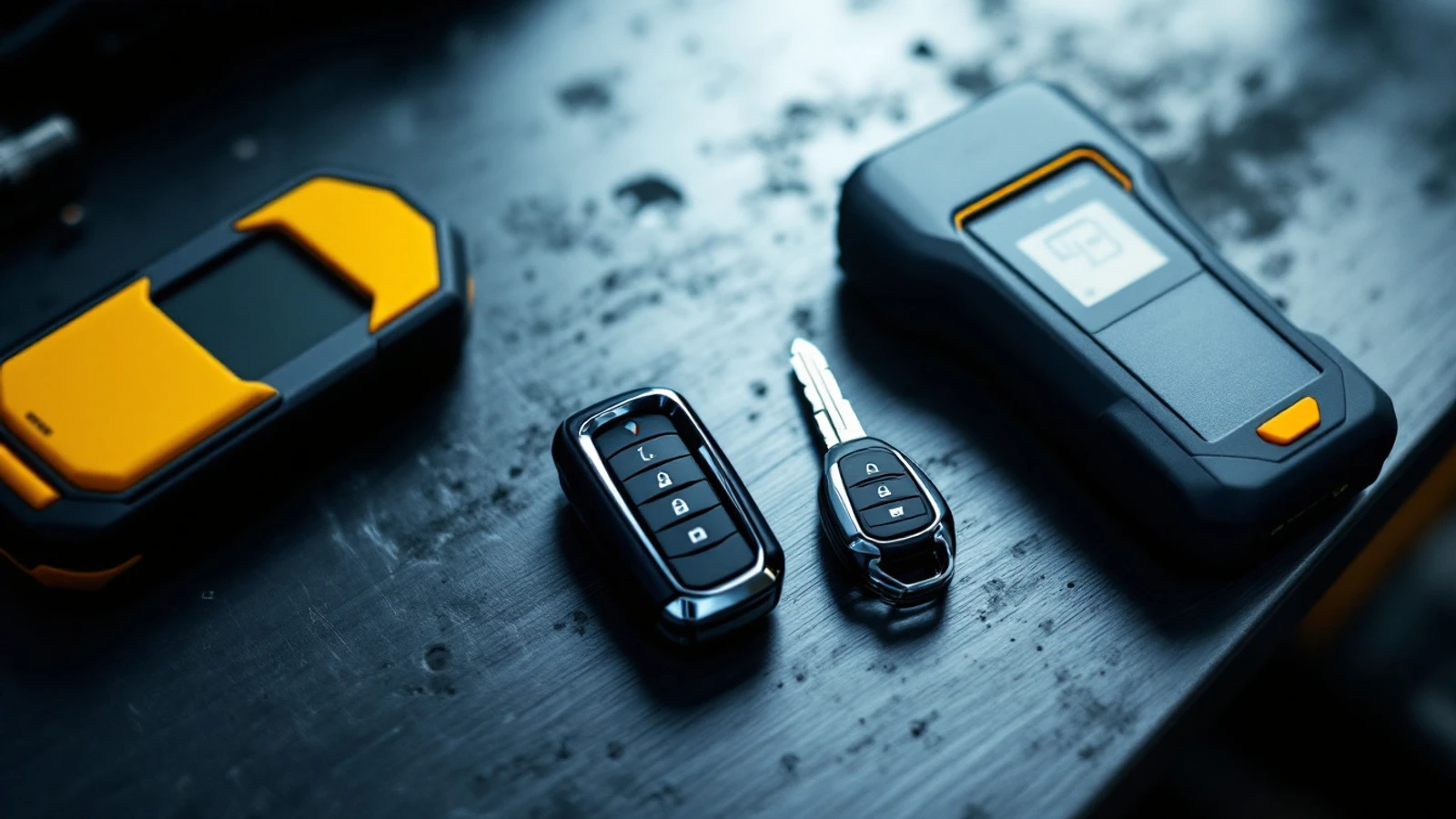
As of August 2026, a Toyota key replacement runs $150 to $425 all-in through a mobile automotive locksmith. A transponder spare for a pre-2019 Camry, Corolla or RAV4 sits at the bottom of that band, around $150 to $210. A Smart Key replaced with every key lost sits at the top, $295 to $425. A Toyota dealer charges $375 to $625 for that same all-keys-lost job, before the tow.
That is the short answer. The rest of this guide explains why the band is that wide, which end of it your specific Toyota lands on, and what you can control.
Every figure below is drawn from the ranges published on our Toyota make page and is stated as of August 2026. They are all-in prices: key blank, mechanical cut, programming, and the service call to come to you, not a "starting at" number that grows on arrival.
What a Toyota key costs in 2026
| Situation | Mobile locksmith, all-in |
|---|---|
| Basic transponder key, working spare present | $150 – $210 |
| Basic transponder key, all keys lost | $190 – $260 |
| H-chip truck transponder, working spare | $175 – $245 |
| H-chip truck transponder, all keys lost | $245 – $345 |
| Smart Key spare, working master present | $220 – $310 |
| Smart Key, all keys lost | $295 – $425 |
| Fob battery replacement | under $135 |
| Ignition cylinder rekey or replacement | $175 – $385 |
| Toyota dealer, Smart Key all keys lost (comparison) | $375 – $625, plus tow |
Two things jump out of that table, and they are the two levers that matter.
The first is key type. A transponder key and a Smart Key are different products with different blanks and different programming procedures. The second is whether a working key survives. Read across any pair of rows and the all-keys-lost version costs meaningfully more than the spare version of the same key.
Everything else, including model, trim, mileage and how new the car is, moves the number far less than those two.
Which key does your Toyota take?
You do not need a part number to place yourself on the table. The physical key tells you.
Transponder key. A cut metal blade with a plastic head, inserted into an ignition cylinder and turned. The chip is embedded in the head. If your Camry, Corolla or RAV4 is roughly 2019 or older and you turn a key to start it, this is you. Rows one and two.
H-chip truck transponder. Same shape and same motion, different chip generation. Toyota used it across Tacoma, Tundra and 4Runner from about 2010 to 2024. Rows three and four.
Smart Key. A fob you never take out of your pocket. The car detects it, and you start the engine with a button. Inside the fob is a small mechanical emergency blade that opens the driver's door when a battery dies. Rows five and six.
If you are genuinely unsure which of the three you have, our guide to transponder versus smart key walks through the identification without any tooling.
Where the common Toyotas land
Toyota's published model callouts map onto the table cleanly. Use your model year against these, because the year is what decides the generation.
Camry, Corolla and RAV4. Pre-2019 examples are basic transponder vehicles — rows one and two, $150 to $260. From 2018 onward the Camry and RAV4 moved to Smart Key, which puts them on rows five and six at $220 to $425. The 2018–2019 window is the crossover, and it is the one place where two cars wearing the same badge genuinely need different keys.
Highlander and Sienna. Both appear in Toyota's Smart Key generation from 2018. Expect $220 to $310 for a spare and $295 to $425 with all keys lost.
Tacoma, Tundra and 4Runner. These run the H-chip truck transponder from roughly 2010 through 2024 — rows three and four, $175 to $345. That is a modest step above a Camry-class transponder and reflects a different blank and procedure, not a truck premium.
If your Toyota is not on that list, the identification in the previous section still resolves it. Whether you turn a blade or press a button is the fastest question to answer, and it places you on the right half of the table before anyone quotes anything.
The four things that move the number
1. Whether you still hold a working key
This is the single largest lever, and the only one you control before the fact.
When one working key exists, the vehicle can be instructed to accept an additional one. The immobilizer already trusts a credential, and adding a second is a comparatively short handshake.
When no working key exists, the situation the trade calls all keys lost, or AKL, trust has to be established from nothing. On a Toyota that means a timed relearn: roughly 16 minutes on 2010 to 2017 transponder vehicles, and about 30 minutes on 2018-and-newer Smart Key vehicles, which also adds a further security handshake.
That timed sequence is why the surcharge exists: $40 to $60 on transponder vehicles and $80 to $110 on Smart Key vehicles. It is not markup. It is a stopwatch the vehicle enforces, and a technician who cannot do anything else while it runs.
The practical consequence is worth stating plainly. A spare cut while your current key still works costs $150 to $310 depending on type. The same key cut after you lose the last one costs $190 to $425. Buying the spare early is the cheapest decision available on this entire page.
2. Key type
Covered above, and it is mostly a function of model year. The jump from transponder to Smart Key is roughly $70 to $100 at the spare level and about $105 to $165 at the all-keys-lost level.
That gap reflects a more expensive blank and a longer pairing procedure. It is the same pattern across every manufacturer. See the brand-by-brand ladder in push-to-start key cost, where Toyota sits in the mainstream tier rather than the premium one.
3. Where you are and how far someone has to travel
The key itself is a national commodity. A Highlander Smart Key blank costs a supplier the same in Michigan as in Georgia, and the programming procedure is identical.
What varies is reaching you. A specialist covering a dense metro absorbs travel across a short radius; the same job at the outer edge of a service area carries more of it. That is a travel variable, not a key variable, and an honest quote separates the two rather than burying it.
4. Whether the problem is actually the key
This is the one that saves people the most money, and it is worth checking before you book anything.
A Toyota that will not start with a fob in your pocket is very often a dead fob battery, not a failed key. Toyota builds a fallback for exactly this: hold the fob against the start button and press, and the vehicle reads the transponder directly at close range. If that starts the car, you need a coin cell, not a key.
Likewise, a key that turns but does not crank is frequently a worn ignition cylinder rather than an immobilizer problem. Replacing the chip in the key does nothing for a worn cylinder. The fix is a rekey or a cylinder replacement, which a mobile specialist handles on site for $175 to $385 depending on model.
Both of those are cheaper outcomes than a new key. A technician who checks them first is doing the job properly.
Dealer versus mobile locksmith on the same Toyota
The comparison row in the table above is the honest version: $375 to $625 at a Toyota dealer for a Smart Key all-keys-lost job, against $295 to $425 mobile.
The dealer figure is built from three components. Flat-rate programming labor of roughly 1.0 to 1.4 hours, billed at benchmark dealer labor rates in the range the J.D. Power 2024 Customer Service Index documents. OEM part markup over wholesale on the key itself. And, critically, the tow, because a vehicle with no working key cannot be driven to the dealership.
That last item is the one people forget when they compare the two numbers. An all-keys-lost car is immobile by definition. The dealer path starts with a tow truck; the mobile path starts with a technician arriving where the car already sits.
There are vehicles where the dealer is genuinely the right answer. Toyota is not usually one of them. Any current Toyota Smart Key, including the DST-AES generation used from 2018, can be programmed on site with mainstream professional tooling. There is no NASTF Vehicle Security Professional restriction on the make and no encrypted-module step that locks the work to a franchise. We break the general case down further in dealer versus mobile locksmith car key cost.
What the visit actually looks like
Knowing the sequence makes it much easier to tell a competent quote from a hopeful one, because each step is a real cost you can point at.
1. Verification. The technician confirms the vehicle is yours. Registration or title plus photo identification is standard, and on an all-keys-lost job it is not optional — a shop that skips it is a shop that would cut a key for anyone standing next to your car. Per NASTF's Secure Data Release Model, documented ownership verification is a baseline expectation for this work.
2. Key identification. Year, model and VIN resolve which blank the vehicle takes. On a transition-year Camry or RAV4 this is the step that prevents the wrong key coming off the truck.
3. Cutting. The blade is cut to your lock, either the ignition key itself or the emergency blade inside a Smart Key fob. This is mechanical work and takes minutes.
4. Programming. The tool connects to the vehicle and enrolls the key with the immobilizer. On a spare this is short. On an all-keys-lost Toyota this is where the timed relearn runs — 16 minutes on transponder vehicles, about 30 on Smart Key vehicles — and nothing accelerates it.
5. Testing before departure. Engine start, lock, unlock, panic, and on a proximity vehicle the passive entry and push-button start. A key that has not been tested in front of you has not been finished.
Most Toyota jobs run 30 to 90 minutes end to end. The all-keys-lost Smart Key case sits at the long end of that because of the relearn.
Reading a Toyota quote: what should worry you
Toyota is a high-volume make, which makes it a common target for the bait pricing the FTC's consumer alert on locksmith scams documents: a very low advertised figure that becomes a much larger on-arrival number from a contractor with no fixed address and no warranty.
Four things separate a real quote from that:
A single all-in number, given before dispatch. If the price is quoted as "starting at" and the real figure only appears when someone is standing at your car, that is the pattern the FTC describes.
The technician asks whether you still have a working key. This is the largest cost variable on the make. Anyone quoting without asking it is quoting a number they cannot honor.
A named vehicle-specific blank. "A Toyota key" is not a specification. The chip generation matters, and a technician who knows yours will say which one.
A warranty on the key and the programming. Reputable work carries one. Ask for the terms in writing before the visit rather than after.
Worth saying plainly: DIY is not a shortcut on modern Toyotas. Owner-programming procedures exist on some older vehicles but generally require two working keys already present, which is not the situation anyone reading this is in. A 2018-and-newer Smart Key is not realistically owner-programmable without professional tooling and a license for it.
The spare-key math, worked
The strongest financial argument on this page is worth putting in numbers.
Suppose you drive a 2021 RAV4 with one working Smart Key. Two futures:
You buy a spare now. $220 to $310. You now hold two keys. If one is later lost, you replace it as a spare again — another $220 to $310 — and you are never without a working key.
You wait. If that single key is lost, you are on the all-keys-lost row: $295 to $425, plus the vehicle is immobile wherever it is standing, plus you are booking under time pressure rather than at your convenience. If the dealer path is taken instead, $375 to $625 plus a tow.
The difference on the mobile path is $75 to $115. The difference between planning and not planning is considerably larger than that, because the second scenario also costs you a day.
That calculation holds on every make. Toyota just happens to make it easy to see, because the two rows sit next to each other in published pricing.
What a Toyota quote should include
An all-in price for a Toyota key should cover four things, and a quote that omits any of them is not comparable to one that includes them:
- The key blank, correct for your vehicle's chip generation
- The mechanical cut, either the ignition blade or the emergency blade inside a Smart Key
- The programming, pairing the key to your specific immobilizer
- The service call, bringing that capability to where the vehicle is
A price that covers only the blank is not a price for a working key. The Toyota make page publishes the full band, and our smart key replacement and transponder key programming pages cover what each procedure involves.
It is also worth checking that whoever arrives is equipped for your specific generation rather than simply nearby — who can actually program a car key covers the credentials and tooling behind that difference.
For a sense of how Toyota compares against the other high-volume Japanese fleet, our Nissan key replacement cost guide uses a deliberately comparable table, though Nissan adds a per-VIN BCM PIN step on all-keys-lost jobs that Toyota does not have.
Check whether you are already covered
Before paying out of pocket, it is worth five minutes to find out whether someone else pays.
Some comprehensive auto policies include lost-key replacement, usually subject to a deductible. Many manufacturer-issued key-protection plans and roadside-assistance memberships include it as a named benefit, and buyers frequently do not remember signing up for one at the dealership.
Where coverage exists, the typical requirement is documentation from a licensed locksmith: a written invoice showing the VIN, the key part, the work performed, and the warranty. That is a reason to establish coverage before the visit rather than after, so the technician knows to produce paperwork in the form your carrier will accept.
On a $150 transponder spare the effort may not be worth it. On a $425 all-keys-lost Smart Key job it usually is.
Getting an accurate number for your vehicle
Three details close the gap between a range and a quote: year, model, and whether you still have a working key. Those three place you on a single row of the table above rather than across it.
A fourth detail sharpens it further, which is the VIN. It resolves which chip generation your specific vehicle left the factory with, and that matters on transition years where the same model shipped both ways.
If you have no working key at all, say so up front. It is the difference between two rows, and a technician who learns it on arrival has brought the wrong plan. Our lost car keys page covers what that visit looks like, and you can start a request on the get help page.
Prices in this guide are as of August 2026 and reflect the published ranges on the CarKeyNation Toyota page. Dealer labor benchmarks referenced from the J.D. Power 2024 Customer Service Index. Immobilizer credentialing standards referenced from NASTF's Secure Data Release Model.
Frequently asked questions
How much does a Toyota key replacement cost in 2026?
As of August 2026, Toyota key replacement runs $150 to $425 all-in through a mobile automotive locksmith. The low end is a basic transponder spare for a pre-2019 Camry, Corolla or RAV4 at $150 to $210. The high end is a Smart Key with every key lost at $295 to $425. Those figures are total prices covering the key blank, the mechanical cut, the programming and the service call.
Why is my Toyota quote higher than someone else's for the same model year?
Almost always because one of you still has a working key and the other does not. A spare programmed alongside an existing key is a short procedure. With every key gone, the vehicle has to be walked through a timed immobilizer relearn, roughly 16 minutes on 2010 to 2017 transponder vehicles and about 30 minutes on 2018-and-newer Smart Key vehicles. That adds $40 to $110 to the job before anything else is counted.
Is a Toyota dealer more expensive than a locksmith?
For the same all-keys-lost Smart Key job, a Toyota dealer typically lands between $375 and $625 once the tow, the flat-rate programming labor and the OEM part markup are included. Dealer labor benchmarks in the J.D. Power 2024 Customer Service Index put that programming step at roughly 1.0 to 1.4 flat-rate hours. A mobile locksmith who programs in your driveway is the lower total in nearly every case on a vehicle four or more years old.
Can a locksmith actually program a Toyota Smart Key, or is that dealer-only?
A qualified locksmith can program any current Toyota Smart Key, including the DST-AES generation used from 2018 onward. Toyota carries no NASTF Vehicle Security Professional restriction and no encrypted-module step that forces the work to a dealer. The constraint is tooling and credential on the technician's side, not a lock Toyota puts on the vehicle.
My Toyota key stopped working entirely. Do I need a whole new key?
Usually not. A fob that has gone completely dead most often needs a coin-cell battery, which is a few dollars of parts and one of the cheapest visits in the Toyota lineup, typically under $135 all-in if a technician comes to you. Replace the battery and retest before authorizing a replacement key, because a dead battery and a failed key look identical from the driver's seat.
Does a Tacoma or Tundra cost more than a Camry?
Slightly, yes. Toyota trucks from roughly 2010 through 2024 use an H-chip transponder that sits a step above the passenger-car chip: $175 to $245 for a spare against $150 to $210 for a Camry-class transponder, and $245 to $345 rather than $190 to $260 when all keys are lost. The gap is the blank and the procedure, not a truck surcharge.
Do these prices change depending on what state I am in?
The key, the blank and the programming labor are essentially national. A Highlander Smart Key is the same job in Ohio as in Arizona. What varies regionally is travel time to reach you and how far a qualified specialist has to come, which is why a dense metro often quotes tighter than an outlying area of the same state.