Push-to-Start Key Cost: Why the Same Technology Spans $280 to $1,200
Every push-button car uses a proximity smart key, yet replacement prices vary four-fold between brands. Here is the brand-by-brand ladder, what drives each tier, and where your vehicle sits on it.
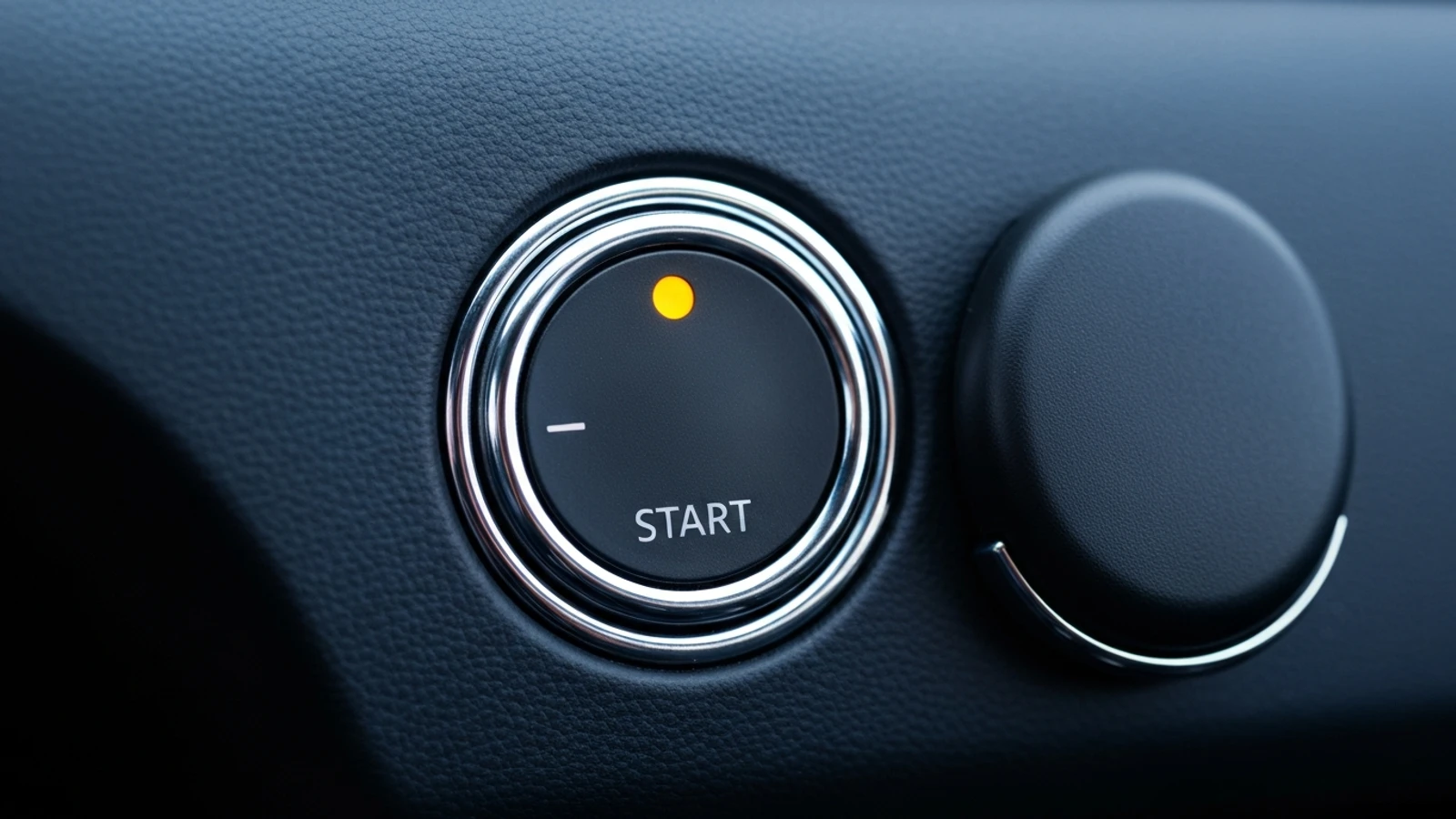
Every push-button car works the same way from the driver's seat. The fob stays in your pocket, the car detects it, the button starts the engine. Same interaction, same convenience, same basic technology.
Replacing that fob costs anywhere from $280 to $1,200 depending on the badge on the bonnet. That is a four-fold spread for what looks, to a driver, like an identical product — and it is the single most common source of quote confusion we see on proximity vehicles.
This guide lays out the actual ladder, brand by brand, and explains what you are paying for at each rung. All figures are as of August 2026 and reflect the ranges published on our proximity key replacement page. They are all-in: fob, emergency blade cut, and programming.
The brand ladder
| Brand / system | Mobile locksmith | Dealership |
|---|---|---|
| Hyundai / Kia Smart Key | $280 – $400 | $400 – $650 |
| Toyota / Lexus Smart Key | $280 – $420 | $450 – $700 |
| Honda / Acura Smart Entry | $300 – $450 | $450 – $700 |
| Ford Intelligent Access | $300 – $475 | $475 – $750 |
| GM (Chevrolet / GMC / Cadillac) | $320 – $475 | $475 – $800 |
| BMW Comfort Access | $450 – $850 | $700 – $1,300 |
| Audi Advanced Key | $450 – $850 | $700 – $1,300 |
| Mercedes-Benz Keyless Go | $500 – $900 | $850 – $1,500 |
| Range Rover / Jaguar Land Rover | $650 – $1,200 | $950 – $1,800 |
| All-keys-lost surcharge (any row) | +$100 – $250 | +$200 – $500, plus tow |
Read down that table and the structure becomes obvious. There are effectively three tiers, not a smooth gradient — mainstream Asian and domestic systems clustered between $280 and $475, German premium systems between $450 and $900, and JLR alone at the top.
Tier one: mainstream, $280 to $475
This band covers most push-button cars on the road: Toyota, Lexus, Honda, Acura, Hyundai, Kia, Ford, and the GM brands.
These systems use well-documented immobilizer architectures with broad aftermarket tool support. A qualified technician with a mainstream programr and the right blank completes the job on site, typically within 30 to 90 minutes. Hardware is competitively supplied, and the programming is a single tool session rather than a staged procedure.
Within this tier, the variation is modest and comes down to how deep the body-control-module pairing goes. GM sits slightly higher than Hyundai and Kia for this reason, not because the fob is fundamentally different.
Per-make published ranges — which span every key type for the brand, not just proximity — put this tier in context: Toyota at $150–$425, Honda at $150–$400, Ford at $150–$400, Hyundai at $180–$420, Kia at $175–$400, GMC at $175–$450 and Cadillac at $300–$700.
Tier two: German premium, $450 to $900
BMW Comfort Access, Audi Advanced Key and Mercedes-Benz Keyless Go roughly double the mainstream figure, and the reason splits cleanly in two.
Hardware. Premium fobs carry proprietary encryption and higher component counts. Across the market, a smart fob blank ranges from $80 to $400 wholesale — the top of that range is where these brands live, against $5 to $25 for a basic transponder blank.
Procedure. These immobilizers frequently require a documented security-data request and a multi-stage pairing sequence. That is technician time, and on an all-keys-lost job it is substantially more of it.
The per-make all-in ranges reflect the same shape: BMW at $390–$850, Audi at $380–$800, and Mercedes-Benz at $420–$950.
There is a further wrinkle at the top of this tier. Certain 2018-and-newer BMW, Mercedes-Benz and Range Rover models carry OEM key-coding restrictions that route the work to the dealer regardless of who you call. This is a genuine manufacturer constraint, not a capability gap — a shop insisting otherwise on one of these vehicles is a warning sign.
Tier three: JLR, $650 to $1,200
Range Rover, Land Rover and Jaguar sit alone at the top, with dealer pricing reaching $950 to $1,800 before a tow.
The drivers are the same as tier two, intensified: expensive proprietary hardware, restricted data access, and long programming procedures. On an all-keys-lost JLR job, the combination of surcharge and base price makes this the single most expensive routine key replacement in the market.
If you drive one of these, the case for a spare made in advance is stronger than for any other vehicle on this page — the gap between a planned spare and an emergency callout is at its widest here.
What actually moves your number within a tier
Three things, in descending order of impact.
Whether a working fob survives. The all-keys-lost surcharge is $100 to $250 through a locksmith. On a dealer job it is $200 to $500 plus a tow. This is the largest controllable variable in the entire process, and it is controllable only in advance.
Model year. Newer generations within the same brand use heavier encryption. A 2015 and a 2024 example of the same nameplate can sit at opposite ends of that brand's published range for exactly this reason.
Which path you choose. Every row in the table above shows a dealer premium of roughly 50 to 60 percent, before the tow. Our dealer versus mobile locksmith breakdown covers where that gap comes from and the narrow cases where the dealer is still correct.
What you are actually buying inside the fob
The tier differences make more sense once you know what is physically in the case, because a proximity fob is a more crowded object than it looks.
A basic transponder key contains one thing: a passive chip that answers a challenge from the immobilizer when it is close to the ignition. No battery, no transmitter, no range.
A smart key contains at least four. A low-frequency receive coil that detects the car's proximity field. An RF transmitter for the lock and unlock buttons. The immobilizer credential that authorises starting. A battery to power all of it. Plus a cut mechanical blade folded inside for when that battery dies.
That is why the blank costs $80 to $400 wholesale against $5 to $25 for a transponder — you are buying a small radio, not a chip in a plastic head. Premium systems add proprietary encryption on top, which raises both the component cost and the licensing burden on the tools that talk to it.
The labor follows the same logic. A transponder needs the immobilizer taught to accept the new chip: one system, one procedure. A smart key needs that plus body-control-module programming so the car unlocks, recognises proximity and starts on the button. Two systems, roughly double the bench time — before any brand-specific complexity.
The all-keys-lost cliff, tier by tier
The surcharge is a flat-sounding $100 to $250, but its practical weight varies enormously by where you sit on the ladder — because it stacks on a base that is already four times larger at the top than the bottom.
| Tier | Spare key | All keys lost | Practical gap |
|---|---|---|---|
| Mainstream proximity | $240 – $400 | $320 – $475 | Meaningful |
| Luxury European | $420 – $750 | $550 – $1,200 | Substantial |
Read the bottom row carefully. On a premium vehicle, the difference between planning ahead and not planning ahead is measured in several hundred dollars — and that is before the dealer version, where the surcharge alone is $200 to $500 plus a tow.
There is a second reason the cliff is steeper at the top. On many premium systems, an all-keys-lost job requires a documented security-data request rather than a straightforward tool session, which adds elapsed time as well as labor. A mainstream proximity key lost on a Tuesday afternoon is usually a same-day fix. The same situation on a restricted European model can involve a wait for authorisation.
Before you accept a quote in these ranges
Two checks specific to proximity vehicles, beyond the usual credential questions.
Confirm the blade is included. Every push-to-start fob contains an emergency mechanical key cut to your door lock. A quote that omits the cutting step is either incomplete or describes a fob you will not be able to use when the battery dies. Ask explicitly whether the blade is cut and tested.
Confirm proximity detection will be tested, not just engine start. These are separate programming outcomes. A fob that starts the car when held against the start button but does not unlock the doors as you walk up is a half-programd key. It is a two-minute check in the driveway and a considerably longer conversation the following week.
Is it a smart key at all?
Worth confirming before you accept any quote in the ranges above, because being quoted a proximity key for a simpler problem is a common and expensive mix-up.
- If you press a button while the fob stays in your pocket, you have a smart key and this page applies.
- If you insert a key and turn it, you have a transponder or flip transponder — those run $180 to $320, not $280 to $475. See transponder key programming.
- If the engine starts fine but the remote buttons stopped working, that is frequently a reprogram at $25 to $60, not a replacement at all. See key fob programming.
Our guide to identifying your key type settles it in about thirty seconds.
Make-specific cost guides
The ladder above is the cross-brand view. For a single make broken down by key type and by whether a working key survives, these go deeper:
- Toyota key replacement cost (2026) — transponder, H-chip truck and Smart Key bands, plus the timed relearn surcharge
- Ford key replacement cost (2026) — every PATS and HITAG generation, and the PATS code step on older vehicles
- Honda key types by year — the three Honda generations and the iN PIN requirement unique to the make
- Nissan key replacement cost (2026) — the NATS generations and the per-VIN BCM PIN that all-keys-lost jobs require
- Hyundai and Kia key types by year — the HITAG generations and the 2011-2021 immobilizer gap
One thing worth doing before you spend anything in these ranges: confirm the fob has actually failed. A dashboard message saying the key is not detected is far more often a flat coin cell or a lost pairing than dead hardware, and re-pairing an existing fob costs a fraction of replacing one. Our guide to what to check when push-to-start says the key is not detected walks the diagnosis in order.
Before you book
Three questions, on any tier:
- Do you hold NASTF SDRM registration for my make and year? Required for many 2010-and-newer vehicles, and portable across every state.
- Are you licensed under whatever authority regulates locksmiths here? In Texas that is the DPS Private Security Program; other states use different authorities.
- Is that number all-in — fob, blade cut and programming — and does it include the all-keys-lost surcharge if it applies?
Then verify the work before the technician leaves. Per ALOA service standards, the job should end with the engine started and every lock, unlock and panic function confirmed. A fob that starts the car but will not unlock the doors is a half-finished job, and it is far easier to resolve in the driveway than by phone the following morning.
The takeaway
The four-fold spread on push-to-start keys is not arbitrary and it is not markup. It tracks encryption depth, hardware cost and programming labor — three things set by the manufacturer years before you needed a replacement.
What you control is the surcharge. A second fob bought while your current one still works keeps you at the bottom of your brand's range instead of the top, and on a tier-three vehicle that difference is measured in several hundred dollars.
For a make-by-make breakdown rather than a tier, the per-brand cost guides go further than this article can: BMW for the German premium tier, Cadillac for American luxury, and Toyota for the mainstream tier.
Ready to get a real figure for your vehicle? Request a specialist and we will match you to a vetted local technician with the right tool and credential for your exact car.
Frequently asked questions
Why does a luxury smart key cost three times more than a mainstream one?
Two separate multipliers stack. The fob hardware itself is more expensive, because premium systems use proprietary encryption and higher component counts — a smart fob blank ranges from $80 to $400 wholesale across the market. Then the programming is longer, because premium immobilizers often require a documented security-data request and a multi-stage pairing procedure rather than a single tool session. Neither multiplier is markup; both are real cost.
My car is push-to-start but it is not a luxury brand. What should I expect?
As of September 2026, mainstream proximity keys run $280 to $475 through a mobile locksmith and $450 to $800 through a dealership. Toyota and Lexus Smart Key sits at $280 to $420, Hyundai and Kia at $280 to $400, Honda and Acura Smart Entry at $300 to $450, Ford Intelligent Access at $300 to $475, and GM at $320 to $475. Those are all-in figures covering the fob, the emergency blade cut, and the programming.
Is the price different if I still have one working fob?
Yes, and it is the largest single lever you control. With a working fob, the vehicle can be instructed to accept an additional one. With every fob gone, authorisation is established from scratch, which adds $100 to $250 through a locksmith and $200 to $500 through a dealer, plus a tow in the dealer case. A spare bought while your current fob still works avoids that entirely.
Why does a push-to-start fob still have a metal blade inside it?
That is the emergency mechanical key, and every push-to-start vehicle has one. It exists so you can open the driver's door when the fob battery dies or the vehicle battery is flat. It is cut to your door lock, which is why smart key replacement always includes a cutting step even though nothing is ever inserted into an ignition.
Can a locksmith do a push-to-start key, or is this dealer-only work?
For the overwhelming majority of vehicles, a qualified mobile locksmith handles it on site. The genuine exceptions are narrow: certain 2018-and-newer BMW, Mercedes-Benz and Range Rover models carry OEM key-coding restrictions that route the work to the dealer. For everything else, the constraint is credential rather than capability — per NASTF's Secure Data Release Model, the technician needs active SDRM registration for many 2010-and-newer vehicles.
Does a more expensive fob mean a better key?
It means a more complex one, which is not the same thing. The price reflects encryption depth, component count and programming labor, not durability or convenience. A $300 mainstream fob and an $850 European fob perform the same function for the driver — unlock, proximity detection, push-button start.
Is an aftermarket smart fob a way to get into a lower tier?
Not reliably, and the tiers do not really work that way. Aftermarket availability is good on some mainstream platforms and poor to nonexistent on premium European ones, which is part of why those brands sit high on the ladder in the first place. Where a quality aftermarket fob exists, a locksmith can usually offer it as an option — but the programming labor, which is the other half of the tier difference, does not change.