Hyundai and Kia Key Types by Year (2003-2026)
Which key your Hyundai or Kia takes, generation by generation, plus what the 2011-2021 immobilizer gap and the 2023 upgrade campaign mean when you replace a key today.
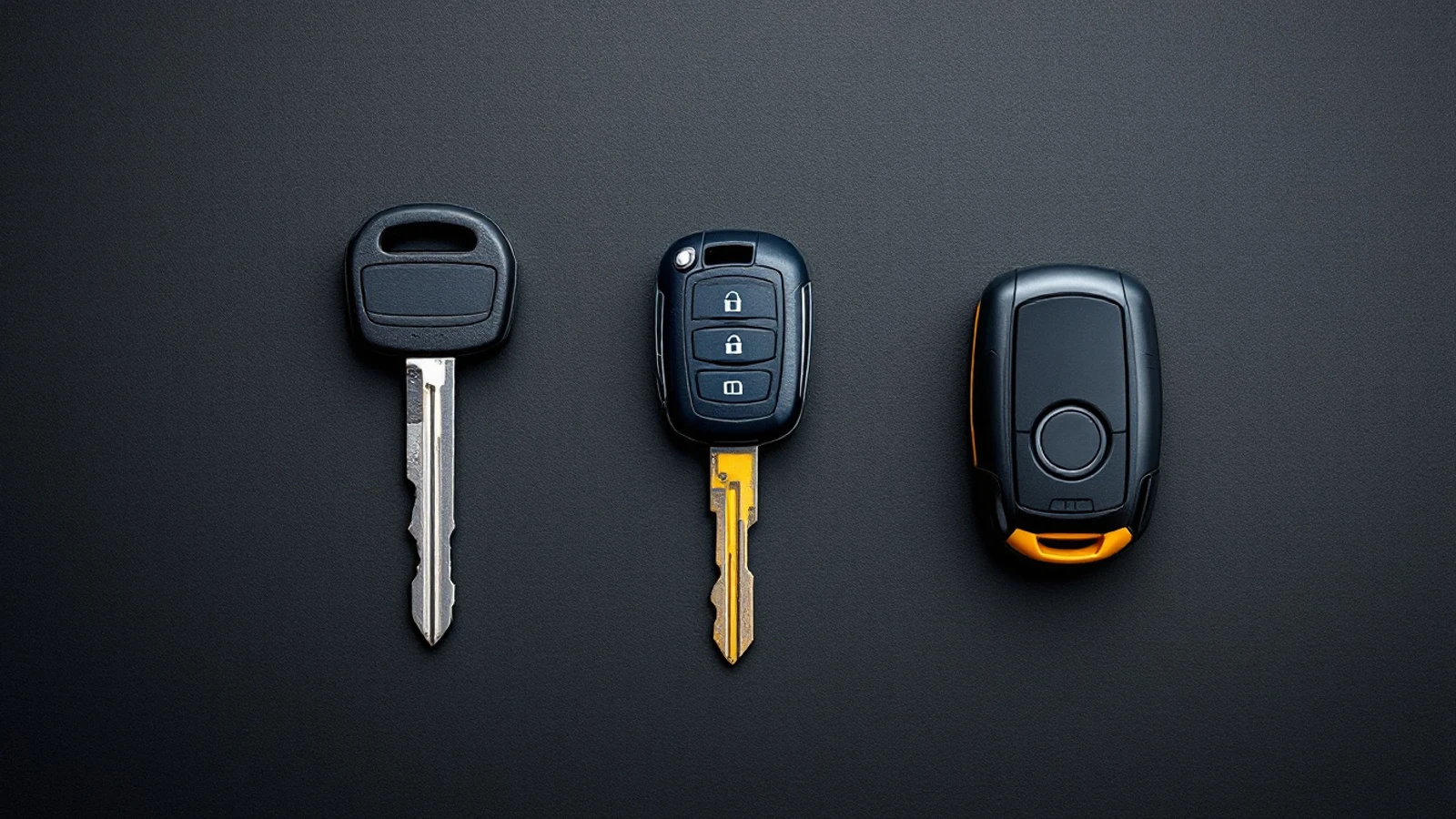
Hyundai and Kia are sister marques inside Hyundai Motor Group, and they share the electronic architecture that decides what key your car takes. That is why this guide covers both: the transponder generations, the pricing bands and the immobilizer timeline track together across the two brands.
Three things decide what you are dealing with. Model year sets the transponder generation. Trim decides whether you got a bladed key or a proximity SmartKey, because base trims often kept a blade years after upper trims moved on. And for a specific window of vehicles, whether your car shipped with an engine immobilizer at all adds a step to the job.
All pricing below is drawn from our Hyundai and Kia make pages and is stated as of August 2026.
The three transponder generations
PCF7936, roughly 2003 to 2010
The earliest generation in meaningful numbers on the road today. A cut metal blade with a plastic head, inserted and turned, with the chip in the head.
These are the cheapest keys in either lineup. A spare runs $145 to $215 on both brands. If your Elantra, Accent, Optima or Sportage is from this era and you turn a key to start it, this is you.
HITAG-2, roughly 2010 to 2017
The middle generation, and still overwhelmingly bladed. HITAG-2 is a more capable transponder than PCF7936 but the owner experience is identical: insert, turn, drive.
A spare runs $165 to $235 on both brands. A 2014 Elantra and a 2014 Optima both sit here, and they are among the most common calls in either lineup.
HITAG-AES SmartKey, 2018 onward
The current generation, and the one behind the proximity SmartKey. You keep the fob in a pocket, the car detects it, and you start with a button. Inside the fob is a small emergency blade for opening the driver door when the cell dies.
This is where the two brands diverge slightly on price:
- Hyundai SmartKey spare, working master present: $215 to $295
- Hyundai SmartKey, all keys lost: $295 to $420
- Kia SmartKey spare, working master present: $205 to $285
- Kia SmartKey, all keys lost: $275 to $400
The Kia figures sit marginally lower across the board, which reflects published pricing rather than any difference in difficulty.
The full picture in one table
| Generation and situation | Hyundai | Kia |
|---|---|---|
| PCF7936 transponder spare (approx. 2003–2010) | $145 – $215 | $145 – $215 |
| HITAG-2 transponder spare (approx. 2010–2017) | $165 – $235 | $165 – $235 |
| HITAG-AES SmartKey spare, working master (2018+) | $215 – $295 | $205 – $285 |
| HITAG-AES SmartKey, all keys lost (2018+) | $295 – $420 | $275 – $400 |
| Immobilizer-upgrade verification, where applicable | add $25 – $45 | add $25 – $45 |
| Electric platform (IONIQ 5 / EV6 / EV9) | $275 – $395 | $255 – $375 |
| Fob battery replacement | under $135 | under $135 |
| Ignition cylinder rekey or replacement | $175 – $385 | $175 – $385 |
Two patterns are worth reading out of that table.
The generational step is modest. Moving from HITAG-2 to a SmartKey spare adds roughly $40 to $60. The technology changed substantially between those generations; the price did not change proportionally.
Losing every key costs more than the generation does. Compare the SmartKey spare row against the all-keys-lost row and the gap is $70 to $125 — larger than the entire jump from the 2010 generation to the 2018 one. Buying a spare while you still hold a working key remains the cheapest decision available.
Reading your own car
You do not need a part number. Three questions settle it.
Do you turn a key or press a button? A blade you insert and turn puts you in the PCF7936 or HITAG-2 rows. A button with the fob in your pocket puts you in the SmartKey rows.
What model year is it? Pre-2010 leans PCF7936, 2010 to 2017 leans HITAG-2, 2018 onward is HITAG-AES.
What trim is it? This is the one people skip, and it is where the surprises live. Base and mid trims frequently kept a bladed key well after upper trims moved to proximity, so two cars of the same model and year genuinely can take different keys. If a neighbour's identical-looking Tucson took a different key from yours, trim is usually why.
For a more general walkthrough of identifying key types across any make, our guide to transponder versus smart key covers it without any tooling, and our Honda key types by year guide follows the same structure for a different manufacturer.
The 2011 to 2021 immobilizer gap
This is the Hyundai Motor Group specific issue, and it is worth understanding plainly because it affects both what your car has and what a key job involves.
An engine immobilizer is the electronic component that checks a chip in your key before allowing the engine to run. It has been effectively standard equipment across the industry for decades.
A range of Hyundai and Kia vehicles built between roughly 2011 and 2021 shipped without one. The affected vehicles were generally base and mid trims with a bladed key and a turn ignition — Sportage, Soul, Forte and Optima base trims on the Kia side, and their Hyundai equivalents. Vehicles with push-button start were not affected, because proximity systems inherently include the immobilizer function.
The consequence was a widely reported theft surge, and Hyundai Motor Group responded in 2023 with a software upgrade campaign for affected vehicles, carrying the campaign code 968 on the Hyundai side and SC241 on the Kia side.
What this means when you replace a key
Three practical consequences.
Check your VIN first. The reliable way to know whether your vehicle is affected, and whether the upgrade has already been performed, is a VIN lookup against the manufacturer campaign and the NHTSA recall database. Rough trim-and-year indicators are useful for orientation but they are not authoritative for your specific car. If a manufacturer campaign covers work on your VIN, it is performed at no charge — which is worth establishing before paying anyone.
Mention it when you request a quote. Our published pricing lists the upgrade verification as an additional $25 to $45. A technician who learns about it on arrival has quoted the job as though the step were not there, and nobody enjoys that conversation in a driveway.
Do not assume an affected car has no chip in the key. Many of these vehicles still use a transponder key for other functions even where the engine immobilizer was absent, so the key replacement itself is a normal job on normal pricing.
How long these jobs take
Timing tracks the same split as price, and it is a useful check on any quote.
A spare with a working master present runs roughly 35 to 60 minutes. Most of that is the mechanical cut on bladed generations, or the emergency-blade cut and pairing on a SmartKey.
An all-keys-lost job runs roughly 60 to 90 minutes. The extra time is originating a blade with nothing to copy from, plus a longer programming sequence, plus a proper cold test at the end.
That cold test is worth insisting on. A key tested on a car that has just been running and is fully awake is not really tested; a key tested from a cold start, engine fully off, is. It is a two-minute difference on the visit and it is the difference between finding a problem in the driveway and finding it in a car park a week later.
Faults that are not a lost key
A meaningful share of Hyundai and Kia key calls turn out to be something cheaper, and knowing the alternatives protects you from buying hardware you do not need.
An exhausted fob cell. The leading cause of a SmartKey that has apparently died. The cell lasts roughly two to four years and fails gradually, so the tell is shrinking range before total silence. A visit for this is under $135 all-in, and the part itself costs a few dollars.
A worn ignition cylinder on the bladed generations. On higher-mileage vehicles the wafers wear unevenly, producing a key that turns intermittently and behaves differently when reseated. A new chip in a new key does nothing for this, because the fault is mechanical. On-site rekey or replacement runs $175 to $385.
A lost key registry after battery work. A rough jump start or a clumsy battery replacement can leave the body control module unable to recognise keys it previously accepted. The key is fine; the pairing is not. That is a programming visit rather than a hardware purchase.
An open recall or campaign. Beyond the immobilizer upgrade discussed above, check the VIN against the NHTSA database before paying for anything. Work covered by an open campaign is performed at no charge.
Does your state change the price?
Not materially. The blank, the transponder and the programming labor are national — a Telluride SmartKey is the same procedure in Virginia as in Washington.
What varies is reach, because a specialist covering a dense metro absorbs less unbilled drive time than one covering an outlying county. That difference shows up at the edges of the published bands rather than in their middle. Our state pages for Virginia and Washington show how coverage is organised, and the makes index lists every make we publish pricing for.
Why these are straightforward jobs
Hyundai and Kia are among the more locksmith-friendly makes in the market, and the reasons are specific:
- No NASTF Vehicle Security Professional restriction, so there is no manufacturer gate forcing the work to a dealer
- No component protection layer, unlike some European makes where modules are cryptographically bound to the vehicle
- No per-VIN PIN requirement, unlike some Japanese makes where an all-keys-lost job needs a credential retrieved from a module first
The practical upshot is that a qualified mobile locksmith with current tooling can handle the great majority of Hyundai and Kia key work on-site, including all-keys-lost. The constraint is the individual technician's tooling and credentials rather than anything the manufacturer imposes — which is exactly the distinction our guide to who can actually program a car key works through.
The electric models
The E-GMP electric platform vehicles — the Hyundai IONIQ 5 and the Kia EV6 and EV9 — use the same HITAG-AES SmartKey family as their combustion siblings, so the underlying technology is not new.
They are priced separately because the platform differs in ways that affect the visit rather than the key: $275 to $395 on the Hyundai side and $255 to $375 on the Kia side.
One point catches owners out. An electric vehicle still carries a small 12-volt battery that runs the body electronics, entirely separate from the traction battery. Key detection depends on that small battery, so a healthy state of charge on the main pack says nothing about whether the car can hear your key. If an E-GMP vehicle intermittently fails to detect a key, the 12-volt battery belongs on the suspect list alongside the fob cell.
What to have ready
Four details turn a range into a quote:
- Year, model and trim, since trim decides bladed versus proximity
- Whether you still hold a working key, which is the largest single price lever
- Whether the immobilizer upgrade applies to your VIN, and whether it has been done
- The VIN itself, which resolves what the vehicle actually left the factory with
That last one matters most on transition years. The 2017 to 2018 window spans the HITAG-2 to HITAG-AES change, and the same nameplate shipped both ways depending on build date and trim.
Our transponder key programming and smart key replacement pages cover what each procedure involves, and you can start a request on the get help page.
Prices in this guide are as of August 2026 and reflect the published ranges on the CarKeyNation Hyundai and Kia pages. Recall and campaign status should be verified by VIN against the manufacturer and the National Highway Traffic Safety Administration recall database. Immobilizer credentialing standards referenced from NASTF's Secure Data Release Model.
Frequently asked questions
What key does my Hyundai or Kia take?
It depends on model year. Vehicles from roughly 2003 to 2010 use a PCF7936 transponder in a bladed key. Vehicles from roughly 2010 to 2017 use a HITAG-2 transponder, still bladed on most trims. Vehicles from 2018 onward use HITAG-AES, which is the generation behind the proximity SmartKey. Trim matters too, because base trims often kept a bladed key years after upper trims moved to proximity.
How much does a Hyundai or Kia key cost in 2026?
As of August 2026, Hyundai runs $180 to $420 all-in and Kia runs $175 to $400 through a mobile automotive locksmith. A 2014 Elantra or Optima HITAG-2 spare sits around $165 to $235. A 2024 Palisade SmartKey with all keys lost runs $345 to $420, and a 2024 Telluride equivalent runs $325 to $400.
What was the 2011-2021 immobilizer gap?
A range of Hyundai and Kia vehicles built between roughly 2011 and 2021, generally base and mid trims with a bladed key rather than push-button start, shipped without an engine immobilizer. That made them notably easier to steal, which drove a widely reported theft surge. Hyundai Motor Group responded with a software upgrade campaign in 2023 for affected vehicles.
How do I know whether my car is affected by the immobilizer gap?
The rough indicator is a bladed key with a turn ignition on a base or mid trim from that window. Vehicles with push-button start were not affected. The reliable check is a VIN lookup against the manufacturer campaign and the NHTSA recall database, which will show whether the upgrade applies to your specific vehicle and whether it has already been performed.
Does the immobilizer upgrade change my key replacement?
It can add a verification step. Our published pricing lists that verification as an additional $25 to $45 on affected vehicles. Mention the upgrade when you request a quote, because a technician who discovers it on arrival has priced the job as though it were not there.
Are Hyundai and Kia keys difficult for a locksmith to program?
No, and this is one of the friendlier makes in the market. Hyundai Motor Group vehicles carry no NASTF Vehicle Security Professional restriction, no component protection layer, and no per-VIN PIN requirement. That means a qualified locksmith with current tooling can handle the great majority of these jobs on-site.
Do the electric models use different keys?
They use the same HITAG-AES SmartKey family, but the E-GMP electric platform vehicles are priced separately on our pages. An IONIQ 5 runs $275 to $395 and an EV6 or EV9 runs $255 to $375. The difference reflects platform specifics rather than a fundamentally different key technology.
Why do Hyundai and Kia share the same answer so often?
Because they are sister marques within Hyundai Motor Group and share mechanical and electronic architecture. The transponder generations, the immobilizer timeline and the upgrade campaign all track together across both brands, which is why one guide covers them properly and two separate ones would repeat themselves.