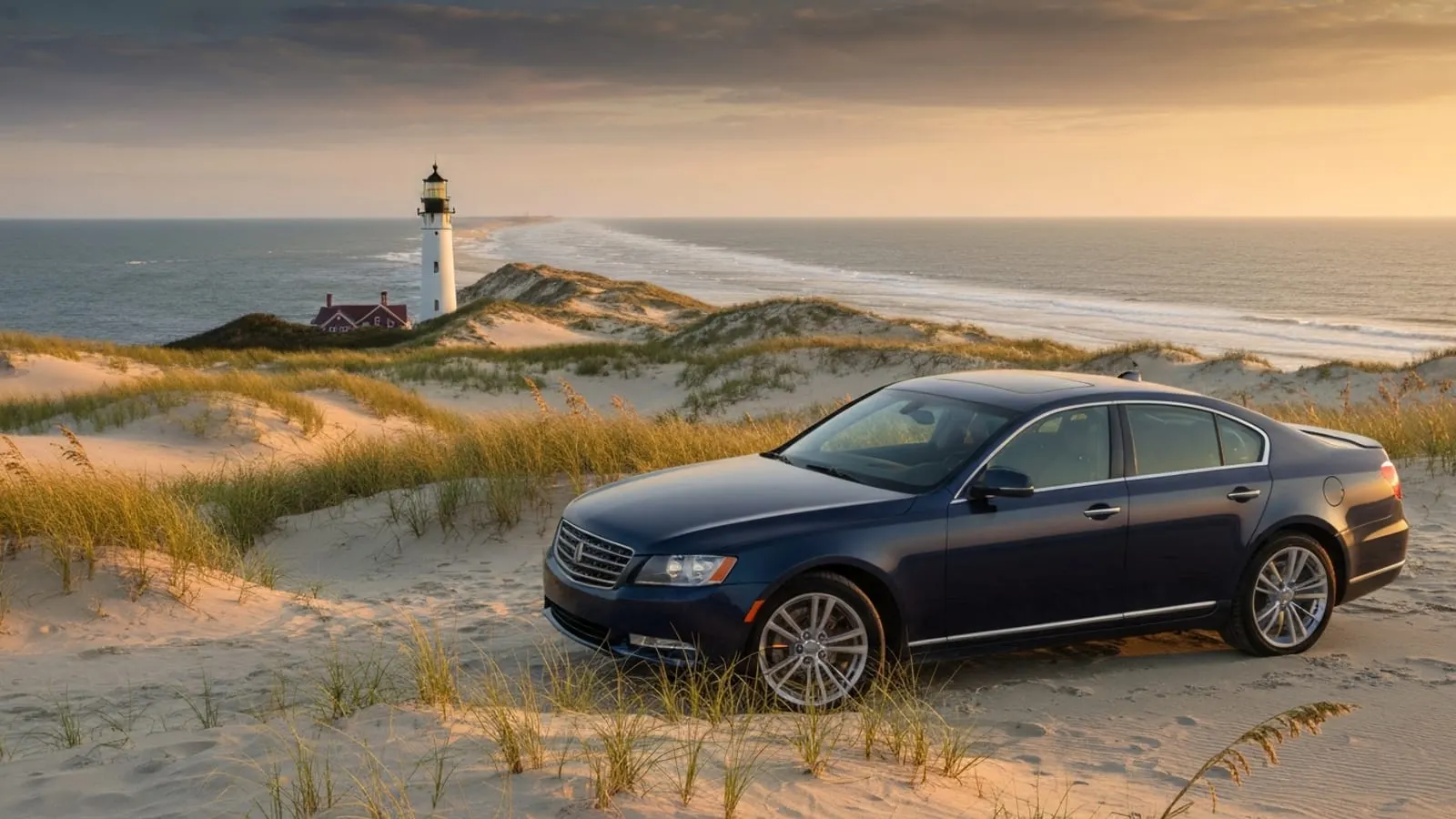
Automotive key service in Virginia
CarKeyNation is live in 10 Virginia metros from Virginia Beach to Suffolk. Virginia REGULATES locksmiths through DCJS — every dispatch goes to a partner with a valid DCJS Private Security Services Business License (the prefix is '11-' followed by four digits), verifiable in real time at the DCJS portal before you authorize the work.
10 Virginia metros live now
Virginia Beach
pop. 459KMobile automotive key specialists serving Virginia Beach and surrounding ZIPs.
View Virginia Beach servicesNorfolk
pop. 238KMobile automotive key specialists serving Norfolk and surrounding ZIPs.
View Norfolk servicesChesapeake
pop. 249KMobile automotive key specialists serving Chesapeake and surrounding ZIPs.
View Chesapeake servicesRichmond
pop. 227KMobile automotive key specialists serving Richmond and surrounding ZIPs.
View Richmond servicesNewport News
pop. 186KMobile automotive key specialists serving Newport News and surrounding ZIPs.
View Newport News servicesAlexandria
pop. 159KMobile automotive key specialists serving Alexandria and surrounding ZIPs.
View Alexandria servicesHampton
pop. 137KMobile automotive key specialists serving Hampton and surrounding ZIPs.
View Hampton servicesRoanoke
pop. 100KMobile automotive key specialists serving Roanoke and surrounding ZIPs.
View Roanoke servicesPortsmouth
pop. 98KMobile automotive key specialists serving Portsmouth and surrounding ZIPs.
View Portsmouth servicesSuffolk
pop. 94KMobile automotive key specialists serving Suffolk and surrounding ZIPs.
View Suffolk servicesWhy we launched in Virginia
Virginia is one of the larger U.S. automotive markets by every meaningful metric: total registered vehicles per the Virginia Department of Motor Vehicles, strong-and-growing electric-vehicle adoption concentrated in Northern Virginia, and a defense-and-federal-government population dynamic — Pentagon, Naval Station Norfolk, Joint Base Langley-Eustis, Joint Base Anacostia-Bolling, Fort Belvoir, NAS Oceana, NSA Hampton Roads, NMC Portsmouth, NASA Langley, the FBI Academy, and Quantico — that drives constant out-of-state-titled vehicle movement, PCS-related key-handoff situations, and post-PCS inheritance-key invalidation workloads that no other state matches at this scale.
Virginia is also a state where the consumer cost of a bad automotive-key experience is unusually high — both because vehicle values skew high in the Pentagon-adjacent Northern Virginia and Virginia Beach suburban affluent corridors and because the cost of being without a working vehicle in metros like Hampton Roads (where the tunnel and bridge geography makes substitute transportation slow and expensive) and Northern Virginia (where rideshare and rental costs are among the highest in the country) is structural.
CarKeyNation launched in Virginia with a 10-metro footprint covering Virginia Beach, Norfolk, Chesapeake, Richmond, Newport News, Alexandria, Hampton, Roanoke, Portsmouth, and Suffolk. Together those ten cities account for roughly 1.95 million residents per the U.S. Census Bureau 2020 decennial count, and the surrounding counties and the adjacent DC metro bring the addressable population closer to 7 million. Coverage of additional Northern Virginia (Arlington, Fairfax, Loudoun, Prince William), the Charlottesville and Lynchburg corridors, the Eastern Shore, and the southwestern Appalachian counties is on the near-term roadmap.
The model is simple. Drivers submit a single form — make, model, year, location, what is wrong with the key — and our system matches them to a vetted automotive key specialist with the right tooling for their vehicle. No directory hunt, no $19 bait pricing, no unbranded vans charging multi-x on arrival. The specialist arrives, performs the work on-site with a written estimate, and provides a receipt with the company's Virginia SCC entity name and the operator's DCJS Private Security Services Business License '11-' number on it.
The 10 Virginia metros we serve
CarKeyNation Virginia coverage today, by 2020 Census population:
- Virginia Beach (459,470) — Oceanfront resort district, NAS Oceana PCS rotation, Sandbridge / Pungo agricultural belt, Tidewater hurricane-prep practice
- Norfolk (238,005) — Naval Station Norfolk PCS rotation, Hampton Roads tunnel-commute (HRBT / Downtown / Midtown), Old Dominion University fleet, urban core
- Chesapeake (249,422) — Great Bridge / Greenbrier / Western Branch / Deep Creek / South Norfolk five-hub geography, regional contractor truck fleet, CBBT approach on US-13
- Richmond (226,610) — state capital (DCJS / SCC / VA AG all downtown), VCU + University of Richmond + VSU student fleet, Fan / Museum / Church Hill row-house street parking
- Newport News (186,247) — Newport News Shipbuilding (Huntington Ingalls), Joint Base Langley-Eustis Eustis side, PHF airport, I-664 / MMMBT corridor
- Alexandria (159,467) — Old Town historic district, Pentagon-adjacent PCS housing, Beltway DC commuter overflow, Northern Virginia luxury-fleet pricing tier
- Hampton (137,148) — Joint Base Langley-Eustis Langley AFB side (Air Combat Command HQ, 1st Fighter Wing F-22), NASA Langley Research Center, Hampton University
- Roanoke (100,011) — Blue Ridge mountain valley, I-81 long-haul truck corridor, Carilion Clinic + VT Carilion School of Medicine, winter cold-snap fob-battery pattern
- Portsmouth (97,915) — Norfolk Naval Shipyard (oldest US public shipyard, 1767), Naval Medical Center Portsmouth, Olde Towne historic, cross-river ferry corridor
- Suffolk (94,324) — largest VA city by land area (400 sq mi), I-664 / MMMBT corridor, agricultural peanut-belt + farm-equipment fleet, North Suffolk / Harbour View growth
Each metro has its own dedicated landing page with city-specific pricing, neighborhood coverage detail, typical drive-times informed by VDOT Traffic Counts data corridor measurements, and the specific scam patterns we see locally.
Virginia locksmith licensing — the consumer-protection advantage
Virginia is one of a relatively small number of U.S. states that actually licenses locksmiths at the state level — and the way the regime is set up gives Virginia consumers an unusually strong verification path. Per the Virginia Department of Criminal Justice Services Locksmith Licensure & Regulatory Affairs, every locksmith business operating in the Commonwealth must hold a Private Security Services Business License issued under Title 9.1 of the Code of Virginia and 6 VAC 20-171 / 6 VAC 20-172. Business license numbers begin with the prefix '11-' followed by four digits — a recognizable format that makes verification easy.
Individual locksmiths working under a licensed business must complete the 25E compulsory minimum training, pass a National Criminal Records and Virginia Criminal History Records fingerprint check, and register as a Private Security Services Registrant. Both the business license and the individual registration are independently verifiable in real time on the DCJS GLSuite external verification portal — businesses at one URL, individuals at another.
The 30-second verification protocol every Virginia consumer should run before authorizing any locksmith work:
- Ask the dispatched locksmith for the DCJS Private Security Services Business License number. It should begin with '11-' followed by four digits.
- Plug that number into the DCJS Business Verification lookup at the DCJS GLSuite portal.
- Confirm the on-screen business name matches the name on the van, the name on the printed/emailed invoice, and the name on the Virginia SCC entity registration.
- Cross-check the company on the Virginia State Corporation Commission Clerk's Information System to confirm it is an active Virginia entity in good standing.
- If any of those four checks fails, do NOT authorize the work. Refer the operator to the Virginia AG Consumer Protection Section.
Compare this to states without state locksmith licensing (Michigan, Georgia, Ohio, and many others). Virginia consumers have a verifiable license number to check; consumers in unlicensed states must rely on indirect signals (ALOA, NASTF VSP, BBB, COI, bond) without any state-issued credential to verify. That is a meaningful consumer-protection advantage Virginia residents should use.
Beyond DCJS license — additional credentials to verify
DCJS licensing is the floor, not the ceiling. The most reliable Virginia operators carry additional voluntary credentials that signal both training depth and industry-standard practice:
- ALOA membership — verify on aloa.org. Signals industry-standard training and continuing education.
- NASTF VSP (Vehicle Security Professional) credential — required for modern OEM-restricted programming. Verify on nastf.org. Without VSP, an operator cannot legitimately access Stellantis SGW, GM Global B, late-model Hyundai / Kia post-2021, or other OEM-restricted immobilizer systems through the Secure Data Release Model.
- BBB rating — Virginia's BBB territories include BBB Serving Central Virginia (Richmond / Charlottesville / Fredericksburg) and BBB Serving Greater Hampton Roads (Norfolk / Virginia Beach / Chesapeake / Portsmouth / Newport News / Hampton / Suffolk). Northern Virginia falls under the larger DC-area BBB. Check accreditation status and complaint history.
- Certificate of Insurance (COI) — request the COI from the commercial liability carrier directly, not as a photocopy from the operator. A real COI lists the carrier, the policy number, and the certificate-holder's name.
- City / county business license — the locality where the work is performed must have an active business license on file for the operator.
- Written estimate before work begins — required practice norm enforced by the Virginia AG's Consumer Protection Section.
Typical Virginia pricing across vehicle classes
Pricing varies by metro and by vehicle class, but the cross-state ranges sit in well-understood bands. Per BLS OEWS 49-9094 (Locksmiths) labor-cost data, Northern Virginia metros (Alexandria, Arlington, Fairfax) command premium pricing on European luxury and Tesla programming; Tidewater metros (Virginia Beach / Norfolk / Hampton Roads) sit mid-pack; Roanoke and the southwestern Appalachian markets price below the state median. The headline ranges below are statewide guidance — the per-city pages provide the metro-specific numbers.
- Basic transponder spare (2005-2015 Camry / Civic / Altima / Corolla): $115-$225
- Smart Key spare with working master present (2018+ Toyota / Honda / Mazda): $185-$345
- Smart Key all-keys-lost (2018+ Toyota / Honda / Mazda): $245-$465
- BMW comfort access all-keys-lost (2007+): $335-$795
- Mercedes-Benz FBS3 / FBS4 programming: $245-$945
- Audi advanced key (AKL): $385-$845
- Tesla Model 3 / Y key-card or key-fob pairing: $185-$385
- Ford F-150 / Super Duty PATS programming: $155-$385
- GM Hitag2 / PASS-Lock relearn (Silverado / Sierra / Tahoe): $195-$425
- Ram 1500 / 2500 / Jeep Grand Cherokee 2018+ SGW-gated (NASTF VSP required): $225-$525
- Hyundai / Kia 2011-2021 immobilizer reset post-theft recovery: $215-$435
- Ignition cylinder pull, rekey, or replace: $175-$415
- Dead-fob battery replacement + re-sync: $30-$85
- Agricultural-equipment ignition rekey (Kubota / John Deere / New Holland) — Suffolk / Isle of Wight / Southampton: $145-$385
Dealer pricing for the same jobs runs 40-100% higher per the OEM owner portals, plus the tow if the vehicle is not drivable. The structural cost gap is real, well-documented, and the reason mobile credentialed locksmith service exists as a category. Per the FTC Consumer Alert on locksmith scams, any starting-at-$15 or starting-at-$29 advertised price in any Virginia market is a near-certain bait-and-switch — the verified statewide ranges above reflect what credentialed work actually costs.
Virginia-specific situations — military bases, tunnels, hurricane season, agricultural fleet
Virginia's car-key emergency mix has four distinct dimensions that no other state shares at this combined intensity. Each shapes how we route, document, and price work.
**Military base PCS rotation.** Virginia hosts Pentagon, Naval Station Norfolk (world's largest naval base by personnel), NAS Oceana (master East Coast F/A-18 jet base), Joint Base Langley-Eustis (Air Combat Command HQ + 1st Fighter Wing F-22), Joint Expeditionary Base Little Creek, NSA Hampton Roads, NMC Portsmouth, Norfolk Naval Shipyard (oldest US public shipyard), Fort Belvoir, Quantico, the FBI Academy, and Joint Base Anacostia-Bolling adjacent. The combined active-duty and DoD-civilian PCS rotation drives more out-of-state-titled vehicle movement and more inheritance-key invalidation work than any state outside California or Texas. On-base dispatch requires sponsorship — CarKeyNation partners cannot bypass DoD access controls, and we coordinate with the customer to plan vehicle relocation, sponsored escort, or Pass & ID coordination.
**Hampton Roads tunnel-commute geography.** The HRBT, MMMBT, Downtown Tunnel, Midtown Tunnel, CBBT, and the various drawbridges create tunnel-state-dependent drive-time swings that can convert a 25-minute job into a 90-minute job without warning. Per VDOT Traffic Counts data, the HRBT in particular carries the heaviest peak-direction volume of any segment in the Commonwealth. We give every partner a live VDOT 511 feed and disclose tunnel-state-dependent ETAs honestly at dispatch.
**Tidewater hurricane season.** The Atlantic hurricane season runs June 1 through November 30. Virginia Beach, Norfolk, Portsmouth, Newport News, Hampton, and the Eastern Shore all sit in the storm-surge exposure zone, and the practical key consequences (flood-damaged ignition cylinders, salt-water-soaked smart fobs, evacuation single-key failures) are real workloads that recur every season. Per Virginia DMV Vehicle Consumer Information, flood-damaged vehicles that meet total-loss thresholds must be titled with a flood brand — which means the post-storm key and immobilizer work has insurance-claim and title-status consequences a credentialed locksmith should help you document.
**Agricultural and farm-equipment fleet.** Suffolk's 400-square-mile footprint includes a meaningful active peanut-and-cotton agricultural belt, and the surrounding Isle of Wight, Southampton, and Sussex County agricultural footprint runs heavy-truck and farm-equipment fleet at volumes no other Commonwealth city sees. Suffolk and adjacent partners handle Kubota, John Deere, New Holland, Case IH, and Massey Ferguson ignition rekey work as a routine capability.
Common Virginia vehicle scenarios and the right partner filter
Three vehicle classes drive the majority of modern Virginia all-keys-lost programming workload, and each requires a specific partner filter at dispatch:
- Stellantis SGW-gated (most 2018+ Ram, Jeep, Dodge, Chrysler) — partner must hold active NASTF Vehicle Security Professional credential to access the Secure Gateway module legitimately.
- GM Global B (most 2018+ Cadillac, GMC, Chevrolet trucks and SUVs) — same NASTF VSP requirement for the GM proprietary secured-programming path.
- Late-model Hyundai / Kia post-2021 — manufacturer added secured programming after the 2011-2021 Kia Boys vulnerability era, and post-2021 reset work requires NASTF VSP credentialing.
Outside those three OEM-restricted classes, the typical Virginia partner toolkit handles Toyota, Honda, Mazda, Nissan, Subaru, Ford (PATS), pre-SGW Stellantis, BMW (CAS / FEM-BDC), Mercedes-Benz (FBS3 / FBS4), Audi (AKL), Lexus, Acura, and the 2011-2021 Hyundai / Kia immobilizer reset workload as routine capabilities. Tesla key-card and key-fob pairing is supported by partners with the right OEM tooling — Northern Virginia and the North Suffolk / Harbour View corridor see this work at higher volumes than the rest of the state.
Virginia automotive key insight — written estimates and credentialed sourcing
“Consumers should always confirm that any locksmith arriving on-scene is licensed in their state, carries proper identification, and provides a written estimate before work begins. A reputable automotive locksmith will not ask you to sign a blank invoice and will be transparent about exactly which key, chip type, and programming step the job requires.”
— Mary May, Executive Director, Associated Locksmiths of America (ALOA Security Professionals Association)
ALOA's framing applies with full force in Virginia because the state's licensure regime gives consumers an unusually robust verification path that consumers in neighboring no-license states (West Virginia, much of the Carolinas in practice) cannot match. The "written estimate before work begins" discipline paired with the DCJS '11-' license-number check is the right protocol for every Virginia consumer.
“Automotive security professionals working under the NASTF Secure Data Release Model can access OEM key codes and immobilizer reset procedures through legitimate channels — that distinguishes a credentialed automotive locksmith from someone who only knows how to cut a metal key blank. Consumers buying smart-key or transponder service should ask whether the technician carries an active NASTF Vehicle Security Professional credential.”
— Donny Seyfer, Executive Officer, National Automotive Service Task Force (NASTF)
NASTF's framing applies in Virginia because the state's defense-and-federal-government PCS rotation pumps a constant stream of inherited and out-of-state-titled modern Stellantis, GM, and late-model Hyundai / Kia vehicles into the local market — exactly the OEM-restricted classes where NASTF VSP credentialing is the technical bottleneck. Confirming a partner is on the NASTF VSP Registry is the single most important technical filter for any Virginia all-keys-lost or modern OEM-restricted programming job.
What to do if a Virginia locksmith experience goes wrong
If a Virginia locksmith experience involves price gouging, unlicensed work, refusal to provide a DCJS '11-' license number or a Virginia SCC entity name, refusal to issue a written estimate before work begins, or any other practice that violates the Virginia Consumer Protection Act, file a complaint with the Office of the Virginia Attorney General Consumer Protection Section at (800) 552-9963 in-state or (804) 786-2042 from outside Virginia. The Section is the central clearinghouse for consumer-fraud complaints in the Commonwealth and explicitly takes complaints from the cities of Alexandria, Fairfax, and Falls Church even when the underlying actor is based outside Virginia.
Complaints can also be filed directly with the DCJS Division of Licensure and Regulatory Services if the underlying issue is a licensing violation (working without a DCJS license, lapsed registration, or unauthorized representation as a Private Security Services Registrant). The Better Business Bureau Serving Central Virginia and BBB Serving Greater Hampton Roads also accept complaints and publish accreditation and rating records that affect operator reputations over time.
CarKeyNation-dispatched partners in Virginia carry the DCJS '11-' license number, the Virginia SCC entity name, the city/county business license, an active Certificate of Insurance, and (where applicable) ALOA + NASTF VSP credentials. We include all of that documentation on every invoice and back programming with a 90-day workmanship warranty. If a CarKeyNation experience falls short of those standards, contact us directly and we will make it right.
Why a vetted network matters across Virginia
The locksmith industry's structural weakness — exposed in every FTC consumer alert on the topic — is that the cost of getting it wrong falls almost entirely on the consumer, while the cost of advertising a low bait price is almost zero. A search-result ad with $19 lockout pricing can be bought for a few dollars per click. A vetted, bonded, insured, credentialed mobile locksmith with five-figure tool investments cannot economically compete on that price — so the customer who clicks the cheapest ad almost never reaches a vetted operator. CarKeyNation exists to invert that economic flow across every Virginia metro we serve: the verification work happens upstream, before the customer ever has to choose between an ad with a fake price and an ad with a real price.
Our Virginia partner network is structured around five hard gates. First, business registration and bonding in Virginia — verified at intake and re-verified on a rolling annual basis. Second, ALOA membership in good standing where applicable. Third, NASTF Vehicle Security Professional registration for partners handling restricted- access work (Stellantis Security Gateway, certain BMW and Mercedes procedures). Fourth, active tool licenses (Autel IM608, Smart Pro, VVDI Key Tool Plus, or OEM equivalents) for the makes and years the partner is authorized to work on. Fifth, a written estimate before any work begins and a 90-day workmanship warranty on every completed job. A partner who fails any one of those gates is not in our routing pool.
The practical consequence for a Virginia driver: the technician who arrives at your address through a CarKeyNation intake is verifiably qualified for your specific vehicle, carries insurance that covers any workmanship issue, and is accountable to a network that cares about long-term partner reputation. That is a meaningfully different outcome than what a customer experiences clicking a random ad — and the price difference is usually small or zero because the vetted partner is competing on quality and reputation, not on bait pricing.
How Virginia pricing compares to the national benchmark
Mobile automotive locksmith pricing in Virginia tracks closely with the national benchmark for the same type of job and the same vehicle generation, with metro-specific adjustments for local labor cost and drive-time density. The U.S. Bureau of Labor Statistics tracks locksmith employment under occupation code 49-9094 (Locksmiths and Safe Repairers), and the per-metro wage data published in the Occupational Employment and Wage Statistics series is the most useful neutral reference for understanding why prices vary by city even within the same state.
Across Virginia, our intake conversations regularly encounter three categories of customer confusion that honest pricing transparency resolves. The first is the $19 / $29 / $49 marketing bait we have already discussed. The second is the assumption that a dealer quote and a locksmith quote should be roughly equivalent — they almost never are for vehicles 4+ years old, and the dealer premium often runs 35-100% over the equivalent locksmith flat rate. The third is the assumption that European luxury keys (BMW, Mercedes-Benz, Audi) cost roughly the same as mainstream brands — they do not, because the underlying tool investment and per-job complexity are meaningfully higher.
Per the J.D. Power 2024 Customer Service Index Study, mass-market dealer satisfaction averages 850 out of 1,000 and luxury dealer satisfaction averages 862. For warranty work, the dealer is usually the right call. For out-of-warranty key work on vehicles 4 to 12 years old — the bulk of what mobile locksmiths handle in Virginia— the savings versus the dealer typically range from $150 to $700 per job, before accounting for the tow charge a non-running vehicle would otherwise incur. The pricing on every city page reflects this reality with realistic ranges rather than marketing-driven low-end bait numbers.
Frequently asked questions
Does Virginia license locksmiths?
Yes. Virginia regulates locksmiths through the Department of Criminal Justice Services (DCJS) under Title 9.1 of the Code of Virginia and 6 VAC 20-171 / 6 VAC 20-172. Every locksmith business in the Commonwealth must hold a Private Security Services Business License (number begins with '11-' followed by four digits). Individual technicians must complete the 25E compulsory minimum training, pass a background check, and register as Private Security Services Registrants. Both are verifiable on the DCJS GLSuite portal.
How do I verify a Virginia locksmith license before they start work?
Ask the dispatched operator for the DCJS Private Security Services Business License number (should begin with '11-'). Plug it into the DCJS Business Verification lookup. Confirm the on-screen business name matches the van, the invoice, and the SCC entity. Cross-check the company on the Virginia SCC Clerk's Information System entity search. If any of those four checks fails, do not authorize the work — and report the operator to the Virginia AG Consumer Protection Section.
What's the difference between DCJS license and NASTF VSP credentialing?
DCJS license is the Virginia state regulatory requirement for any locksmith business operating in the Commonwealth — it's mandatory. NASTF VSP (Vehicle Security Professional) credentialing is a voluntary industry credential that grants access to the OEM Secure Data Release Model for modern OEM-restricted programming (Stellantis SGW, GM Global B, late-model Hyundai / Kia post-2021). Both matter: DCJS is the legal floor, NASTF VSP is the technical ceiling for late-model work. CarKeyNation filters Virginia partners on both.
How fast can a locksmith reach me anywhere in Virginia?
ETA varies dramatically by metro. Urban Northern Virginia and Hampton Roads addresses typically land in 25-55 minutes off-peak; tunnel-state-dependent jobs (HRBT, MMMBT, Downtown / Midtown tunnels) can swing 30-90 minutes during peak windows; rural Roanoke Valley / I-81 corridor / Suffolk peanut belt jobs run 30-75 minutes. We give a live VDOT 511-informed ETA at dispatch confirmation so you can decide before committing.
Sources
- Virginia Department of Criminal Justice Services (DCJS) — Locksmith Licensure & Regulatory Affairs (Title 9.1; 6 VAC 20-171/172)
- DCJS Business Verification — confirm any Virginia locksmith business license (numbers begin with 11-)
- Office of the Virginia Attorney General — Consumer Protection Section
- Virginia State Corporation Commission (SCC) — Clerk's Information System business entity search
- Virginia Department of Motor Vehicles — Vehicle Records & Consumer Information
- Virginia Department of Transportation (VDOT) — Traffic Counts & Travel Data
- NICB 2023 Hot Spots Report (auto theft rankings by state + metro)
- BLS OEWS Locksmiths & Safe Repairers (49-9094)
- AAA Roadside Assistance Service Data
- U.S. Census Bureau American Community Survey (ACS) 5-year metro estimates
- ALOA (Associated Locksmiths of America) Service Standards
- NASTF (National Automotive Service Task Force) VSP Registry
- FTC Consumer Alert — How to Find a Reliable Locksmith
- Better Business Bureau Serving Central Virginia (Richmond / Charlottesville / Fredericksburg region)
- Better Business Bureau Serving Greater Hampton Roads (Norfolk / Virginia Beach / Chesapeake region)
All 15 states we cover
CarKeyNation is live in 150 metros across these 15 launch states. Pick another to see its coverage.
Ready to get rolling again?
Request a local specialist now — vetted, accountable, and matched to your vehicle.