Honda Key Types by Year: Which Key Your Honda Actually Takes
Honda has shipped three distinct immobilizer generations since 2003, and which one your Civic, Accord, CR-V or Pilot carries decides both the key you need and what it costs. Here is the year-by-year map.
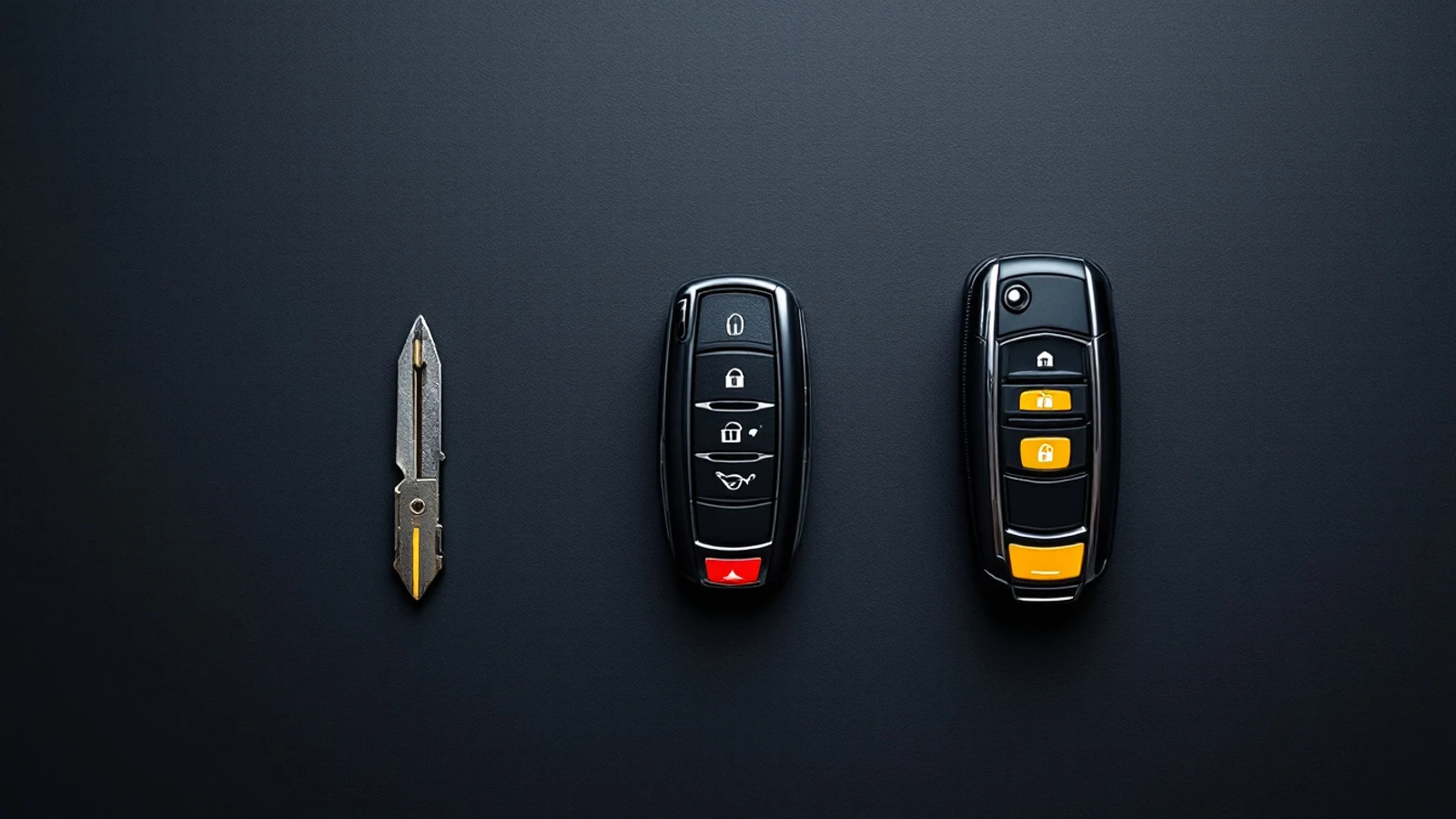
Honda has been fitting immobilizers to mainstream vehicles for over two decades, and in that time the underlying system has changed three times. To a driver, a 2008 Civic key and a 2023 Pilot fob are both just "the Honda key." To the technician who has to replace one, they are three different jobs with three different price bands and one extra requirement that is unique to the make.
This guide maps Honda's key generations to model years, so you can identify yours before you call anyone, understand why the price lands where it does, and know which detail actually resolves the ambiguous cases.
All figures are drawn from the ranges published on our Honda make page and are stated as of September 2026. They are all-in: key blank, cut, programming, and the service call.
The three generations at a glance
| Generation | Typical years | Physical key | Spare, all-in | All keys lost |
|---|---|---|---|---|
| HITAG-2 transponder | ~2003 – 2014 | Bladed key, turned in ignition | $150 – $210 | $185 – $260 |
| HITAG-Pro transponder | ~2015 – 2018, trim-dependent | Bladed key, turned in ignition | $175 – $245 | varies by vehicle |
| HITAG-AES Smart Entry | 2019 onward | Proximity fob, push-button start | $225 – $310 | $295 – $400 |
| Honda iN PIN, when dealer-only | any generation requiring it | — | add $25 – $75 | add $25 – $75 |
| Honda dealer, Smart Entry all keys lost | comparison | — | — | $425 – $650, plus tow |
Two structural facts fall out of that table, and they are the ones worth internalizing.
Price tracks generation, not nameplate. A Civic and an Accord of the same year on the same generation cost the same. Honda pricing does not have a "bigger vehicle costs more" axis the way people expect.
The gap between a spare and all keys lost is consistent. Roughly $35 to $90 depending on generation. That gap is the cost of establishing trust from nothing, and it is entirely avoidable by cutting a spare while your current key still works.
HITAG-2: roughly 2003 to 2014
This is the largest population of Hondas still on the road, covering Civic, Accord and CR-V across their most heavily sold years.
How to recognize it. You insert a metal blade into an ignition cylinder and turn it. The plastic head of the key contains the transponder chip. There is no proximity detection and no start button.
What it costs. A spare runs $150 to $210. With every key lost, $185 to $260.
This is the cheapest generation in the Honda lineup and the most straightforward to work on. Tooling support is mature and the enrollment procedure is well documented.
The one thing to watch. Vehicles this age frequently have a second problem hiding behind the key. If your key turns but the engine does not crank, or the key sticks and binds in the cylinder, the ignition cylinder itself may be worn. Replacing the chip does nothing for a worn cylinder. On-site rekeying or cylinder replacement runs $175 to $385 depending on model, and it is worth having assessed at the same visit rather than paying twice.
HITAG-Pro: roughly 2015 to 2018, and trim matters
This is the transition window, and it is the section of this guide that causes the most confusion.
How to recognize it. Physically, it looks like the previous generation. Bladed key, ignition cylinder, turn to start. The chip inside is a later family.
What it costs. A spare runs $175 to $245, a modest step up from HITAG-2.
Why the years are fuzzy. Honda did not switch the entire lineup on a single date. Higher trims moved first — EX and EX-L variants adopted HITAG-Pro ahead of base trims — and by 2018 some models had already moved on to Smart Entry entirely.
The practical consequence is that two Hondas of the same model year can require different keys. A 2016 base sedan and a 2016 EX-L are not necessarily the same job.
If your Honda falls in this window, this is the case where providing the VIN rather than the model year genuinely changes the outcome. It resolves which chip generation your specific vehicle left the factory with, and it prevents a technician arriving with the wrong blank. Our guide to what the VIN changes about your quote covers why that one detail carries so much weight.
HITAG-AES Smart Entry: 2019 onward
The current generation, covering Accord, CR-V, Pilot and the rest of the modern lineup.
How to recognize it. The fob stays in your pocket. The vehicle detects it as you approach, and you start the engine with a button. Inside the fob is a small mechanical emergency blade that opens the driver's door if the fob battery dies.
What it costs. A spare runs $225 to $310. With every key lost, $295 to $400, assuming the vehicle's PIN can be obtained.
That last clause is the Honda-specific part, and it deserves its own section.
The Honda iN PIN: the make's one genuine complication
Most manufacturers require a technician to have the right tool. Honda adds a second requirement on many vehicles: a vehicle-specific code, obtained through Honda's dealer information system, before a new key can be enrolled.
There are three ways that code reaches the technician, and they differ enormously in convenience:
1. Honda's dealer portal, at a parts counter. A lookup performed by a dealer, typically carrying a $25 to $50 fee. It works, but it puts a dealer visit in the middle of what was supposed to be a mobile job.
2. Derived from the VIN on professional tooling. Several current diagnostic platforms calculate the code from the VIN directly. No dealer trip at all, and the job completes in one visit at your location.
3. A printed sticker in the glove box. Present on some older Pilots. Worth checking before you assume the code has to be sourced.
Where the code has to come from a dealer, expect $25 to $75 added to the job.
The reason this matters when you are choosing who to call is simple. Two technicians can quote the same key at the same price, and one of them completes it in your driveway in an hour while the other needs a dealer parts counter to open first. Asking how they obtain the PIN is a fair and useful question, and a competent Honda specialist will answer it without hesitation.
Where the common Hondas land
Honda's published model callouts map onto the three generations directly. Match your model year first; the nameplate rarely changes the answer.
Civic, Accord and CR-V. The 2003 to 2014 examples of all three are HITAG-2 — the cheapest band, $150 to $210 for a spare. These three account for the largest share of Hondas on the road in that era, which is why the bottom row of the table is also the most commonly quoted one.
Accord, CR-V and Pilot, 2019 onward. Smart Entry, HITAG-AES. $225 to $310 for a spare, $295 to $400 with all keys lost.
EX and EX-L trims, 2015 to 2018. This is the HITAG-Pro window, and it is trim-sensitive rather than purely year-based. $175 to $245 for a spare.
Older Pilots. Worth a specific mention because some carry the immobilizer PIN on a printed sticker in the glove box. If yours does, that removes an entire step and its associated fee from the job. Check before you assume the code has to be sourced.
For a Honda that is not on that list, the year still decides the generation. The three-way physical test — blade-and-turn on an older car, blade-and-turn on a mid-decade car, or fob-and-button — resolves nearly every case without a part number.
What the visit actually looks like
Honda has one extra step compared with most makes, and seeing where it falls explains a lot about quoting differences.
1. Verification. Registration or title plus photo identification. On an all-keys-lost job this is mandatory — per NASTF's Secure Data Release Model, documented ownership verification is the baseline expectation before a key is generated for a vehicle with no working credential.
2. Generation identification. Year, model, trim and VIN. On a 2015 to 2018 Honda this step carries more weight than on almost any other make, for the trim reasons above.
3. PIN acquisition. The Honda-specific step. Derived from the VIN on capable tooling, retrieved through a dealer portal for a fee, or read off a glove-box sticker on some older Pilots. Which of the three applies is the difference between a one-visit job and a job with a dealer counter in the middle of it.
4. Cutting. The blade is cut to your lock — the ignition key on transponder generations, or the emergency blade inside a Smart Entry fob.
5. Programming. The tool connects and enrolls the key against the immobilizer using the PIN.
6. Testing before departure. Engine start, lock, unlock, panic, and on Smart Entry the passive entry and push-button start. A key that has not been demonstrated to you is not a completed job.
Reading a Honda quote: what should worry you
Honda's volume makes it a frequent target for the bait pattern the FTC's consumer alert on locksmith scams describes: a very low advertised price that becomes a much larger on-arrival figure from a contractor with no fixed address and no warranty.
Four checks, one of which is Honda-specific:
One all-in number before dispatch, not a "starting at" figure that resolves when someone is standing at your car.
The technician asks whether a working key still exists. It is the largest cost variable on any make.
The technician can say how they will obtain the PIN. This is the Honda-specific check, and it is the most useful question on this page. "We derive it from the VIN" means one visit. "We'll have to get it from a dealer" means a fee and a delay — which is legitimate, but you should hear it before the visit rather than during it.
A stated warranty on the key and the programming, with terms available in writing.
DIY is not a practical route on modern Hondas. The PIN requirement alone rules out the inexpensive programming kits sold online, and on Smart Entry vehicles professional tooling plus a license for it is the entry requirement.
Dealer versus mobile on the same Honda
The published comparison: a Honda dealer Smart Entry all-keys-lost job typically runs $425 to $650, against $295 to $400 mobile.
The dealer figure reflects flat-rate programming labor at dealer benchmark rates, OEM part markup, and — critically — a tow, because a Honda with no working key cannot be driven to a dealership.
Honda is not a make where the dealer holds a technical monopoly. Every current Smart Entry key can be programmed on site by a technician with appropriate tooling and a path to the PIN. The constraint is credential and capability on the technician's side, which is why matching the job to a partner set up for your specific vehicle matters more than which sign is on the building.
Before you assume you need a key
Two cheaper outcomes are worth ruling out first, because both look like key failure from the driver's seat.
A dead fob battery. On a Smart Entry Honda, a fob that no longer works is very often a coin cell. Honda builds a close-range fallback for exactly this situation, documented in the owner's manual, that lets the vehicle read the fob directly when the radio has no power. A battery replacement visit runs under $135 all-in, and the part itself is a few dollars.
A worn ignition cylinder, on the bladed generations. Covered above at $175 to $385, and no amount of key work fixes it.
Getting an accurate Honda quote
Four details close the gap between the table above and a firm number:
- Model year and model
- Trim, specifically if the vehicle sits in the 2015 to 2018 window
- Whether a working key still exists
- The VIN, which resolves generation definitively
Provide those and a Honda specialist can quote a single figure rather than a range. Withhold the third one and the technician may arrive planned for a spare when the job is all-keys-lost, which is a different procedure and a different price.
For background on the underlying key types, transponder versus smart key covers the identification in general terms. Our transponder key programming and smart key replacement pages describe what each visit involves. Acura owners should confirm against the Acura ranges rather than assuming Honda's year boundaries transfer. If there is a Toyota in the same household, Toyota key types by year is the companion guide, and the generational boundaries fall in different years on that make, so read it rather than assuming Honda's dates carry across.
You can start a request on the get help page.
Prices in this guide are as of September 2026 and reflect the published ranges on the CarKeyNation Honda page. Dealer labor benchmarks referenced from the J.D. Power Customer Service Index. Immobilizer credentialing standards referenced from NASTF's Secure Data Release Model.
Frequently asked questions
How do I tell which key generation my Honda uses?
Start with the physical key. If you insert a blade and turn it to start, you are on a transponder generation, and the model year separates HITAG-2 from HITAG-Pro. If you keep a fob in your pocket and press a button to start, you are on HITAG-AES Smart Entry. That single distinction places you on the right half of the table, and the model year does the rest.
What is the Honda iN PIN, and do I have to go to a dealer for it?
It is a vehicle-specific code that Honda's immobilizer requires before a new key can be enrolled on many models. There are three ways to obtain it: a lookup through Honda's dealer portal at a parts counter, which typically carries a $25 to $50 fee; a VIN-derived calculation on professional tooling, which needs no dealer trip at all; or a printed sticker in the glove box on some older Pilots. Where the code has to come from a dealer, expect $25 to $75 added to the job.
How much does a Honda key cost in 2026?
As of August 2026, Honda key replacement runs $150 to $400 all-in through a mobile automotive locksmith. A 2014 Civic transponder spare is about $150 to $210. A 2023 Pilot Smart Key with every key lost runs $295 to $400. A Honda dealer charges $425 to $650 for that same Smart Entry all-keys-lost job before a tow is added.
Does an Accord cost more than a Civic?
Not meaningfully, because Honda price follows the immobilizer generation rather than the model. A Civic and an Accord of the same year on the same generation land in the same band. What separates two Hondas is the year they were built and whether a working key still exists, not which nameplate is on the trunk.
My Honda is a 2016 EX-L. Which generation is that?
The 2015 to 2018 window is where Honda transitioned, and trim matters more than usual in it. Higher trims such as EX and EX-L moved to HITAG-Pro earlier than base trims, and some 2018 models had already moved to Smart Entry. This is the range where the VIN is worth providing rather than guessing, because two 2016 Hondas can genuinely need different keys.
Can a locksmith program a Honda Smart Entry key, or is it dealer-only?
A qualified locksmith can program every current Honda Smart Entry key, including the HITAG-AES generation used from 2019, provided they have a path to the vehicle's PIN. That path is the real constraint on Honda rather than any manufacturer lockout. A technician whose tooling derives the PIN from the VIN completes the job on site with no dealer involvement.
Does Acura follow the same generations as Honda?
Broadly yes, since the two share immobilizer architecture, but Acura runs its own trim and model-year boundaries and its published ranges differ. Treat this guide as the Honda map and confirm an Acura against the Acura ranges rather than assuming the years transfer directly.