Subaru Key Types by Year: Which Key Your Subaru Actually Takes
The Subaru-specific 4D transponder, the move to HITAG-2, Push-Button-Start proximity keys, and the BIU step that can turn a 2020-or-newer all-keys-lost into a dealer visit.
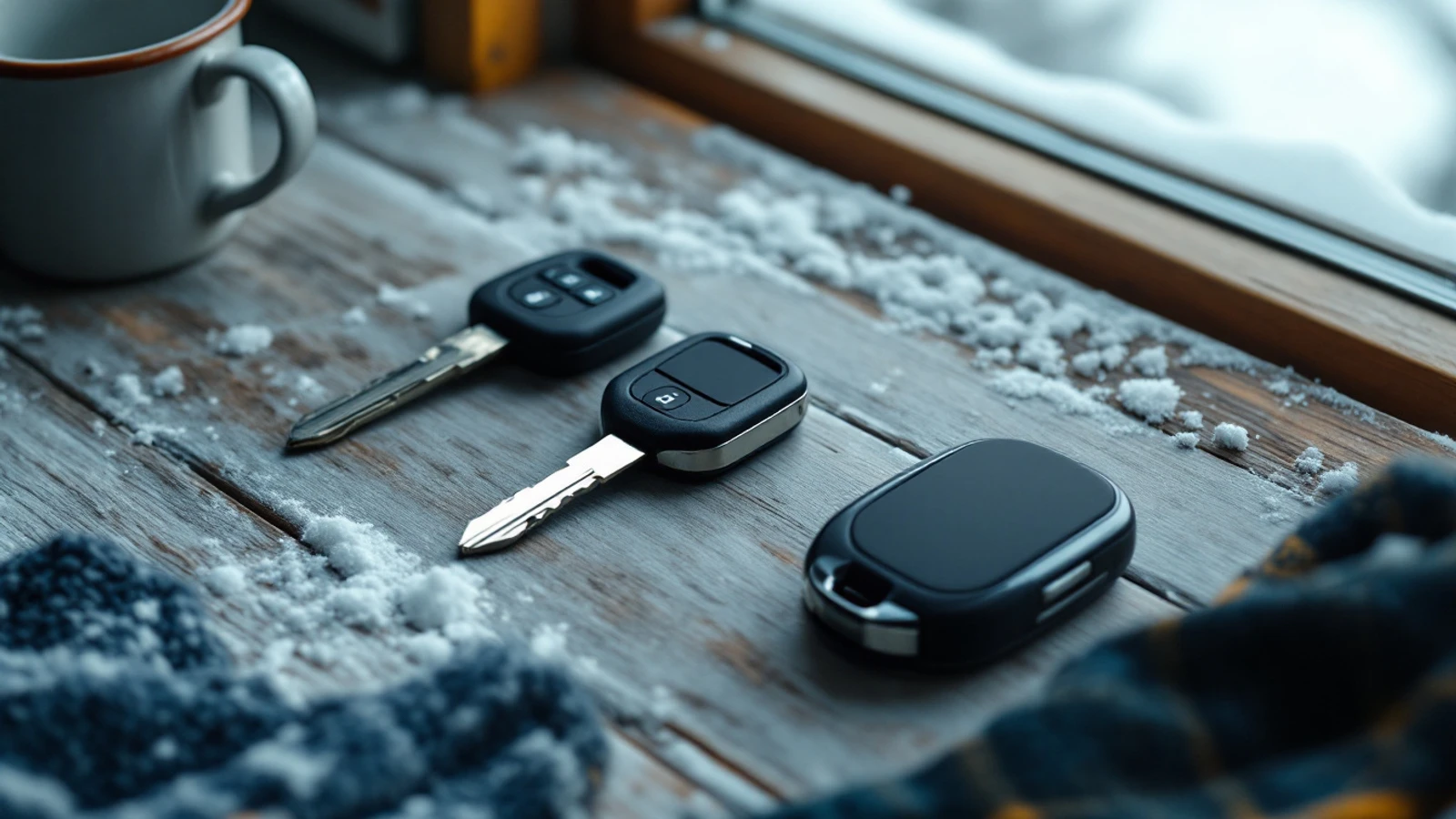
Subaru has used three key families on the cars still on the road: its own 4D62 and 4D65 transponders from about 2004 to 2014, HITAG-2 transponders from about 2015, and Push-Button-Start proximity keys on upper trims from roughly 2017. As of September 2026, a spare runs $175 to $325 depending on which you have, and a Push-Button-Start car with every key lost runs $325 to $420. The one wrinkle unique to Subaru is a module called the BIU, which on some 2020-or-newer cars can turn an all-keys-lost into a dealer visit.
Subaru's sales are concentrated in a handful of models, the Outback, Forester, Crosstrek and Ascent, and they are disproportionately popular in the Pacific Northwest and the Northeast. That means a lot of Subaru owners live in the colder, more rural parts of the states we cover, which is exactly where knowing your key type before you call saves a wasted trip. This guide explains the three generations, where the common models land, how to identify yours in a few seconds, and when the dealer is genuinely the right call.
The three generations at a glance
These bands come from our Subaru make page and are total on-site prices.
| Key type | Roughly | How you start the car | Spare, working key present | All keys lost |
|---|---|---|---|---|
| 4D62 / 4D65 transponder | 2004 – 2014 | Insert and turn | $175 – $245 | quoted per vehicle |
| HITAG-2 transponder | 2015 onward, key-start trims | Insert and turn | $195 – $275 | quoted per vehicle |
| HITAG-2 Push-Button-Start proximity | 2017 onward, upper trims | Fob in pocket, press start | $245 – $325 | $325 – $420 |
| BIU security lock after all keys lost | some 2020+ vehicles | — | not applicable | dealer re-flash first |
The years overlap on purpose. Subaru did not switch every model in the same year, and within a single model year a base trim and a Touring trim can carry different keys. That is why the VIN, not the model name, is the reliable answer. The all-keys-lost cells for the transponder generations are left unquoted because those jobs are priced per vehicle rather than from a standing band.
4D62 and 4D65: roughly 2004 to 2014
Subaru shipped its first transponder immobilizer around 2004 using a Subaru-specific variant of the Texas Instruments 4D chip. Early Outback and Forester models used the 4D62; roughly 2009 to 2014 models moved to the 4D65.
These are straightforward keys. The factory Subaru software handles them, and so do the mainstream aftermarket tools most automotive specialists carry, including the Autel IM608, Smart Pro and JMA TRS-5000. A 2014 Outback 4D62 spare runs $175 to $245, which is the example the make page uses.
The one thing to get right is the blank. A generic 4D chip can look identical to the Subaru variant and simply will not program. A specialist who works on Subarus regularly carries the right blanks; one who does not may have to order them, which is where a delay comes from.
If your Subaru from this era has high mileage, also consider the cylinder. On older cars a key that turns sometimes and not others is usually worn wafers in the ignition rather than a failing chip. Our guide to a key that will not turn in the ignition explains the difference.
HITAG-2 transponders: roughly 2015 onward
From about 2015, Subaru moved to the NXP HITAG-2 transponder on its key-start cars, starting with the Outback and Forester. For the owner, the key looks and behaves much the same: a bladed key, often with the remote built into the head, inserted and turned to start.
The change matters on the tool side. HITAG-2 is programmed differently from the older 4D family, and a HITAG-2 spare runs $195 to $275. It is still routine work for any specialist with a current Subaru licence on their tool, and there is no PIN or security credential in the way.
Push-Button-Start proximity: roughly 2017 onward
From about 2017, Subaru's Limited and Touring trims moved to Push-Button-Start, Subaru's name for its proximity key system. The fob stays in your pocket or bag, the car unlocks as you touch the handle, and you press a button to start. Underneath it is still HITAG-2, paired with the body electronics and a gateway.
A Push-Button-Start spare with a working key present runs $245 to $325. All keys lost runs $325 to $420, the example on the make page being a 2024 Outback Touring XT. The price difference between the two is procedure: with a working key present, the car already trusts something and can be told to accept one more; with every key gone, it has to be persuaded from nothing.
Because these keys run on a coin cell, the most common false alarm on a Push-Button-Start Subaru is a flat battery, which shows up first as shrinking range and then as unreliable hands-free entry. If your door handle has stopped responding, our guide to a smart key in your pocket that will not unlock the door walks through the checks before you pay for anything.
The BIU: the Subaru-specific catch
The Body Integrated Unit, or BIU, manages Subaru's body electronics, including recognising keys. On some 2020-or-newer Outback, Forester and Ascent vehicles, an all-keys-lost event can leave the BIU in a security-locked state.
When that happens, an aftermarket specialist can still program new keys, but the BIU has to be cleared first, and that requires Subaru's SSM-IV factory tool with dealer-level connectivity. In practice that means a trip to a Subaru dealer for the re-flash before the key job can be finished, typically a one-to-two-day round trip.
Two things are worth knowing. First, it is uncommon; most all-keys-lost jobs on these cars finish on-site. Second, a specialist who knows Subarus will flag the risk at intake rather than after arriving, so you are not surprised. It is also the strongest argument on this make for adding a spare while you still have one working key: a spare job never triggers the BIU lock.
Where the common Subarus land
- Outback. The best-selling Subaru and the widest spread of key types. Early cars carry 4D62, 2009 to 2014 cars 4D65, key-start cars from about 2015 HITAG-2, and Limited and Touring trims from about 2017 Push-Button-Start. The 2025-and-newer refresh continues HITAG-2 Push-Button-Start.
- Forester. Follows the Outback closely: 4D-family transponders on older cars, HITAG-2 later, Push-Button-Start on upper trims. The 2025-and-newer generation, including the hybrid, uses HITAG-2.
- Crosstrek. Built from 2013; its third generation from 2024 is an all-new design. Base trims tend to be key-start, upper trims Push-Button-Start.
- Impreza. Shares its platform with the Crosstrek, with the same trim-dependent split.
- Ascent. The three-row SUV, built from 2019, with HITAG-2 Push-Button-Start standard. It is one of the models where the BIU lock can apply on all keys lost.
- WRX. The performance variant shares its key family with the Impreza of the same era.
- Legacy. Discontinued after the 2025 model year; the final generation uses HITAG-2.
- BRZ. Shares its platform with the Toyota GR86 and uses Toyota's DST80 and DST-AES key families. Treat it as a Toyota; our Toyota key types guide covers it.
- Solterra. A Toyota-derived electric vehicle. Again, the Toyota guide is the relevant one.
If your model is not listed, or it sits on a boundary year, the specialist confirms the key family from the VIN before anyone is dispatched.
Identifying yours in ten seconds
- Look at how you start the car. A key you turn means a transponder generation. A start button means Push-Button-Start.
- Check the year. Before about 2015 on a key-start car points to the 4D family. From about 2015 on a key-start car points to HITAG-2.
- Check the trim. Limited, Touring and similar upper trims from about 2017 are the ones most likely to be Push-Button-Start, even when the base model of the same year is key-start.
- Check for a Toyota badge in the family. BRZ and Solterra follow Toyota rather than Subaru.
That is enough for a specialist to give you a price range on the phone. The VIN then confirms it before the visit. Our guide to what the VIN changes about your quote explains why a good specialist asks for it early.
Subaru compared with the other Japanese makes
Because this site is built around comparisons, here is how Subaru sits beside its neighbours, using the bands from each make page and our proximity key page.
| Make | Transponder spare | Proximity spare | Main complication |
|---|---|---|---|
| Subaru | $175 – $275 | $245 – $325 | BIU lock on some 2020+ all-keys-lost |
| Toyota / Lexus Smart Key | see Toyota guide | $280 – $420 | Truck H chip needs a dedicated cable |
| Honda / Acura Smart Entry | see Honda guide | $300 – $450 | Generation-dependent programming |
| Nissan | see Nissan guide | see Nissan guide | BCM PIN on all keys lost |
Subaru is among the least complicated makes to key, with one notable exception. The Toyota, Honda and Nissan equivalents are covered in our Toyota key types and Honda key types guides and our Nissan cost guide.
What the visit actually looks like
These windows come from our Subaru make page.
- Spare with a working key present: 20 to 40 minutes.
- All keys lost: 60 to 90 minutes.
- All keys lost where the BIU has locked: the specialist programs keys after a Subaru dealer re-flash, adding roughly a one-to-two-day round trip.
Have your registration and a matching photo ID in the car, because a legitimate specialist verifies ownership before programming a key.
Dealer versus mobile on the same Subaru
For most Subarus the mobile route is the lower total cost, and on an all-keys-lost it saves a tow as well. The dealer is genuinely the right call in three cases, all listed on our make page:
- The BIU needs a re-flash. Only Subaru's SSM-IV with dealer connectivity can clear it.
- There is an open recall on EyeSight or the BIU. Check the VIN against the NHTSA recall database; a recall remedy is free at the dealer.
- You hold a Subaru Added Security extended warranty that covers the fault.
Before you assume you need a key
- Replace the fob battery on a Push-Button-Start car before anything else.
- Try the spare key. If the spare works and your usual key does not, the fault is that key, and on a cracked or worn fob a new shell may be enough; our guide to a key fob that is falling apart explains when.
- Think about cold. A borderline battery often fails on the first cold morning, which is common Subaru territory. Our guide to car key problems in cold weather covers it.
Getting an accurate Subaru quote
Tell whoever you call the year, model and trim, whether you turn a key or press a button, and whether any working key exists. Those three facts are enough for an accurate range, and the VIN confirms it. We match Subaru owners with specialists across 15 states, including Washington, New York, Pennsylvania and New Jersey. Start at get help, or read how it works first.
Frequently asked questions
How do I tell which key type my Subaru uses?
Start with how you start the car. If you insert a key and turn it, you have a transponder key. If you press a start button with the fob in your pocket, you have a Push-Button-Start proximity key. Then use the year. Subaru used its own 4D-family transponders from about 2004 to 2014, moved to HITAG-2 transponders from about 2015, and put Push-Button-Start proximity keys on Limited and Touring trims from roughly 2017. The specialist confirms from the VIN before quoting.
What is special about the Subaru 4D62 and 4D65 chips?
They are variants of the Texas Instruments 4D transponder family used specifically by Subaru, 4D62 on early Outback and Forester models and 4D65 on roughly 2009 to 2014 vehicles. They are well supported by the Subaru factory software and by mainstream aftermarket tools, so a spare for one of these cars is routine. The practical point is to make sure the blank is the Subaru variant rather than a generic 4D chip that looks the same.
What does a Subaru key cost by generation?
As of September 2026, a 4D62 or 4D65 transponder spare runs $175 to $245, a HITAG-2 transponder spare $195 to $275, a Push-Button-Start spare $245 to $325, and a Push-Button-Start all-keys-lost $325 to $420. Those are the bands published on our Subaru make page and are total on-site prices.
What is the BIU and why can it send me to the dealer?
The BIU is the Body Integrated Unit, the module that manages body electronics including key recognition. On some 2020-or-newer Outback, Forester and Ascent vehicles, losing every key can leave the BIU in a security-locked state. Clearing that state needs the Subaru SSM-IV factory tool with dealer-level connectivity. An aftermarket specialist can program the new keys, but the BIU step has to happen at a dealer first. It is uncommon, but it is the one case where a Subaru key job cannot be finished on-site.
Can a locksmith program any Subaru key?
Very nearly. Subaru is one of the more locksmith-friendly makes: there is no NASTF Vehicle Security Professional requirement and no per-vehicle PIN on routine key work. Transponder and Push-Button-Start keys are programmed with tools such as the Autel IM608, Smart Pro or a licensed Subaru SSM-III or SSM-IV. The exceptions are the BIU lock on some 2020-or-newer all-keys-lost jobs and the Toyota-built models, which follow Toyota's key families.
Why does my Subaru BRZ or Solterra not follow the Subaru pattern?
Both are built in partnership with Toyota. The BRZ shares its platform with the Toyota GR86 and uses Toyota's DST80 and DST-AES key families. The Solterra is a Toyota-derived electric vehicle. For keying purposes, treat them as Toyotas, and see our Toyota key types guide rather than this one.
How long does a Subaru key take on site?
A spare with a working key present takes 20 to 40 minutes. All keys lost takes 60 to 90 minutes. If the BIU has locked, add a round trip to a Subaru dealer for the re-flash, typically one to two days, before the specialist can complete the job.
Is it cheaper to add a spare Subaru key now or wait?
Now, by a clear margin. On a Push-Button-Start Subaru, a spare with a working key present runs $245 to $325, while all keys lost runs $325 to $420, and on some 2020-or-newer cars all keys lost risks the BIU dealer step as well. Adding a spare while one key still works avoids both the higher price and that risk.