Smart Key in Your Pocket but the Door Handle Won't Unlock: What to Check
When touching the door handle no longer unlocks a keyless-entry car, the cause is usually the key battery, a single handle sensor or a car-side antenna. How to tell which, and what each fix costs.
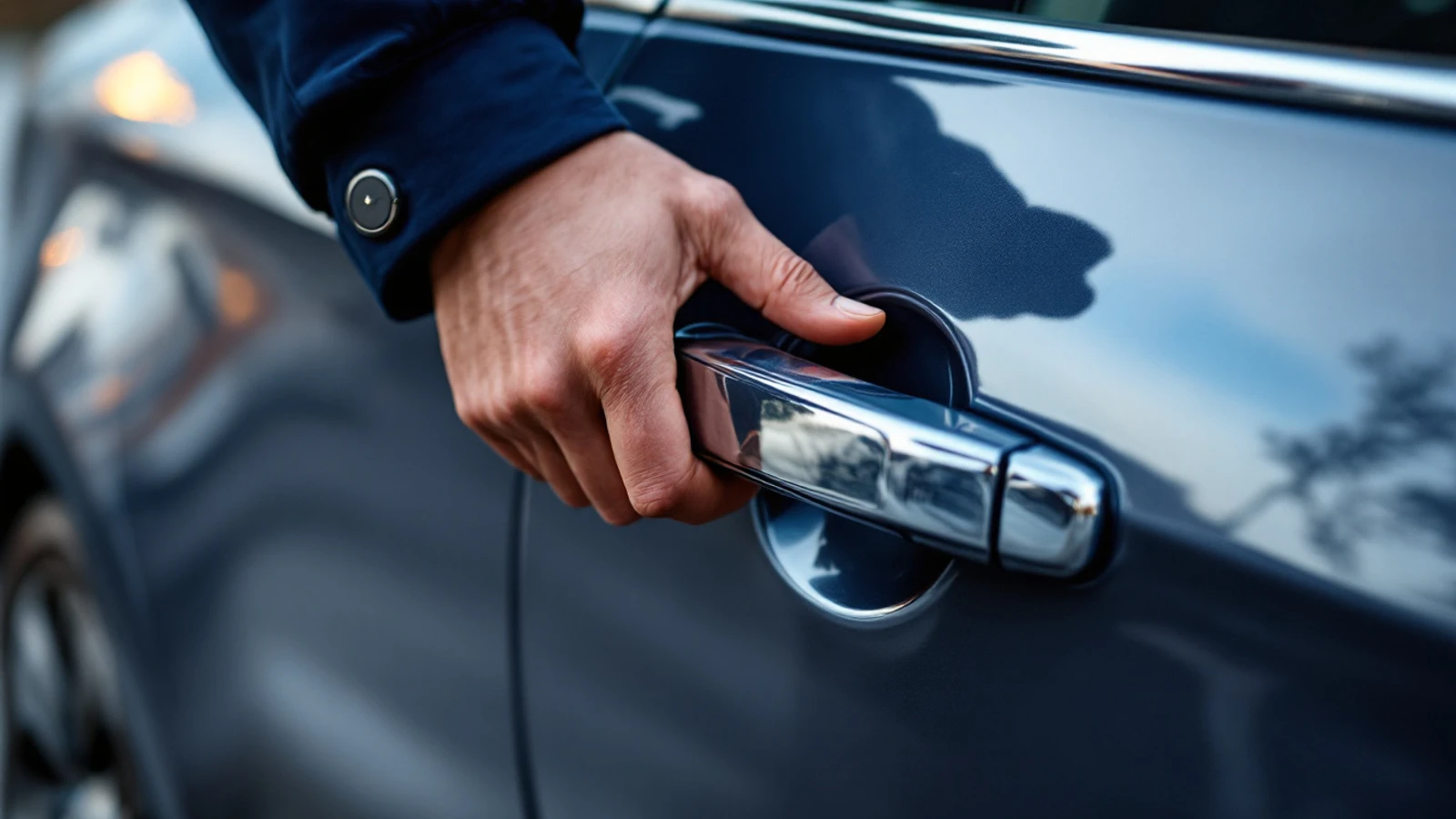
When touching the door handle no longer unlocks a keyless-entry car, the cause is usually one of three things: a weak battery in the key, a fault in one door's handle sensor or antenna, or interference from something in your pocket. The battery is the most common by a wide margin and costs a few dollars. As of September 2026, a replacement proximity key runs $280 to $475 on most mainstream brands if the key itself has genuinely failed, but that is the outcome to rule in last, not first.
Passive entry, the feature where the car unlocks as you touch the handle, is marketed under many names: Keyless Go, Comfort Access, Intelligent Access, Smart Entry, SmartAccess, Push-Button-Start. They all work the same basic way, and they all fail in the same few patterns. This guide walks through how the system works, how to tell which part has failed from the pattern of symptoms, and what each fix realistically costs.
How hands-free entry actually works
It helps to know the sequence, because each step is a place where things can break.
- You touch the handle or press a small button on it. That is a sensor in the handle telling the car someone wants in.
- The car wakes an antenna inside that door and sends out a low-frequency signal that only reaches a metre or so.
- The key in your pocket hears that weak signal, wakes up, and answers with a coded radio reply.
- The car checks the reply, and if it belongs to a key it trusts, it unlocks.
That whole exchange happens in a fraction of a second. The weak point is step three. Hearing a faint low-frequency signal and answering it quickly takes more from the key's coin cell than pressing a button does, which is why a tired battery kills hands-free entry long before it kills the buttons.
What the pattern of symptoms tells you
The most useful thing you can do before calling anyone is work out which pattern you have. Five minutes of testing narrows the cause more than any phone conversation.
| What you notice | Most likely cause | Typical fix |
|---|---|---|
| Hands-free entry stopped on every door; fob buttons still work | Weak coin cell in the key | Replace the cell, a few dollars |
| Hands-free works only when the key is held close to the handle | Weak coin cell, or a tired key antenna | Replace the cell; retest before anything else |
| One door handle ignores you; other doors and the tailgate work | Handle sensor, door antenna or door wiring | Car-side repair, quoted after diagnosis |
| Nothing works hands-free and buttons are dead too | Dead key battery or a failed key | Cell first; if that fails, test the key |
| Works with the spare key, not with your usual key | Your usual key is failing | Replace or re-house that key |
| Stopped after a car battery change or jump start | The car has lost its pairing with the key | Re-sync or reprogram the existing key |
| Works in the driveway, fails in certain car parks | Radio interference nearby | Usually nothing to fix |
The row that saves the most money is the one-door pattern. If the passenger door unlocks hands-free and the driver's door does not, the key has just proved it works, and buying a new one will not change anything.
Step one: rule out the key battery
Start here every time. Proximity keys run on a coin cell, usually a CR2032 or CR2025, that lasts roughly two to four years. The failure is gradual. Range shrinks first, hands-free entry becomes unreliable second, and the buttons are the last thing to go.
Replace the cell with the correct type, fitted the right way up, and retest all doors and the tailgate. If hands-free entry comes back, you are done. If it improves but is still patchy, try a second fresh cell, because a poor-quality or old-stock cell is a surprisingly common reason a battery swap appears not to work.
Our guide to a fob that only works up close goes further into range testing, and our guide to car key problems in cold weather covers why a borderline cell tends to fail on the first cold morning, which matters across the northern states we cover such as Illinois, Michigan and Ohio.
Step two: rule out interference
Passive entry works over very short distances with very weak signals, so it is easy to disrupt. Before concluding anything is broken, test like this:
- Take one key only, and put any other proximity key for the same car out of range.
- Hold that key in your hand rather than a pocket.
- Move it away from your phone, a laptop, a garage-door remote and any metal-lined or RFID-blocking wallet.
- Touch the handle.
If it works under those conditions, the system is fine and the problem is what the key lives next to. Some car parks and fuel stations also sit in radio noise that interferes with the handshake, which is why a car can work perfectly at home and fail at the same shop every week.
Step three: test every door and the tailgate
Walk around the car and try every handle that should respond, plus the tailgate or boot release if it is hands-free on your car.
If every door fails, the problem is on the key side or the whole passive-entry system. Go back to the battery, then try the spare key.
If one door fails and the rest work, the key is fine. The fault sits in that door: the touch sensor or small request button on the handle, the low-frequency antenna inside the door, or the wiring that runs through the door hinge. Driver's doors fail most often simply because they are opened most, and the hinge wiring flexes every time.
If only the tailgate fails, it is a tailgate sensor or antenna issue, which again is car-side.
Step four: test the spare key
If you have a second key, fit it with a fresh cell and test it.
If the spare works hands-free and your usual key does not, your usual key is failing. The usual causes are a cracked case that lets moisture reach the board, a failing antenna coil inside the key, or physical damage from drops. Sometimes the chip and board are fine and only the housing is damaged, in which case moving the internals into a new shell restores the key for roughly half the cost of a fresh key. Our guide to a key fob that is falling apart walks through that decision.
If neither key works hands-free, the fault is almost certainly on the car side, because two keys rarely fail at the same moment.
When the car, not the key, has lost the pairing
If hands-free entry stopped right after the car's 12-volt battery was replaced, disconnected or jump started, the car may have lost its pairing with the key. On some vehicles the remote and passive-entry functions need a re-sync after a power interruption even though the immobilizer still recognises the key and the car starts normally.
That is a re-sync of the existing key, not a new key. On our key fob programming page, programming-only work is listed at typically $60 to $150, against $280 to $475 for a new mainstream proximity key. Make sure anyone you call knows the timing, because "it stopped the day the battery was changed" points a competent specialist straight at the right fix.
What each fix costs
As of September 2026, these are the figures from our service pages. Car-side repairs to handle sensors and door antennas vary too much by vehicle to quote honestly without a diagnosis, so they are shown that way.
| Fix | Typical cost |
|---|---|
| Replacement coin cell | a few dollars |
| Re-sync or reprogram an existing fob | $60 – $150 |
| Move working internals into a new shell | roughly half the cost of a new key |
| New proximity key, mainstream brands (Toyota, Honda, Hyundai, Ford, GM) | $280 – $475 |
| New proximity key, luxury European brands (BMW, Mercedes, Audi, Range Rover) | $450 – $1,200 |
| Handle sensor, door antenna or door wiring repair | quoted per vehicle after diagnosis |
The per-brand proximity bands are on our proximity key replacement page, which is the page to check if you do end up needing a new key.
What a good specialist does before selling you a key
A competent mobile automotive specialist diagnoses before quoting. On a passive-entry complaint, that normally means:
- Checking the key battery with a meter rather than by eye.
- Confirming whether the key is transmitting when buttons are pressed.
- Checking with a diagnostic tool whether the car sees the key at each door, which separates a key fault from a door fault in minutes.
- Reading the body module for stored faults on a specific door antenna or handle sensor.
If that check shows a door-side fault, a specialist should say so plainly, and on some vehicles refer the handle or antenna repair to the dealer or an auto-electrical shop rather than selling you a key. A new key cannot fix a broken sensor in a door, and anyone who quotes one without testing each door has skipped the step that matters. Our guide to who can actually program a car key explains the tooling difference between a general locksmith and an automotive specialist.
When to call someone now rather than later
A handle that has stopped responding is an inconvenience while the buttons and the emergency blade still work. It becomes urgent in three situations:
- You cannot get in at all, because the buttons are dead and the emergency blade does not open the door. That is a lockout, and our guide to lockout versus key replacement explains what kind of help to ask for.
- The car will not start either. If the start button also reports that no key is detected, see our guide to a key not detected on a push-to-start car.
- Only one key exists and it is the one failing. Losing your only working key turns a spare job into an all-keys-lost job, which costs noticeably more. Adding a spare while one key still works is the cheapest moment to do it.
Getting an accurate quote
Tell whoever you call four things:
- Year, make and model, so they know which passive-entry system and which key to expect. Our makes directory lists the brands we cover.
- The pattern: every door or one door, buttons working or not, spare key working or not.
- Whether you have already replaced the coin cell, and with which type.
- Any recent car battery work, jump start or other electrical repair.
With those four facts, a specialist can usually tell you on the phone whether you need a cell, a re-sync, a key or a car-side repair, and quote accordingly. We match drivers with vetted automotive specialists in 150 metros across 15 states, from Seattle to Miami. Start at get help when you are ready.
Frequently asked questions
Why won't my car unlock when I touch the door handle with the key in my pocket?
The most common cause by a wide margin is a weak coin cell in the key. Passive entry, where the car unlocks as you touch the handle, needs the key to answer a low-frequency signal from an antenna in the door, and that is the first thing to fail as the battery weakens. The buttons on the fob often keep working for weeks after passive entry has stopped, which is why drivers are surprised. Replace the cell and retest before anything else.
The buttons on my fob still work. Can it still be the battery?
Yes, and that combination is the classic sign of it. Pressing a button makes the fob transmit on its own. Passive entry asks the fob to wake up, hear a weak signal from the car and answer in a fraction of a second, which takes more from a tired cell. So a fob whose buttons work but whose hands-free entry has stopped is very often a battery that is almost, but not quite, finished.
Only the driver's door handle stopped working. What does that mean?
If the passenger door and the tailgate still unlock hands-free but one handle does not, the key and its battery are almost certainly fine. The fault is local to that door: the touch sensor or request button in the handle, the antenna inside that door, or the wiring through the door hinge. That is a car-side repair, and a new key will not fix it.
How do I unlock the car if hands-free entry has stopped completely?
Use the fob buttons first. If those are also dead, almost every smart key hides a mechanical emergency blade inside the fob, released by a small slide or button. On many cars the driver's lock cylinder is behind a small cap on the door handle that pops off with the tip of the blade. Once inside, most push-button-start cars will still start if you hold the fob against the start button or place it in the marked backup slot.
How much does it cost to fix a keyless-entry door handle problem?
It depends entirely on the cause. A replacement coin cell is a few dollars. Re-syncing an existing fob is covered by the programming-only band on our key fob page, typically $60 to $150. If the key itself has failed, a new proximity key runs $280 to $475 on most mainstream brands and $450 to $1,200 on luxury European brands, as of September 2026. A failed handle sensor or door antenna is a car-side repair that is quoted per vehicle after diagnosis.
Can a failing door handle sensor be fixed by a locksmith?
Sometimes. A mobile automotive specialist can confirm whether the key is transmitting, check whether each door antenna is being answered, and program or replace the key if that is the fault. Replacing a handle sensor or a door antenna is closer to body and electrical work, and on some vehicles it is done by the dealer or an auto-electrical shop. A good specialist will tell you which side of that line your fault is on before quoting a key you do not need.
Can another key or my phone stop passive entry from working?
Yes. Two proximity keys for the same car in the same pocket, a key sitting next to a phone or a laptop, or a key in a metal-lined wallet can all interfere with the short-range handshake. Test with one key, held in your hand, away from other electronics, before concluding anything is broken.
Should I worry about theft if my hands-free entry stops working?
Not on its own. A handle that stops responding is a reliability fault, not a sign of tampering. If you also find a key missing, or you suspect a key was copied, ask a specialist to erase all existing keys from the car and program fresh ones rather than simply adding a new one.