Lockout or Key Replacement? The $50 Question People Answer Wrong
Locked out and keys visible on the seat is a $50 to $150 problem. Keys genuinely gone is a $280 to $475 problem. Drivers routinely buy the second when they needed the first — here is how to tell them apart before you call.
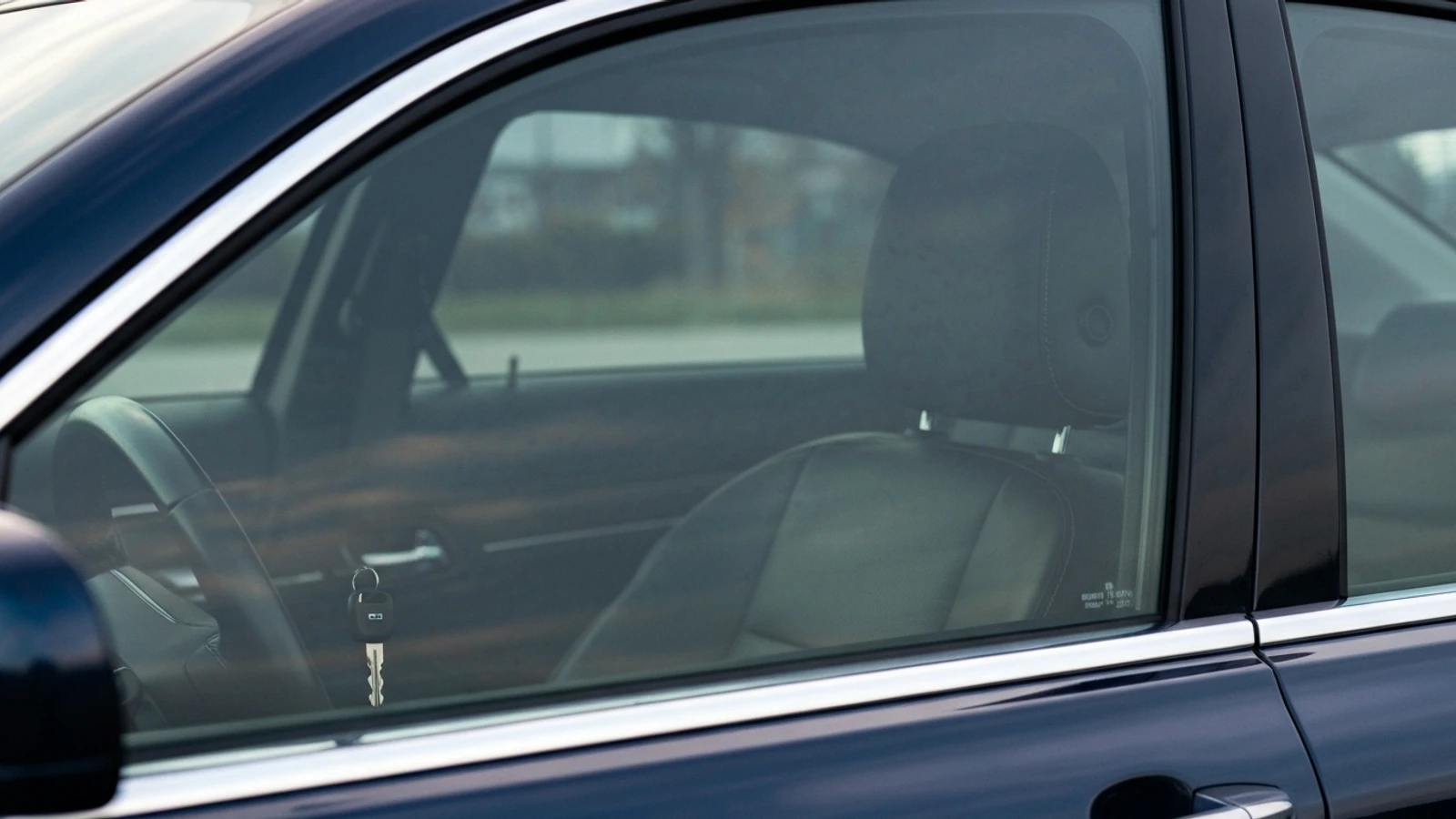
Two drivers call for help on the same afternoon. Both say the same sentence: "I can't get into my car."
One of them will pay $50 to $150. The other will pay $280 to $475, or considerably more on a premium vehicle. The difference has nothing to do with who they called, and everything to do with a distinction neither of them made on the phone.
This guide draws that line clearly, because getting it wrong in the expensive direction is common — and entirely avoidable in about ninety seconds.
All figures are as of August 2026 and reflect the ranges published across our service pages.
The distinction in one line
A lockout is a door problem. A key replacement is a security problem.
If your key exists and functions, and is simply somewhere you cannot reach — on the seat, in the boot, in a coat inside the house — the vehicle's security system is entirely happy. Nothing needs to be programmed. A technician opens the door, you retrieve your key, and you drive away.
If your key is gone, broken, or no longer recognised by the car, the vehicle's immobilizer is now part of the job. A new key has to be sourced, cut, and paired to the car electronically. That programming step is where nearly all of the cost lives.
What each one costs
| Situation | Service you need | Mobile locksmith cost |
|---|---|---|
| Keys visible on the seat | Vehicle lockout | $50 – $150 |
| Keys locked in the boot | Vehicle lockout | $50 – $150 |
| Keys at home, car locked | Vehicle lockout | $50 – $150 |
| Key snapped, half in your hand | Key replacement | $180 – $475 by type |
| Only key genuinely lost | Key replacement, all keys lost | Base + $100 – $250 |
| Spare exists at home, one key lost | Spare key replacement | $140 – $400 by type |
| Remote buttons stopped working | Fob reprogramming | $25 – $60 |
| Key turns, engine will not start | Diagnosis first | Depends on cause |
The spread between the top rows and the middle rows is the whole point of this article. A misdescribed lockout can cost five times what it should.
The ninety-second self-check
Before you call anyone, answer three questions in order. They resolve the category almost every time.
1. Do I know where my key physically is?
If yes — on the seat, in the boot, in your kitchen — this is a lockout. Say the words "I'm locked out, my key is on the seat" when you call. That sentence alone gets you quoted in the $50 to $150 band rather than the key-replacement band.
2. If I could reach it, would it work?
A key you can see through the window works. A key that snapped in the ignition last week does not. If the answer is no, you need a replacement regardless of where the pieces are.
3. Is there any other working key anywhere?
This is the highest-value question on the page, and drivers routinely answer it too quickly. A spare in a kitchen drawer, a key your partner carries, the second key from the original purchase — any of those changes the job from an all-keys-lost procedure into an add-a-key procedure, and removes the $100 to $250 surcharge.
If retrieving that spare takes an afternoon, it is frequently worth the afternoon.
Where drivers get it wrong
Assuming a lost key means all keys lost. It only means that if no working key exists anywhere. People forget the spare from the dealership envelope, or the key their partner has been carrying since the car was bought. Check properly before booking an all-keys-lost job — the surcharge is real money.
Treating a broken key as a lockout. A key that snapped is a replacement, even though the immediate symptom is the same: you are standing outside a car you cannot start. The half in the lock may also need extraction, which a shop should be told about in advance.
Requesting a key for a remote fault. If the engine starts normally but the buttons no longer lock the doors, the key is fine. Reprogramming an existing fob runs $25 to $60; being sold a full smart key for this is one of the most common overpays we see. Our key fob programming page covers which faults fall into which category.
Requesting a key for a no-start. If the doors unlock and the key turns, the mechanical key is doing its job. The fault may be the transponder chip, the immobilizer, or something with no connection to the key at all — a battery, a starter, a fuel-system fault. Ordering a key to solve it is expensive guessing. Describe the symptom, do not prescribe the service.
When a lockout quietly becomes a replacement
Occasionally the categories overlap, and it is worth knowing the two ways that happens.
The first is the boot with no interior release. If your key is locked in a boot on a vehicle whose only boot access is the key itself, the opening job is harder — still a lockout, but a more involved one. Tell the shop where the key is, not just that you are locked out.
The second is the key you can see but that turns out not to be yours to use. Any legitimate technician will confirm you are entitled to access the vehicle before opening it — expect to show identification and proof of ownership or authority. This is standard practice everywhere and not an accusation; a shop that skips it is one you should be wary of for other reasons.
The third category nobody names: the key that exists but stopped working
Most guidance splits this into two boxes. There is a third, and it accounts for a surprising share of calls.
Your key is in your hand. Nothing is lost. But something no longer works — and which something decides whether this costs $25 or $475.
| Symptom | Likely category | Typical cost |
|---|---|---|
| Buttons dead, engine starts normally | Remote fault or flat battery | $25 – $60, or a coin cell |
| Fob works only very close to the car | Weak fob battery | A few dollars |
| Blade turns, engine cranks but won't run | Transponder or immobilizer | Diagnosis first |
| Engine fires, then dies after a second | Immobilizer, or a worn ignition cylinder | Diagnosis first |
| One key works, the other does not | The failed key, not the vehicle | $140 – $400 |
| Blade won't turn in the lock at all | Worn key or lock cylinder | $140 – $450 |
| Everything intermittent after water exposure | Fob hardware damage | Replacement likely |
The first two rows are the ones worth internalising, because they are the cheapest problems in this entire category and they get misdiagnosed upward constantly. A fob with a dying coin cell presents exactly like a fob that has "lost its programming" — reduced range, intermittent buttons, needing to stand closer to the car. Replacing the battery costs a few dollars and takes two minutes with a small screwdriver.
Two of those rows deserve their own walkthrough, because both are routinely mispriced as replacements when they are not. An engine that fires and dies within a second has had fuel and spark, which rules out the battery and the starter and leaves a short list — most often the immobilizer refusing the key, or a worn ignition cylinder dropping the RUN circuit as the key springs back. The free dashboard test that separates those two is in car starts then dies immediately. And a vehicle that accepts one key while refusing another has already proved its immobilizer, antenna and key registry are all healthy — the fault is inside the rejected key, which is the cheap half of every table on this site. That one is walked through in one key works, the other doesn't.
If the engine still starts normally when you press the button or turn the key, your key's security credential is intact. Whatever is wrong is a remote or a battery problem, not a programming problem, and it should not be priced as a replacement. The key fob programming page covers which faults fall where.
Proving the car is yours
Worth knowing in advance so it does not feel like an obstacle at the roadside: any legitimate technician will confirm your entitlement to the vehicle before opening it or programming anything.
Expect to provide photo identification and something linking you to the car — registration, insurance documentation, a purchase agreement, or a title. If the vehicle is registered to someone else, a company, or a leasing firm, that adds a step, so it is worth resolving before a technician is standing in a car park.
This is not a formality invented to slow you down. It is the mechanism that makes the whole system work: if a stranger could get a car opened and a key programmed by describing a registration plate, an immobilizer would be decorative. On many 2010-and-newer vehicles the requirement runs deeper — per NASTF's Secure Data Release Model, obtaining key data requires the technician to hold an active SDRM registration and to document the ownership check.
A shop that skips this step entirely is not being efficient on your behalf.
Getting a lockout done properly
The service is fast and should be uneventful. What defines a good one:
- No damage. Per ALOA service standards, a vehicle opening should leave no damage to the door, frame, glass or weatherstripping. Purpose-made tools exist for exactly this.
- Proof of entitlement checked before the door is opened.
- A quoted figure before dispatch, plus any travel charge for outlying addresses stated up front. Our guide to drive-out and mileage fees covers when that line is legitimate.
- Credentials. In Texas, locksmiths are regulated under the Department of Public Safety Private Security Program; other states we cover use different authorities. Ask which applies where you are.
If anyone proposes forcing a window or prying a door frame, stop. The repair costs more than the lockout did.
What to do in the ten minutes before help arrives
Once the call is made, a few things make the visit go faster and cheaper.
Find your VIN. It sits at the base of the windscreen on the driver's side, readable from outside the car — which is exactly why it is placed there. On a replacement job it determines the correct blank and the programming path, and having it ready is the difference between a quote that holds and one that moves. Our guide to what the VIN changes about your quote covers why it matters so much.
Locate your documentation. Photo identification plus registration, insurance or a purchase agreement. The technician needs to confirm you are entitled to the vehicle before opening it or programming anything, and hunting for paperwork with someone standing beside you wastes the visit.
Confirm the spare situation properly. Not "I think there's one somewhere" — actually check. This single answer decides whether the all-keys-lost surcharge applies, and it is worth a phone call home.
Note where the car is precisely. A level in a multi-storey car park, a bay number, a cross street. Technicians lose real time circling for a vehicle described only by colour.
Stay with the vehicle if it is safe to do so. Not always possible, but a job where the owner is present completes in one visit far more often than one where the technician arrives to an empty car and a phone that goes unanswered.
A note on the tempting shortcuts
Two things circulate widely and are worth addressing directly, because both cost more than they save.
Coat hangers and wedges. Modern doors carry side-curtain airbags, wiring looms and electronic latch components inside the panel. The tools a professional uses are shaped specifically to avoid them. Improvised entry damages weatherstripping and paint at best, and airbag wiring at worst — and none of that is covered by anything.
Hiding a spare on the vehicle. A magnetic box under the bumper turns your immobilizer into decoration. If the reason you are reading this is that your car came with only one key, the answer is a second key stored somewhere off the vehicle, not a bypass attached to the outside of it.
The lesson worth taking away
The single most useful thing you can do while standing next to a locked car is describe your situation precisely instead of requesting a service. "My key is on the passenger seat" and "I've lost my only key" are two different jobs with a several-hundred-dollar gap between them, and only you can tell the shop which one you have.
And if this happened because your car came with exactly one key — a very common situation on used purchases — the fix is a spare made while the current key still works. It costs $140 to $400 depending on type, it avoids the all-keys-lost surcharge permanently, and it turns the next incident into a $50 lockout instead of a $475 emergency.
Not sure which category you are in? Request a specialist and describe the situation — we will match you to a vetted local technician for the job you actually need. You can also review published pricing for lost car keys or find an automotive locksmith near you.
Frequently asked questions
What is the actual difference between a lockout and a key replacement?
A lockout is a door problem: the key exists and works, it is simply on the wrong side of the glass. A technician opens the door and the job is done. A key replacement is a security problem: the key is gone or broken, so a new one has to be cut and paired to the vehicle's immobilizer. The first is mechanical and quick, the second involves programming — which is where the cost sits.
How much cheaper is a lockout?
Substantially. As of September 2026, a vehicle lockout where no key is needed runs $50 to $150 through a mobile locksmith. A mainstream smart key replacement runs $280 to $475, and a luxury European smart key runs $450 to $850. If your key is genuinely sitting on the seat, you are looking at the smaller of those numbers by a wide margin.
My key is locked in the boot and I cannot see it. Which is it?
Still a lockout, as long as the key exists and works. Where the key is inside the vehicle changes the access approach, not the category of job. Tell the shop where you believe it is, because a key in the boot of a car with no interior boot release is a different opening problem than a key on the driver's seat.
I lost my only key but I have a spare at home. What do I need?
Neither, strictly, until you decide. If you can retrieve the spare, you have a working vehicle and no urgent job at all. What you should do afterwards is have a replacement made while that spare still works, because a spare-key job avoids the all-keys-lost surcharge of $100 to $250 entirely. Retrieving the spare converts an emergency into a planned, cheaper appointment.
The key turns but the car will not start. Is that a key problem?
Possibly not. If the doors unlock and the key physically turns, the mechanical side of the key is fine, which points at the transponder chip, the immobilizer, or something unrelated to the key altogether. Describe the exact symptom to the shop rather than requesting a service, because ordering a replacement key for a non-key fault is one of the more expensive misdiagnoses available.
Will a lockout service damage my door or weatherstripping?
Not when performed properly. A qualified technician uses purpose-made tools designed for modern vehicles, and per ALOA service standards the job should leave no damage to the door, frame or weatherstripping. If someone arrives proposing to force a window or bend a door frame, stop the job.
Should I just call roadside assistance instead?
For a straightforward lockout it is worth checking, because many motor clubs and manufacturer roadside programmes include vehicle opening. What they generally do not include is key cutting and programming. So roadside can be a good answer to a lockout and rarely a complete answer to a lost key.