One Key Works, the Other Doesn't: What Actually Failed
When a car accepts one key and refuses another, the vehicle has already told you the fault is in the key rather than the car. Which part of the key failed, and what each fix costs.
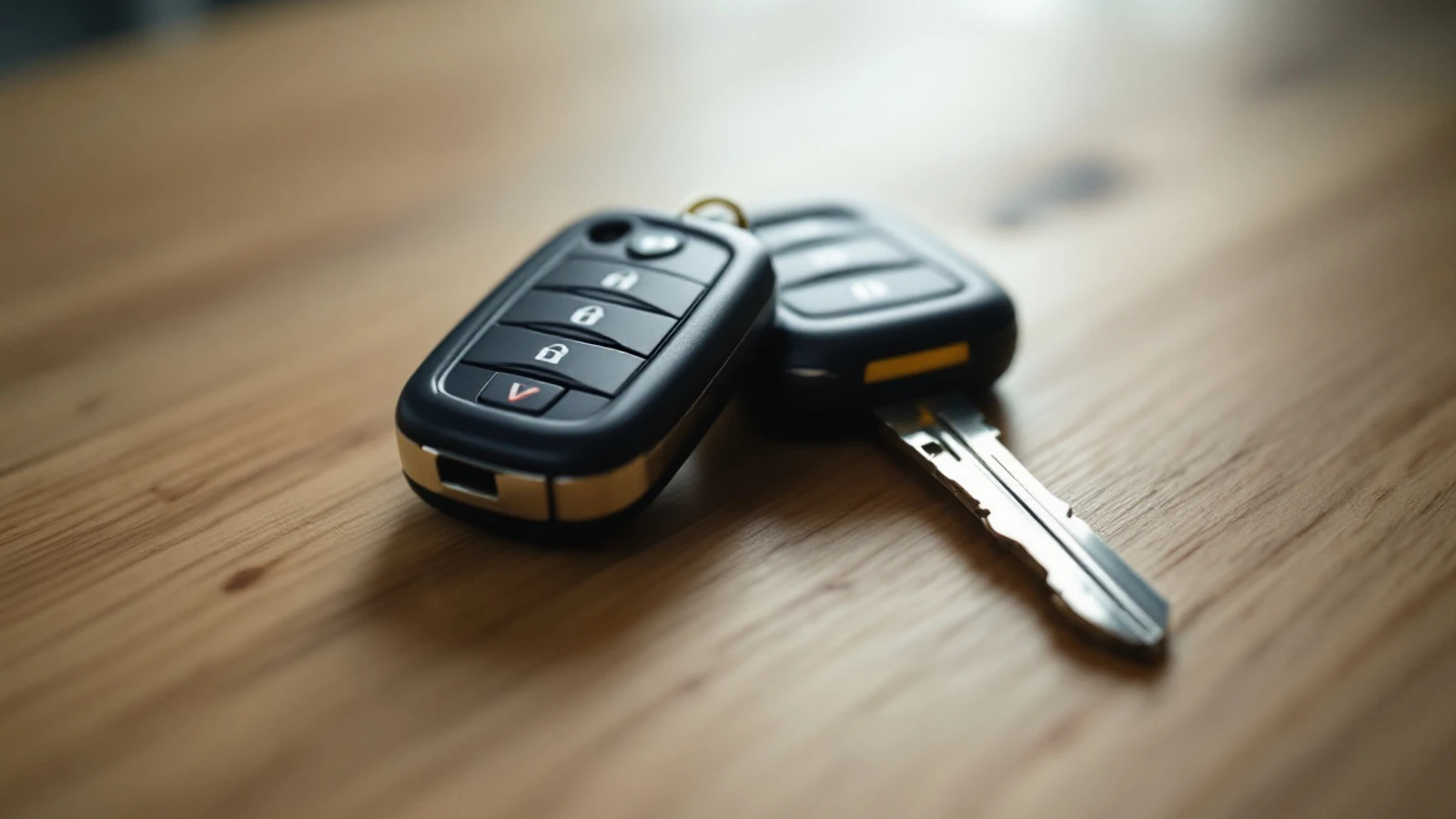
Your car accepts one key and refuses the other. Frustrating, but the vehicle has just done you a favour.
A car that starts with any key has a functioning immobilizer, a functioning antenna ring around the ignition, and an intact key registry in the module. All the expensive components are demonstrably fine. Whatever is wrong is inside the key it rejected.
That is a much smaller and much cheaper problem than the one most people assume they have when they call. This guide narrows it further — down to which part of the key failed, what it costs to fix, and the one scenario where the car quietly did this to you on purpose.
First, decide which part of the key stopped working
A key does two independent jobs. The blade is mechanical: it lifts wafers in the cylinder so it can turn. The chip is electronic: it answers the immobilizer's challenge so the engine is allowed to keep running. They fail separately, and the symptom tells you which one went.
| What happens with the bad key | What failed |
|---|---|
| Will not enter, or enters and will not turn | The blade |
| Turns only with jiggling or extra force | The blade, and probably the cylinder too |
| Turns normally, engine cranks but never fires | The chip or its pairing |
| Turns normally, engine fires then dies in a second | The chip or its pairing |
| Unlocks the doors by button but will not start | The chip specifically — the radio side is fine |
| Nothing at all, no dash lights, no crank | Not a key problem — look at the battery |
On a push-to-start vehicle there is no blade, so the top half of that table disappears and the answer is always electronic.
That distinction decides who you call and what you pay. A blade problem may not need a new key at all — it may need the cylinder looked at. A chip problem is squarely key work.
The five things that actually cause this
1. The registry was wiped when a new key was made
This deserves the top spot because it is the most common version we hear, and because people reasonably assume something went wrong.
On many makes, the all-keys-lost programming procedure does not add a key — it clears the registry and writes a fresh set. Any key not physically present in that session is erased from the vehicle's memory. It is not damaged. It simply no longer exists as far as the car is concerned.
The tell: your other key worked perfectly until the day you had a new one made, and stopped immediately afterward.
This is documented manufacturer behaviour, not a technician error — but it should have been explained before the work started, and any key you still own should have been brought along to be re-added in the same session. It is exactly the kind of thing our guide to what to do after you get a new car key tells you to check before the technician leaves.
The fix is usually a straightforward re-pair at the low end of the price range, with one exception covered below.
2. The transponder chip is damaged
The chip is not powered. The antenna ring around the ignition energises it inductively every time you turn the key, which is why a transponder does not "go flat" the way a fob battery does.
What it does do is break. A drop onto concrete, a cracked key head, a full laundry cycle, or years of leverage against a heavy keyring will eventually kill one.
The tell: the key turns and the engine behaves as though the immobilizer rejected it — cranks without firing, or fires and dies in a second. If it fires then dies, our guide to a car that starts then dies immediately walks the wider cause list, though with a second key that works you have already excluded most of it.
3. The blade is worn past its tolerance
Underestimated, and the one that most often gets misdiagnosed as an electronic fault.
Your everyday key has spent years being turned under the weight of whatever else is on the ring. Its cuts have rounded. Meanwhile the spare has lived in a drawer and is effectively new. Both chips are fine. Only one blade still lifts the wafers reliably.
The tell: the bad key feels different going in. Notchy, loose, needs jiggling, or needs to be pulled back a millimetre before it will turn.
The complication: if the everyday key is worn, the cylinder it has been wearing against usually is too. Replacing only the key can buy a partial fix that degrades again. Our guide to a car key that won't turn in the ignition covers how to tell key wear from cylinder wear, and car ignition repair cost covers what the cylinder side costs.
4. The fob battery is dead — on a proximity key
Specific to push-to-start vehicles, and the cheapest possible outcome.
A proximity fob's coin cell powers the radio that announces its presence. As it fades, range shrinks before the fob dies outright — which reads as a key that "sometimes works." Your other fob has a fresher cell and works normally.
The tell: holding the bad fob directly against the start button, or in the marked backup slot if your vehicle has one, starts the car. That backup coil reads the chip passively with no radio involved, which is precisely why it works when the battery does not.
If that test starts the car, buy a coin cell. Our guide to a fob that only works up close covers the gradual-range-loss pattern in full.
5. It was a clone, not a programmed key
This one surprises people, and it is worth understanding before you pay to "re-pair" something that cannot be re-paired.
A programmed key gets its own registered slot in the vehicle's key registry. The car knows it as a distinct key.
A cloned key carries a copy of an existing key's identity. The vehicle cannot tell the two apart — it never had a separate record of the clone at all. Cloning is faster and cheaper, which is why budget and online-sourced keys are often clones.
The consequences show up exactly here. A clone cannot be re-added to a registry it was never in. It will not work on systems that expect each key to hold distinct rolling-code state. And if the key it was cloned from is gone, there is nothing left to clone from.
The tell: the key was noticeably cheap, was bought online or cut at a kiosk, and worked at first. Our guide to customer-supplied key fobs sets out when bringing your own part works and when it wastes the visit.
The five-minute test sequence
Run these in order before calling anyone. Each is free and each removes a branch.
- Try the bad key in a door lock, if your vehicle has a keyed door. If it turns the door but not the ignition, the blade is fine and the problem is electronic — or the ignition cylinder specifically is worn.
- Compare the two blades side by side in good light. Rounded shoulders and shallow valleys on one of them are visible to the naked eye once you have something to compare against.
- Press the buttons on the bad key. If the doors respond, the battery and radio work, which isolates the fault to the transponder.
- On a push-to-start car, hold the bad fob against the start button and press. If it starts, it is the battery.
- Ask yourself when it last worked, and what happened around then. "It stopped the day I had a new key cut" is a completely different answer from "it has been getting worse for months."
Five minutes of that, and you can describe the fault accurately enough for a specialist to quote it over the phone.
What each outcome costs
| Outcome | Fix | Cost, as of September 2026 |
|---|---|---|
| Fob battery dead | Coin cell | a few dollars |
| Existing key erased from registry | Re-pair with a working key present | low end of the spare-key range |
| Transponder chip damaged | Replacement transponder key | $140 – $220 |
| Proximity fob failed | Replacement fob programmed | $240 – $400 |
| Blade worn, cylinder good | New key cut to code | $140 – $220 |
| Blade worn, cylinder also worn | Cylinder rekey or replacement | $220 – $450 |
| Key was a clone, source key gone | New key programmed properly | $140 – $400 by key type |
Those figures are all-in — parts, cutting, programming and the visit — and are drawn from the ranges published on our service pages.
Notice what is missing from that table: every all-keys-lost row. Because one key still works, none of them apply to you. That is the cheap half of every price list on this site, and it is a position you hold only until the working key fails too.
Why this is more urgent than it feels
A car with one working key runs perfectly. Nothing about the drive to work tells you anything is wrong. It is genuinely easy to leave this for months.
The arithmetic argues against that.
Right now, a replacement is a spare-key job: $140 to $220 for a transponder, $240 to $400 for a proximity fob, and your vehicle stays drivable throughout because the working key covers you.
If the working key then fails, breaks, or goes missing, the same replacement becomes an all-keys-lost job: $220 to $320, or $320 to $475 on a proximity vehicle — and the vehicle is immobile from the moment it happens until a technician reaches it.
The gap is not a penalty. It is a genuinely longer procedure, which we break down in what the all-keys-lost surcharge covers. But the choice between paying the smaller number on your own schedule and the larger number in a car park is a real one, and today you still have it.
What not to do
Do not throw the dead key away. If the fault is a wiped registry, that key is intact hardware and can often be re-paired for less than a new one. If it is a worn blade, it still carries a good chip that can sometimes be transferred.
Do not buy a replacement online expecting it to solve a blade problem. A key cut from a photo or a guess will not turn a worn cylinder any better than the one you have.
Do not assume the working key is fine. If the bad key failed from wear on a heavy keyring, the good one is on the same ring living the same life.
Do not let anyone quote an all-keys-lost price. You are not in that situation, and the working key is the proof. If a shop quotes the higher number anyway, say so — the distinction between what your vehicle requires and what a shop is set up to charge for is the subject of who can actually program a car key.
Getting an accurate quote
Four sentences let a specialist price this without seeing the vehicle.
Which key fails and how. "Turns fine, cranks, dies" and "will not turn at all" are different jobs.
Whether the working key still works reliably, or is starting to feel notchy too.
When it stopped and what happened around then — particularly whether a new key was made recently.
The VIN, which resolves the key family and the immobilizer generation in one string, for the reasons in what the VIN changes about your quote.
Answer those and the number quoted is the number the technician arrives with — and you will still be holding a working key while the second one is made, which is the whole advantage of dealing with this now.
Frequently asked questions
One of my car keys works and the other doesn't. Is the car broken?
Almost certainly not, and that is genuinely good news. A vehicle that accepts one key has a working immobilizer, a working antenna ring and an intact key registry. If it rejects a second key, the fault is inside that key — its chip, its blade, or its pairing. You have already completed the most useful diagnostic step in the whole process without meaning to.
My old key stopped working right after I had a new one made. Why?
Because on many makes the all-keys-lost programming procedure wipes the entire key registry before writing new entries. If the technician programmed from scratch and your old key was not present to be re-added in the same session, it was erased. This is normal, documented manufacturer behaviour rather than a mistake, but it should have been explained beforehand. The old key is not broken and can usually be re-paired at a modest cost, provided it was not a cloned key.
How do I tell whether it's the chip or the blade that failed?
Watch what the car does. If the key turns the ignition normally and the engine cranks or fires but will not keep running, the blade is fine and the chip or its pairing is the problem. If the key will not enter smoothly, will not turn, or turns only with jiggling, the blade is worn and the chip is irrelevant to the symptom. On push-to-start vehicles there is no blade in the equation, so the answer is always the electronics.
Can a worn key blade stop a car from starting even if the chip is fine?
Yes. The blade has to lift the wafers inside the cylinder far enough to let it rotate. A key worn by years on a heavy keyring loses that precision, and a cylinder worn in parallel makes it worse. The classic pattern is a newer spare that works perfectly and an everyday key that has quietly become unreliable. If both the key and the cylinder are worn, replacing only the key buys you a partial fix.
Is a cloned key different from a programmed key?
Yes, and the difference matters when one key stops working. A programmed key gets its own registered slot in the vehicle's key registry. A cloned key carries a copy of an existing key's identity, so the vehicle cannot tell the two apart and never had a separate record of it. That means a clone cannot be re-paired if it is lost from the registry, it does not work with rolling-code systems that expect distinct keys, and it usually cannot be re-added later without cloning again from a working key.
My fob unlocks the doors but won't start the car. Is that the same problem?
It is a different one, and the distinction is useful. Door unlocking uses the fob's battery-powered radio. Starting uses the passive transponder, which the vehicle powers inductively and which does not depend on the fob battery at all. A fob that unlocks but will not start has a working battery and radio, and a failed or unpaired chip. It is the clearest possible evidence that the fault is the transponder specifically.
How much does it cost to fix the key that stopped working?
Because a working key survives, you are in the cheaper half of every price table. Re-pairing an existing key is at the low end. A replacement transponder key runs $140 to $220 and a replacement proximity fob $240 to $400, both as spares rather than all-keys-lost jobs. If the fault turns out to be a worn ignition cylinder rather than the key, that runs $220 to $450. All figures are as of September 2026.
Should I keep using the key that still works?
Use it, but treat the situation as urgent rather than solved. You are now one failure away from an all-keys-lost job, which costs meaningfully more and immobilises the vehicle while you arrange it. Getting back to two working keys while one still works is the cheapest version of this decision you will ever be offered.