Why a Locksmith Asks for Your VIN — and What Changes If You Don't Have It
The VIN is what turns a rough estimate into a quote that holds. Here is exactly what a shop reads from it, why a number given without it can move on arrival, and where to find yours when you are locked out of the car.
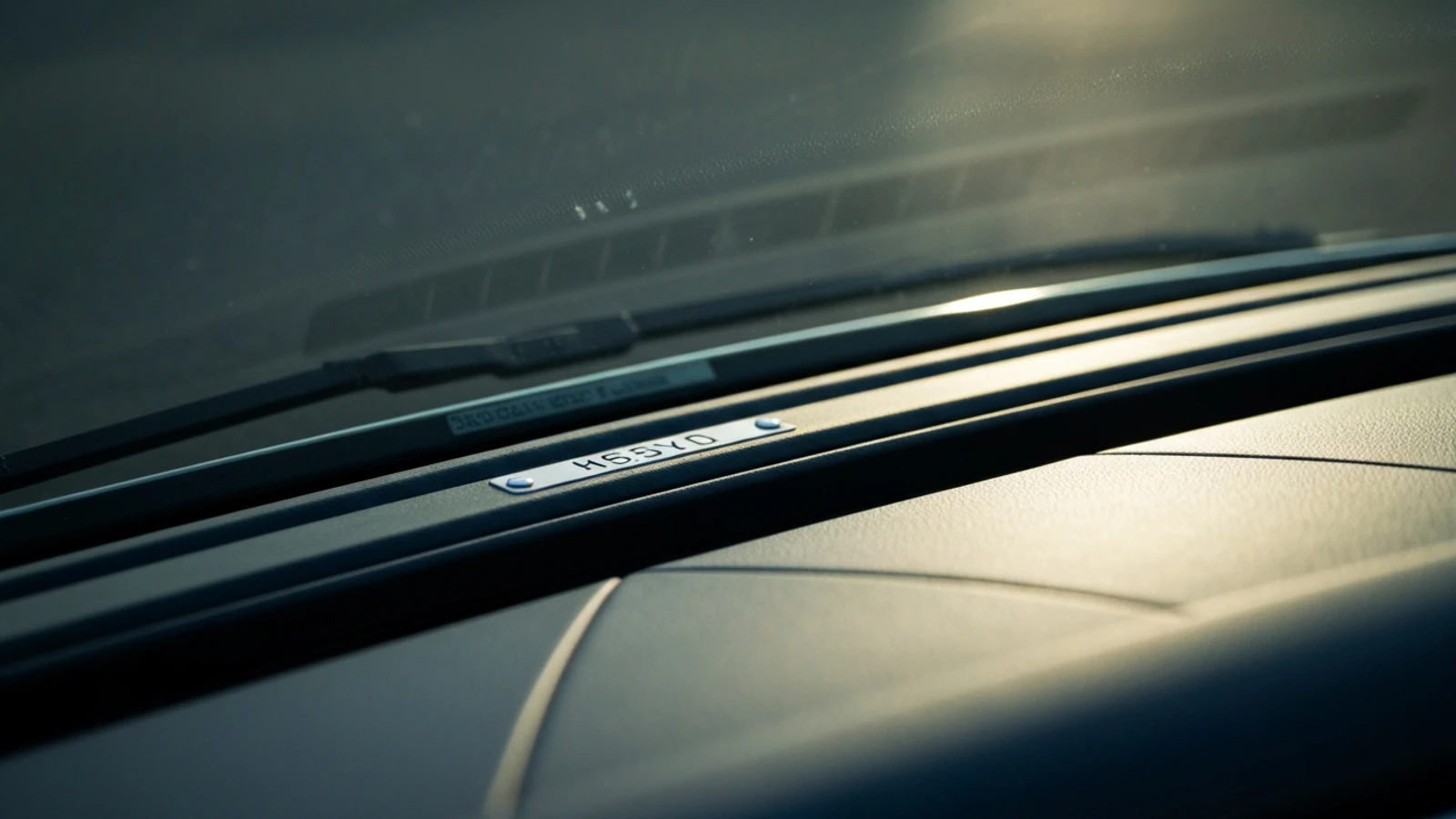
Somewhere in the first minute of a competent car key phone call, someone will ask for seventeen characters. It can feel like an obstacle when you are standing next to a car you cannot start and want a number.
It is the opposite. The VIN is the single thing that converts a rough estimate into a figure that will still be the figure when the technician arrives. This guide explains what a shop actually reads from it, what happens to your quote without it, and where to find yours when the car is locked.
Figures below are as of September 2026 and reflect the ranges published across our service pages.
What the VIN actually tells a locksmith
Three things, each of which independently affects your price.
The exact security architecture. This is the big one, and it is the reason model and year alone are not enough. Manufacturers change immobilizer systems mid-generation and vary them across trims. Two vehicles that look identical in a car park — same model, same year — can use different chip families depending on build date and specification. The VIN resolves which.
The correct blank. Frequency, chip type, blade profile and fob shape all follow from the specific build. A technician who arrives with the wrong blank cannot do the job, which converts a completed visit into a second appointment.
The key code, on many vehicles. This is what allows a blade to be cut to the factory specification rather than copied from an existing key. It is how a key gets made when every key is lost, and it is one of the more genuinely useful things the number unlocks.
What changes in your quote
| With the VIN | Without the VIN |
|---|---|
| A specific figure for your vehicle | A category range |
| Correct blank confirmed before dispatch | Blank chosen from an educated guess |
| Programming path known in advance | Established on arrival |
| Restricted-model issues surface on the phone | Surface at your car |
| Realistic time estimate | Approximate |
| The quote holds | The quote can move |
The fourth row deserves attention. Certain 2018-and-newer BMW, Mercedes-Benz and Range Rover models carry OEM key-coding restrictions that route the work to a dealer regardless of who you call. That is far better to discover during a phone call than after a technician has driven to you — and the VIN is what surfaces it.
Boundary years, where the VIN is not optional
The second row matters most on vehicles built in a year where a manufacturer changed key generations mid-stream, because the model year alone points at two different parts and two different prices.
Ford has three of these — 2003, 2011, and the 2018-to-2021 window where trim rather than year decides whether a truck is proximity or bladed. A 2011 Expedition quoted from the year alone can be out by roughly $90 in either direction; the F-150 and Expedition key types by year breakdown shows where the seams fall. Chevrolet is worse, running four immobilizer generations that overlap at 2003 and again around 2015 — the Chevrolet key replacement cost guide sets out how a single nameplate spans $115 to $400 depending on which side of a seam it lands.
On a boundary-year vehicle, a shop quoting confidently without the VIN is guessing, however assured it sounds.
Why a no-VIN quote can move
There is a legitimate version and an illegitimate version of a quote given without the VIN, and it is worth being able to tell them apart.
The legitimate version: a shop gives you a range and says it is a range. "For a 2016 Camry smart key you are looking at $280 to $420, and I can tighten that with your VIN." That is honest, useful, and accurate — those published ranges exist precisely because they hold across most builds.
The illegitimate version: a firm-sounding low number, given without establishing your key type or your VIN, which grows once someone is standing at your car and you have stopped comparing options. The absence of a VIN request is not proof of this, but it removes the main defence against it.
The distinction is not really about the VIN. It is about whether the shop is describing your vehicle or a category. Our guide to who can actually program a car key covers the other credential questions that separate the two.
Where to find yours
You almost never need to get into the car:
- Base of the windscreen, driver's side — visible from outside, which is exactly why it is there. This is the one that works while locked out.
- Driver's door jamb sticker — only if the door is open.
- Insurance card and registration document — both carry it.
- Purchase or finance paperwork.
- Your manufacturer's app or online owner account, which most brands now provide.
If you are reading a windscreen plate through glass at an angle, photograph it and zoom in rather than reading it aloud. Transposed characters are common and produce the wrong blank, which is the same outcome as not having provided it at all.
Is it safe to hand over?
Yes, and the concern is worth addressing directly because it comes up often.
The VIN is a public identifier. It sits behind the windscreen of every car on every street, legible to anyone walking past. It is on documents you hand to insurers, mechanics and buyers routinely.
What it does not do is open your car. Obtaining key data from a VIN requires the requester to establish that you own the vehicle, and on many 2010-and-newer vehicles it requires the technician to hold an active registration under NASTF's Secure Data Release Model — a credential involving a background check and ongoing compliance. That system exists specifically so that a public identifier cannot become a security weakness.
Expect to show identification and proof of ownership when the technician arrives. A shop that skips that step is not doing you a favour.
What it does not fix
The VIN narrows the quote. It does not remove the two variables that dominate your price:
Key type. A basic transponder runs $180 to $260; a mainstream smart key runs $280 to $475; a luxury European smart key runs $450 to $850. The VIN confirms which of those you are, but it does not change which one you are. Our guide to identifying your key type gets you there in thirty seconds.
Whether a working key survives. All-keys-lost adds $100 to $250 through a locksmith and $200 to $500 through a dealer, plus a tow. No amount of VIN precision avoids that — only a spare made in advance does.
Nor does the VIN resolve travel charges on outlying addresses, which are a function of where you are rather than what you drive. That is covered in drive-out and mileage fees.
Reading the number correctly
Seventeen characters, and two of them cause most of the errors when read aloud.
There is no I, O or Q in a VIN. The standard excludes them precisely because they are confusable with 1 and 0. So if you think you are seeing an O, it is a zero. If you think you are seeing an I, it is a one. That single rule resolves the majority of transcription mistakes.
A few other practical notes:
- Photograph it rather than reading it. Through raked windscreen glass at an angle, characters blur into each other. A photo can be zoomed; a phone call cannot be re-read.
- The last six characters are the serial, unique to your vehicle. If a shop asks for "the last eight," that is a normal request, not a partial one.
- Check it against a document if you can. Your insurance card and registration both carry it, and cross-referencing catches an error before it becomes a wrong blank.
A transposed character produces one of two outcomes: a lookup that fails, which is merely annoying, or a lookup that succeeds against a different vehicle, which is worse — because the quote will sound confident and the blank will be wrong.
What the VIN does not entitle anyone to
It is worth being precise about this, since the reassurance in the previous section can sound like hand-waving.
Knowing a VIN does not let anyone obtain a working key for your car. The gap between the two is a deliberate, documented control system.
To have a key made against a VIN, a technician must establish that you are entitled to the vehicle — photo identification plus registration, insurance, title or a purchase agreement. On many 2010-and-newer vehicles, they must additionally hold an active registration under NASTF's Secure Data Release Model, which involves a background check and ongoing compliance obligations, and the request itself is logged.
That is why the VIN can safely sit behind every windscreen in the country. It identifies the vehicle; it does not authorise anything. Someone with your VIN and no relationship to your car gets exactly as far as someone who wrote down your registration plate.
The practical implication runs the other way, in fact: the ownership check is a feature you should want. A shop that programs keys without performing it is one that would do the same for someone else standing next to your car.
When the VIN reveals bad news
Occasionally the lookup surfaces something you would rather not hear, and it is better to hear it on the phone.
Your vehicle is on a restricted list. Certain 2018-and-newer BMW, Mercedes-Benz and Range Rover models route to the dealer because of OEM key-coding restrictions. Discovering this before dispatch saves a wasted callout and a travel charge.
Your trim uses a more complex system than the model suggests. A higher specification within the same nameplate can sit a tier up in both hardware and labour. Our breakdown of push-to-start key costs covers how sharply those tiers separate.
The blank has to be ordered. Uncommon vehicles are not always stocked in a van. That converts a same-day job into a scheduled one — and it is where a deposit against the specific part becomes a reasonable request rather than a warning sign.
None of these are good news. All three are considerably cheaper to learn about before someone drives to you.
The call that produces an accurate number
In order:
- Key type — push-button start means smart key; a key you turn means transponder.
- Whether any working key exists, anywhere, including at home.
- The VIN, read carefully or photographed.
- Your address, so any travel charge is quoted rather than added.
- The three credential questions — state licence, SDRM registration for your make and year, and whether the figure is all-in.
On licensing: Texas regulates locksmiths through the Department of Public Safety Private Security Program. Other states we cover use different authorities, and the wrong agency is named online constantly — so ask which one applies where you are rather than accepting a badge at face value.
The short version
Seventeen characters, available from outside your locked car, are the difference between a number that holds and a number that moves. It is the cheapest thing you can do to protect a quote, it takes thirty seconds, and it costs you nothing in privacy that walking past your own windscreen does not already reveal.
If a shop asks for it, that is a good sign. If they do not, offer it anyway.
Ready for a quote against your actual vehicle? Request a specialist with your VIN to hand and we will match you to a vetted local technician with the right blank and credential. You can also check published ranges at vehicle makes or read our frequently asked questions.
Frequently asked questions
Why does a locksmith need my VIN before quoting?
Because the VIN resolves the exact trim and security architecture, and those decide both the correct blank and the programming path. Two cars of the same model and year can use different immobilizer systems depending on trim and build date. Without the VIN a shop is quoting a category rather than your vehicle, which is why such numbers frequently move once a technician arrives.
Is it safe to give my VIN to a locksmith?
Yes. The VIN is visible through the windscreen of every car on the street and appears on your insurance and registration documents — it is an identifier, not a credential. What it does not do is grant anyone access to your vehicle. Obtaining key data from it requires proof of ownership plus, on many modern vehicles, an active NASTF SDRM registration held by the technician.
Where do I find my VIN if I am locked out?
The most accessible location is the base of the windscreen on the driver's side, readable from outside the car — which is exactly why it is placed there. It also appears on your insurance card, registration, purchase paperwork, and usually inside your manufacturer's app or online owner account. You rarely need to get into the vehicle to find it.
Can a shop quote without the VIN at all?
They can give you a range, and a good shop will say plainly that it is a range. What they should not do is present it as a firm figure. If you know your year, make, model and key type, that range is usually accurate — the VIN narrows it to a single number and removes the risk of arriving with the wrong blank.
Does the VIN let a locksmith cut a key without the original?
On many vehicles, yes — that is one of its most useful functions. The VIN can resolve the key code, which allows a blade to be cut to the factory specification rather than copied from an existing key. This is how a key gets made when every key is lost, and it requires the technician to verify your ownership first.
Will giving the VIN change my price?
It can move it in either direction, which is the point. It may reveal that your trim uses a simpler system than assumed, or that it uses a more complex one. Either way, the number you are then given is the number you pay — which is more valuable than an optimistic figure that grows on arrival.
What if the shop does not ask for it?
Offer it. A shop that quotes a modern vehicle without wanting the VIN is either very familiar with that exact model or quoting loosely, and you cannot tell which from the outside. Volunteering it costs nothing and removes the most common reason a quote changes when the technician is standing at your car.