Chevrolet Key Replacement Cost (2026)
What a Chevrolet key actually costs in 2026, broken down by the four GM immobilizer generations and by whether a working key survives, with the dealer comparison and the variables that move the number.
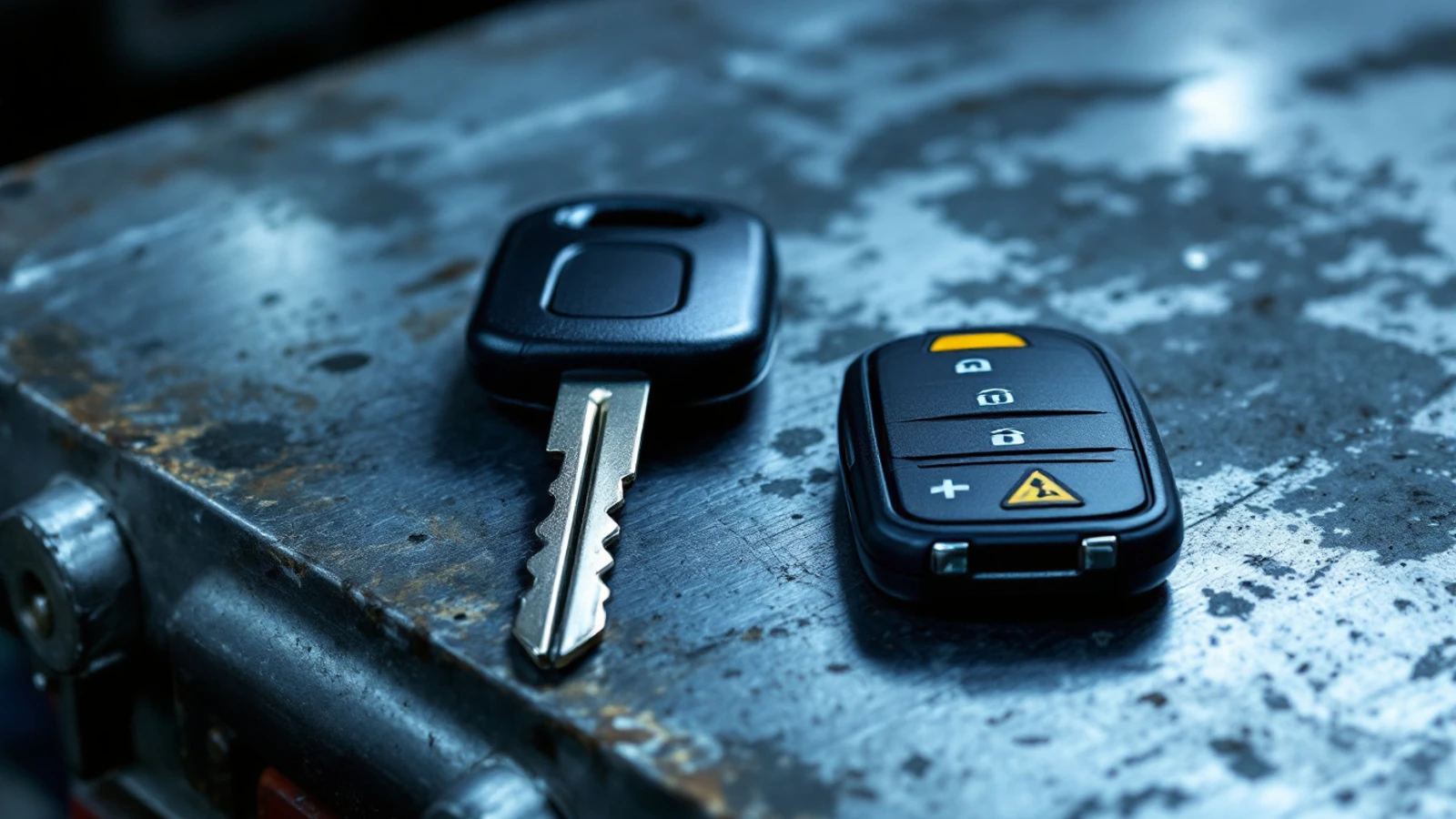
As of September 2026, a Chevrolet key replacement runs $115 to $400 all-in through a mobile automotive locksmith. A PassLock resistor key on an older Silverado or Malibu sits at the bottom of that band. A HITAG-AES proximity fob replaced with every key lost sits at the top, $295 to $400. A Chevrolet dealer charges 35 to 60 percent more for the equivalent work, before the tow.
That is the short answer. The rest of this guide explains why Chevrolet's band is wider than most makes, which part of it your specific vehicle lands in, and what you can actually control.
Every figure below is drawn from the ranges published on our Chevrolet make page and is stated as of September 2026. They are all-in prices covering the key blank, the mechanical cut, the programming, and the service call to come to you — not a "starting at" number that grows once a technician is standing in your driveway.
What a Chevrolet key costs in 2026
| Situation | Mobile locksmith, all-in |
|---|---|
| Pre-1998 mechanical key, no chip | under $135 |
| PassLock resistor key, working spare present | $115 – $175 |
| PassLock resistor key, all keys lost | $145 – $215 |
| PK3+ transponder, working spare present | $135 – $205 |
| PK3+ transponder, all keys lost | $185 – $260 |
| GMLAN HITAG-2 transponder spare | $155 – $225 |
| HITAG-AES proximity fob, working key present | $225 – $315 |
| HITAG-AES proximity fob, all keys lost | $295 – $400 |
| Ignition cylinder rekey or replacement | $175 – $385 |
| Fob coin-cell battery | a few dollars of parts |
Two variables drive that entire table, and everything else is noise by comparison.
The first is which immobilizer generation your Chevrolet belongs to. The second is whether a working key survives. Read across any pair of rows and the all-keys-lost version costs meaningfully more than the spare version of the same key, because losing the last key changes the procedure, not just the parts list.
Model, trim, mileage and condition move the number far less than those two.
Chevrolet has four generations on the road at once
This is the part that surprises people. Most makes run two or three immobilizer families across their in-service fleet. Chevrolet runs four, and they overlap at the edges, which is why Chevrolet quotes vary more than Toyota or Honda quotes do.
PassLock I and II (roughly 1995 to 2004). A resistor pellet embedded in the key shaft. The security module reads the resistance value, not a radio chip. There are ten possible values, and a specialist carrying all ten can cut and pair one on the spot. These are the cheapest programmed Chevrolet keys on the table.
PassKey III and PK3+ (roughly 2003 to 2009). A genuine transponder chip, a Philips PCF7937, in the head of a bladed key. This is the generation most owners picture when they think "chip key."
GMLAN HITAG-2 (roughly 2010 to 2014). GM standardised this chip family across every marque in the group, so a Chevrolet, a GMC and a Buick of the same vintage behave nearly identically at the immobilizer.
HITAG-AES proximity (2015 onward). True rolling-code encryption, and the fob you never take out of your pocket. This generation requires the GM SPS programming step through GDS2, Tech 2 Win or an aftermarket equivalent, which is the one place a technician's tool license actually decides whether the job happens in your driveway today.
Notice the overlap in those year ranges. 2003 could be PassLock or PK3+. 2015 could be HITAG-2 or HITAG-AES. That overlap is exactly why the VIN matters more on a Chevrolet than on most makes — the year alone does not always resolve the generation, and the VIN always does. We cover what the VIN changes about your quote in more detail, and on a Chevrolet it is the single most useful thing you can read out over the phone.
Where the common Chevrolets land
Chevrolet's published model coverage maps onto the table cleanly once you have the model year.
Silverado 1500 and Silverado HD (1999 to 2026). The fourth generation from 2019 onward runs HITAG-AES proximity on RST and higher trims — rows seven and eight, $225 to $400. Earlier trucks walk back through HITAG-2, PK3+ and PassLock as the year drops. A 2013 Silverado spare lands around $160 to $220. The heavy-duty 2500 and 3500 trucks follow the light-duty generation for their year, so they are not a separate pricing case.
Tahoe and Suburban (1995 to 2026). The fifth-generation Tahoe from 2021 onward is HITAG-AES, with a display key on High Country trim. A 2023 Tahoe High Country proximity job with all keys lost runs $315 to $400 — the top of the table.
Equinox (2005 to 2026). The third generation from 2018 starts on HITAG-2 and moves to HITAG-AES on Premier trim, so two Equinoxes a model year apart genuinely need different keys. The 2025 Equinox EV sits on the newer BEV2 architecture.
Traverse (2009 to 2026). The third generation from 2024 onward is HITAG-AES.
If your Chevrolet is not on that list, the identification in the previous section still resolves it. Whether you turn a blade or press a button places you on the right half of the table before anyone quotes a number, and our guide to transponder versus smart key walks through the identification without any tooling.
The three things that move the number
1. Whether a working key survives
This is the largest single lever on the table, and it is the one you can still act on today if you are reading this before anything has gone wrong.
With a working key present, the technician has a reference. The vehicle can be told to accept an additional key using the one it already trusts. It is a short, well-defined procedure.
With every key gone, the vehicle has to be convinced to accept a key it has never seen, starting from nothing. On PassLock vehicles that means the timed relearn — a 10-minute or 30-minute cycle depending on the platform, with the ignition held in position while the security system re-arms. Nothing hurries it. On HITAG-AES proximity vehicles it means a longer relearn window plus the SPS step. Either way the technician's time on site roughly doubles, and the price reflects that, not a surcharge for your bad luck.
Read the table again with that in mind. Every all-keys-lost row costs $30 to $80 more than the spare row directly above it.
2. The generation, not the badge
A $115 PassLock key and a $400 proximity all-keys-lost job can both wear a bowtie. The blank costs different money, the tooling costs different money, and the procedure takes different time. When you get two quotes that look wildly apart, the first question is not who is overcharging — it is whether both shops were quoting the same generation.
3. Travel
The blank, the cut and the programming are national. The travel is not. A specialist forty minutes outside a metro is spending eighty minutes on the road for your job, and that shows up somewhere in the number. An honest quote states it; a dishonest one hides it and produces it on arrival. We break the mechanics down in drive-out and mileage fees explained, and the regional picture in car key cost by state.
What Chevrolet does not do to you
Some makes put genuine roadblocks in front of independent programming. Chevrolet mostly does not, and that is worth knowing before someone tells you otherwise.
There is no NASTF Vehicle Security Professional restriction on Chevrolet. There is no per-VIN PIN to buy from a parts counter before work can start. Compare that to Honda, where 2019-and-newer Smart Entry vehicles need a per-VIN immobilizer PIN before an all-keys-lost job can complete — a real extra step with a real cost attached, covered in our Honda key replacement cost guide.
What Chevrolet does require on 2015-and-newer proximity vehicles is the GM SPS step, which is a tooling and licensing question on the technician's side rather than a lock the manufacturer puts on your vehicle. A specialist with a current license does it in your driveway. One without it cannot, at any price. That distinction — vehicle-imposed versus tool-imposed — is the whole subject of who can actually program a car key, and it is the question worth asking when a shop tells you your Chevrolet is "dealer only."
The one genuine exception is the OnStar-paired stolen-vehicle slowdown flag introduced on the 2023 and newer Silverado, Tahoe and Suburban refresh. If that flag is active, only OnStar can clear it. That is not a locksmith limitation, and no tool works around it.
When the dealer is actually the right call
Three situations, all of which are worth checking before you pay anyone.
You hold GM coverage that includes it. A GM Smart Maintenance Plan or a key-protection product bought at the point of sale may cover the work outright. People forget these constantly.
There is an open recall covering the work. Several manufacturer campaigns over the years have included immobilizer reprogramming or key replacement as part of the remedy. Run your VIN through the NHTSA recall lookup before paying out of pocket. If an open recall covers it, the dealer performs it at no charge, and a reputable mobile specialist will pause a paid job on discovering one.
The OnStar slowdown flag is active, as above, or the vehicle is a Lyriq or Bolt EV with an open high-voltage propulsion recall.
Outside those, the economics point the other way. AAA's 2024 figures put dealer key pricing 35 to 60 percent above mobile pricing on mainstream brands, and that comparison assumes the vehicle can drive itself to the service bay. With every key lost, it cannot, and the tow is a real line on the bill. J.D. Power's 2024 Customer Service Index puts Chevrolet dealer satisfaction below the industry average, which is its own argument. We lay the full comparison out in dealer versus mobile locksmith car key cost.
Three cheaper outcomes to rule out first
Not every Chevrolet that will not start needs a key. Three failures look identical from the driver's seat and cost very different money.
A dead fob battery. Chevrolet proximity keys run a CR2025 or CR2032 coin cell for roughly two to four years. The discharge is gradual: the range shrinks first, so the fob still works when held against the door handle but no longer wakes the truck from across a parking lot. Drivers read that as a dying key. It is a few dollars of parts.
A worn ignition cylinder. On higher-mileage Chevrolets with mechanical cylinders, the wafers wear unevenly. The symptom is a key that works sometimes, and where jiggling or reinserting it changes the behaviour. That is a cylinder fault, not a chip fault, and replacing the key changes nothing. Rekeying or replacing the cylinder runs $175 to $385 on site — see car ignition repair cost for the full picture.
A corrupted key registry after a battery swap or jump start. Chevrolets built since roughly 2010 store key-pairing data in the body control module. A clumsy battery disconnect or a reversed-polarity jump can occasionally corrupt that registry, and a previously fine key gets rejected for no visible reason. The fix is a module rewrite, not a new key. Cutting a key for a corrupted module means paying for a key you did not need.
A fourth worth naming: aftermarket remote-start interference. If a remote-start kit's transponder bypass coil degrades, the symptom mimics a failing key precisely. A technician who checks the bypass before re-cutting saves you the price of the wrong repair.
The spare-key arithmetic, using Chevrolet's own numbers
Chevrolet makes this easy to see because the spare row and the all-keys-lost row sit next to each other in published pricing.
Take a 2023 Tahoe with one working proximity key.
Buy the spare while that key still works. $225 to $315. You now hold two keys, and if you lose one later you replace it as a spare again — still on the lower row, still never stranded.
Wait until the last key is gone. $295 to $400, and the vehicle is immobile wherever it happens to be parked, and you are booking under time pressure instead of at a moment you chose.
The mobile-to-mobile gap is roughly $70 to $85. The gap between the two situations is much larger than that, because the second one also costs you a day and, at a dealer, a tow.
The same arithmetic holds on the PassLock rows, where the spread is smaller in dollars but proportionally similar. It holds on every make. Chevrolet just publishes it plainly.
What about GMC, Buick and Cadillac?
They share GM's underlying immobilizer architecture, so the generational logic in this guide broadly transfers — the same PassLock, PK3+, HITAG-2 and HITAG-AES families, the same spare-versus-all-keys-lost structure, the same absence of a dealer-only lockout on proximity programming.
What does not transfer automatically is the pricing. Each marque runs its own trim boundaries and its own published ranges, and Cadillac in particular adds a Super Cruise gateway pairing step that Chevrolet does not have. Use this guide to understand why a GM quote is shaped the way it is, then confirm the actual figures against the GMC, Buick or Cadillac pages rather than assuming the Chevrolet numbers carry across.
The same caution applies to anyone arriving here from our Ford key replacement cost guide: Ford's PATS generations map onto a different year structure entirely, even though the truck-market comparison invites people to treat an F-150 and a Silverado as interchangeable pricing cases. They are not.
Getting an accurate Chevrolet number
Three details put you on one row instead of across the whole table: model year, model and trim, and whether a working key still exists.
Add the VIN and the generation resolves exactly, which matters more on a Chevrolet than on almost any other make because of those overlapping year ranges. On a 2003 or a 2015 vehicle in particular, the VIN is the difference between a $135 quote and a $315 one, and no honest shop can tell you which without it.
Our transponder key programming and proximity key replacement pages describe what each visit involves, and you can start a request on the get help page. If you want to compare against another make before you commit, the makes index carries the published ranges for all twenty-five.
Prices in this guide are as of September 2026 and reflect the published ranges on the CarKeyNation Chevrolet page. Dealer pricing differentials referenced from AAA 2024 figures; dealer satisfaction from the J.D. Power 2024 Customer Service Index. Immobilizer credentialing standards referenced from NASTF's Secure Data Release Model. Recall status should be verified through the NHTSA VIN lookup.
Frequently asked questions
How much does a Chevrolet key replacement cost in 2026?
As of September 2026, Chevrolet key replacement runs $115 to $400 all-in through a mobile automotive locksmith. The low end is a PassLock resistor key on a late-1990s or early-2000s Chevrolet at $115 to $175. The high end is a HITAG-AES proximity fob replaced with every key lost at $295 to $400. Those are total prices covering the blank, the mechanical cut, the programming and the visit.
Why does my Chevrolet quote differ so much from someone else's on the same model?
Chevrolet spans four immobilizer generations in the fleet still on the road, so two vehicles wearing the same nameplate can need completely different keys. A 2003 Silverado is a PassLock resistor job at $115 to $175 for a spare. A 2023 Silverado on the RST or higher trim is HITAG-AES proximity at $225 to $315 for a spare. The nameplate tells you almost nothing on its own; the model year and trim decide the generation.
Can a locksmith program a Chevrolet proximity key, or is that dealer-only?
A qualified locksmith can program current Chevrolet proximity keys. Chevrolet carries no NASTF Vehicle Security Professional restriction and no per-VIN PIN requirement, which puts it among the more locksmith-friendly makes. The real constraint on 2015-and-newer proximity vehicles is the GM SPS programming step, which needs a technician running GDS2, Tech 2 Win or an aftermarket equivalent with a current license.
What is the PassLock relearn, and why does it add time?
On PassLock-era Chevrolet vehicles the security system has to be walked through a timed relearn, either a 10-minute or a 30-minute cycle depending on the platform, with the ignition held in position while the system re-arms. Nothing can hurry it. It is why an older Chevrolet job that looks mechanically simple still occupies a technician for the better part of an hour.
My Chevrolet fob stopped working. Do I need a new key?
Usually not. Chevrolet proximity fobs use a CR2025 or CR2032 coin cell that lasts roughly two to four years, and as it fades the range shrinks before the fob dies outright. That reads to a driver like a failing key. Replace the battery and retest before authorizing anything. It is a few dollars of parts, and it is the single most common reason a Chevrolet owner pays for a key they did not need.
Does an OnStar subscription change anything about key replacement?
It can on the 2023-and-newer Silverado, Tahoe and Suburban. That refresh introduced an OnStar-paired stolen-vehicle slowdown flag, and if that flag is active, only OnStar can clear it. No locksmith and no aftermarket tool can work around it. It is rare, but it is one of the few genuine dealer-and-OnStar-only situations in the Chevrolet lineup, so it is worth mentioning at intake if your vehicle has ever been reported stolen or recovered.
Is a Chevrolet dealer more expensive than a mobile locksmith?
For the same job, generally yes. AAA's 2024 figures put dealer key pricing 35 to 60 percent above mobile locksmith pricing across mainstream brands, before you add the tow that an immobilized vehicle forces. J.D. Power's 2024 Customer Service Index also places Chevrolet dealer satisfaction below the industry average. The dealer wins in specific cases, mostly coverage and recalls, which this guide sets out.
Do Chevrolet key prices change depending on which state I am in?
The blank, the cut and the programming are national. A HITAG-AES proximity key for a Tahoe is the same part and the same procedure in Ohio as in Arizona. What varies is how far a qualified specialist has to travel to reach you, which is why quotes on identical vehicles can differ without either being wrong.