Honda Key Replacement Cost (2026)
What a Honda key actually costs in 2026 by key generation and by whether a working key survives, including the Honda iN PIN that only affects 2019-and-newer Smart Entry vehicles.
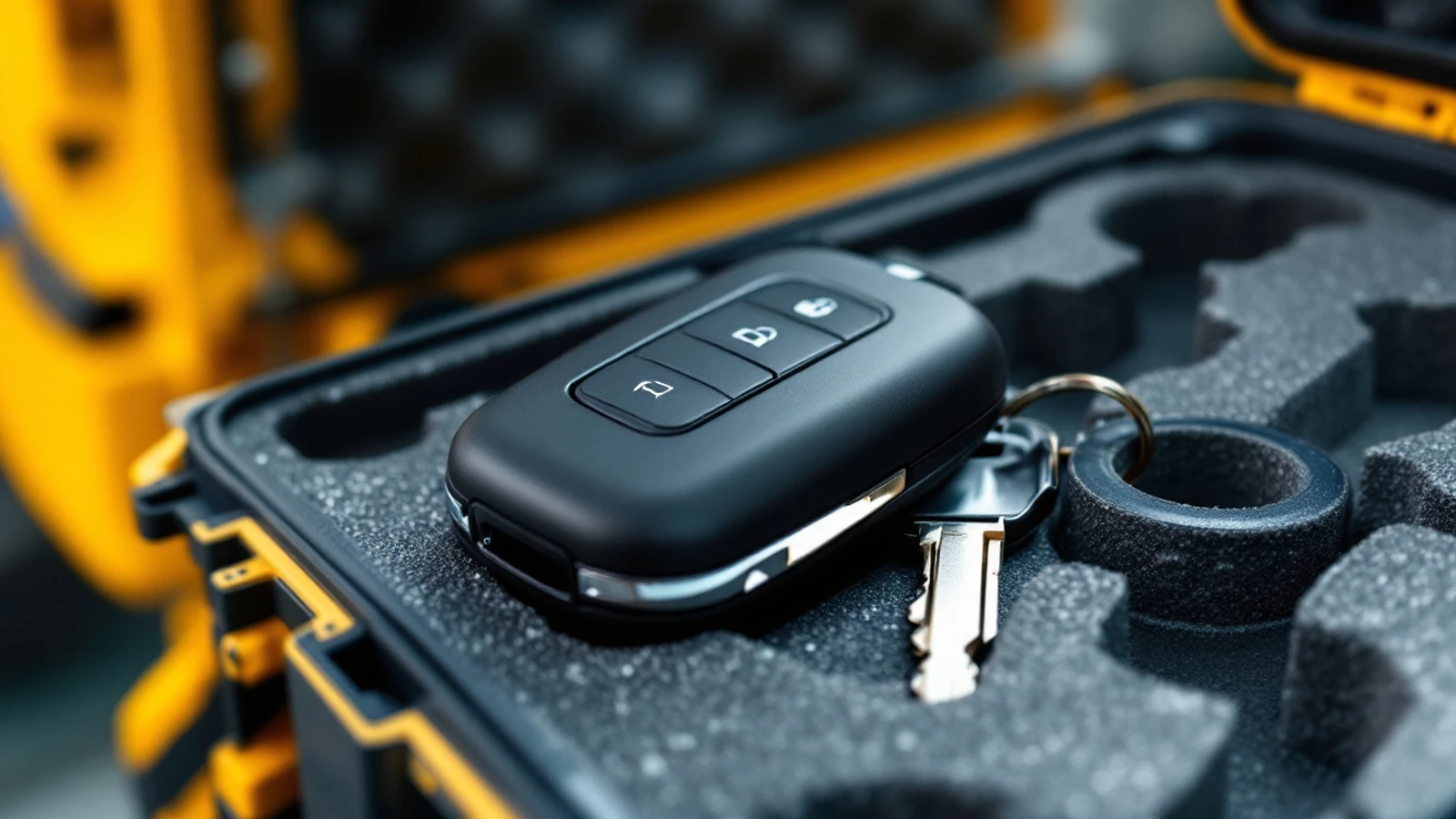
As of September 2026, a Honda key replacement runs $150 to $400 all-in through a mobile automotive locksmith. A transponder spare for a 2003 to 2014 Civic, Accord or CR-V sits at the bottom of that band, $150 to $210. A 2019-and-newer Smart Entry fob replaced with every key lost sits at the top, $295 to $400. A Honda dealer charges $425 to $650 for that same job, before the tow.
That is the short answer. What makes Honda different from the other mainstream Japanese makes is a single extra step on newer vehicles — the Honda iN PIN — and understanding when it applies is worth real money.
Every figure below is drawn from the ranges published on our Honda make page and is stated as of September 2026. They are all-in prices covering the blank, the mechanical cut, the programming and the service call, not a "starting at" number that grows on arrival.
What a Honda key costs in 2026
| Situation | Mobile locksmith, all-in |
|---|---|
| Pre-1998 mechanical key, no chip | under $135 |
| HITAG-2 transponder, working spare present | $150 – $210 |
| HITAG-2 transponder, all keys lost | $185 – $260 |
| HITAG-Pro transponder spare (2015–2018) | $175 – $245 |
| Smart Entry fob spare, working key present | $225 – $310 |
| Smart Entry, all keys lost, PIN obtained | $295 – $400 |
| Honda iN PIN acquisition, when dealer-only | $25 – $75 |
| Ignition cylinder rekey or replacement | $175 – $385 |
| Honda dealer, Smart Entry all keys lost | $425 – $650, plus tow |
Three variables drive that table: which generation your Honda belongs to, whether a working key survives, and — on 2019-and-newer vehicles only — where the PIN comes from.
The three Honda generations, and the year each starts
Honda's immobilizer history is a textbook case of incremental hardening, which is good news for owners: it means the boundaries are clean and predictable.
HITAG-2 (1998 to 2014). An NXP chip in the head of a bladed key, paired through Honda's diagnostic system. This chip family was publicly broken by academic researchers at the 21st USENIX Security Symposium in 2012, which is precisely why Honda moved on. From an owner's point of view it is the cheapest programmed Honda key on the table, rows two and three.
HITAG-Pro (2015 to 2018). Honda's answer to that research. Mechanically the same experience — a blade you turn — with a hardened cipher underneath. Row four, a modest step up in price.
HITAG-AES Smart Entry (2019 onward). True AES rolling code, and the fob stays in your pocket. This generation pairs the key with the body control module, the gateway and the engine ECU as a chain rather than a single handshake, and it is the generation the PIN requirement attaches to. Rows five and six.
If you are not sure which one you have, the physical key answers it faster than any lookup: a blade you insert and turn is HITAG-2 or HITAG-Pro depending on the year; a fob plus a start button is Smart Entry. Our Honda key types by year guide maps the generations onto specific model years if you want the exact boundary for your vehicle, and transponder versus smart key covers the identification generically.
Where the common Hondas land
Honda's model coverage maps onto the table cleanly, but the Smart Entry crossover year moves by nameplate, and that is where quotes go wrong.
Civic (1998 to 2026). The most-programmed Honda in the fleet. Smart Entry became standard on EX and higher trims in 2022 and across all trims in 2023. A 2014 Civic is rows two and three at $150 to $260; a 2023 Civic is rows five and six at $225 to $400. Same nameplate, roughly triple the top-end price.
Accord (1998 to 2026). Smart Entry since 2018 — a year earlier than the general Honda crossover, which catches people out. The 11th generation from 2023 adds a wireless-charging cubby that will start the car with a flat fob battery.
CR-V (1998 to 2026). The sixth generation from 2023 shares the Accord's architecture.
Pilot (2003 to 2026). The fourth generation from 2023 adds a TrailSport remote-start mode. A 2023 Pilot Smart Key with all keys lost is the top of the table, $295 to $400.
Odyssey (1998 to 2026). Worth flagging separately: the sliding-door integration on the Smart Key adds a re-sync step other Hondas do not need. Same price band, slightly longer visit.
HR-V (2016 to 2026) carries Smart Entry as standard since 2023, and Ridgeline (2006 to 2026) follows the Pilot platform it is built on.
The Honda iN PIN, explained properly
This is the one thing that makes Honda pricing different from Toyota or Nissan pricing, and it is widely misdescribed.
On a 2019-and-newer Smart Entry Honda with every key lost, the vehicle demands a per-VIN immobilizer PIN before it will accept a new key. This is not a fee a locksmith invents. Without the PIN, programming does not complete, full stop.
There are three legitimate places that PIN comes from:
- A dealer parts counter lookup on Honda's iN portal, typically $25 to $50 in fees.
- A VIN-derived calculation on advanced aftermarket tooling — Smart Pro, Autel IM608, Xhorse VVDI Key Tool Plus. No dealer trip, no fee, no delay. This is the fast path, and it is why the technician you pick matters on a newer Honda.
- A glove-box sticker, on some older Pilots.
Two implications follow.
First, the PIN does not apply to a spare. If you still hold one working key, a Smart Entry spare is row five, $225 to $310, and no PIN enters the picture. That is another argument for cutting the spare before you need it.
Second, the PIN does not apply to older Hondas at all. A quote that tacks a PIN acquisition fee onto a 2012 Civic is either confused or padding. Ask which generation they think they are quoting. A clear breakdown of what a legitimate quote contains, and what it should never contain, is in deposits and payment: what a legitimate shop asks.
The other Honda-specific gotcha: P1681 and P1682
If a previous attempt at programming failed — a cheap online fob, a well-meaning friend with a borrowed tool, a shop out of its depth — the Honda ECU records diagnostic trouble codes P1681 or P1682 and the immobilizer stops accepting further attempts until those codes are cleared.
It is fully recoverable. It is not fully free, because the next technician now has a clearing step through Honda's diagnostic system or an equivalent before any programming can begin.
The practical advice is simple: say so at intake. A technician who knows before arriving brings the right tool and clears it in minutes. A technician who discovers it in your driveway is troubleshooting on your time. This is the same failure pattern as a customer-supplied fob that will not enrol, and if a key already unlocks your doors but will not start the engine, that specific symptom has its own diagnostic path worth reading first.
Three cheaper outcomes to rule out before you buy a key
A dead coin cell. Honda proximity fobs run a CR2025 or CR2032 for roughly two to four years and fade gradually, so the range shrinks before the fob quits. Held against the door handle it still works; from across a car park it does not. That is a battery, not a key. On a recent Accord you can confirm it in seconds using the wireless-charging cubby, which starts the car with a flat fob.
A worn ignition cylinder. On higher-mileage Hondas with mechanical cylinders, the wafers wear unevenly and the key works intermittently, with jiggling or reinserting changing the behaviour. That is the cylinder, not the chip, and a new key fixes nothing. Rekeying or replacing it runs $175 to $385 on site.
A corrupted key registry. Hondas built since roughly 2010 store key-pairing data in the body control module, and a clumsy battery disconnect or a reversed-polarity jump start can corrupt it. A previously fine key gets rejected for no visible reason. The fix is a module rewrite, not a new key.
A fourth, less common: aftermarket remote-start interference, where a degraded transponder bypass coil mimics a failing key precisely. A technician who checks the bypass before re-cutting saves you the price of the wrong repair.
When the Honda dealer is genuinely the better option
An open safety recall covers the work. Several Honda Sensing campaigns have included key reprogramming as part of the remedy, performed at no charge. Run your VIN through the NHTSA recall lookup before paying anyone.
Your vehicle is inside a firmware-lag window. When Honda ships a clean-sheet platform, aftermarket tooling typically trails by six to eighteen months. The 2026 Prelude is currently in that window; during it, the dealer is the only fast path. That status is checked at intake rather than discovered in your driveway.
You are already at the dealer. If the car is in for scheduled service anyway, the incremental cost is the part plus twenty minutes of labour, and the comparison changes.
Outside those three, the arithmetic favours mobile work: $295 to $400 against $425 to $650 on the same all-keys-lost Smart Entry job, and no tow. The full comparison, including what the dealer route actually involves, is in dealer versus mobile locksmith car key cost.
Worth naming plainly: nothing about Honda's design forces the work to a dealer. There is no NASTF Vehicle Security Professional restriction on Honda. The constraints are the PIN and the technician's tooling, which is exactly the distinction drawn in who can actually program a car key.
The spare-key arithmetic on a Smart Entry Honda
Honda's numbers make the case better than any argument.
Take a 2023 CR-V with one working Smart Entry fob.
Buy the spare now. $225 to $310, no PIN required, booked at a time you choose. You then hold two keys, and losing one later puts you back on the same row rather than the expensive one.
Wait until the last key is gone. $295 to $400 mobile, plus $25 to $75 if the PIN has to come from a dealer counter, with the vehicle immobile wherever it happens to be sitting. Take the dealer route instead and it is $425 to $650 plus a tow.
The mobile-to-mobile difference is roughly $70 to $90 before the PIN. The difference between the two situations is a great deal larger, because the second one also costs a day and removes every choice you had about when it happens.
What varies by where you are, and what does not
The blank, the cut and the programming are national. A Smart Entry fob for a Pilot is the same part and the same procedure in Georgia as in Washington.
What varies is travel — how far a qualified specialist has to come, and how many specialists in reach carry a current Honda license and a VIN-PIN calculation tool. That second factor matters more on a 2019-and-newer Honda than on almost any other mainstream make, because it decides whether the PIN costs you nothing or costs you a dealer trip.
Two quotes on identical vehicles can differ for that reason without either being wrong. What should never happen is travel folded invisibly into the key price and produced on arrival.
Getting an accurate Honda number
Three details put you on one row instead of across the table: model year, trim, and whether a working key still exists. Trim matters more on Honda than on most makes because of the staggered Smart Entry rollout — 2022 Civic EX and 2022 Civic LX are not the same quote.
Add the VIN and the generation resolves exactly, along with whether the PIN applies. What the VIN changes about your quote covers why that single detail tightens a range more than anything else you can say.
Our smart key replacement and transponder key programming pages describe what each visit involves, and you can start a request on the get help page. If you are comparing across makes, the Toyota and Nissan cost guides are the closest structural comparisons, and the Acura page carries the published ranges for the badge that shares Honda's architecture.
Prices in this guide are as of September 2026 and reflect the published ranges on the CarKeyNation Honda page. Dealer benchmark rates referenced from the J.D. Power Customer Service Index. The HITAG-2 cryptanalysis referenced was presented at the 21st USENIX Security Symposium. Immobilizer credentialing standards referenced from NASTF's Secure Data Release Model. Recall status should be verified through the NHTSA VIN lookup.
Frequently asked questions
How much does a Honda key replacement cost in 2026?
As of September 2026, Honda key replacement runs $150 to $400 all-in through a mobile automotive locksmith. A HITAG-2 transponder spare for a 2003 to 2014 Civic, Accord or CR-V is $150 to $210. A 2019-and-newer Smart Entry fob replaced with every key lost is $295 to $400 once the immobilizer PIN is in hand. Those figures cover the blank, the cut, the programming and the visit.
What is the Honda iN PIN and do I have to pay for it?
It is a per-VIN immobilizer PIN that Honda requires before an all-keys-lost job can complete on 2019-and-newer Smart Entry vehicles. Without it, programming simply will not finish. It comes from one of three places: a dealer parts counter lookup on the Honda iN portal for roughly $25 to $50, a VIN-derived calculation on advanced aftermarket tooling with no dealer trip at all, or on some older Pilots a sticker in the glove box. Budget $25 to $75 when the dealer route is the only one available, and nothing when your technician can derive it.
Does the PIN requirement apply to my older Civic or Accord?
No. The Honda iN PIN requirement applies to all-keys-lost programming on 2019-and-newer Smart Entry vehicles. A 2012 Civic on HITAG-2 or a 2016 Accord on HITAG-Pro does not need it, and any quote that adds a PIN fee to one of those vehicles deserves a question.
Why is the Honda dealer so much more expensive?
Honda dealer pricing on a Smart Entry all-keys-lost job typically runs $425 to $650 against $295 to $400 mobile, per J.D. Power Customer Service Index benchmark rates. Honda's own parts pricing generally sits 30 to 80 percent above independent pricing on the same work. On top of that, a vehicle with no working key cannot drive itself to the service bay, so the dealer route usually adds a tow the mobile route does not.
Can a locksmith program a Honda Smart Entry key on site?
Yes, with the right tooling and the PIN. A specialist running a current Autel IM608, Smart Pro or equivalent handles Smart Entry programming in your driveway. Honda places no NASTF Vehicle Security Professional restriction on the work. The two real constraints are the PIN and the technician's tool license, not a lock Honda puts on the vehicle.
My Honda key stopped working. Is it the key or the battery?
Check the battery first. Honda proximity fobs use a CR2025 or CR2032 coin cell that lasts roughly two to four years, and it fades gradually rather than failing outright, so the range shrinks before the fob dies. That reads exactly like a failing key. An 11th-generation Accord and other recent Hondas also carry a wireless-charging cubby or a marked start-button position that will start the car with a flat fob, which is a useful confirmation that the fob, not the car, is the problem.
Someone tried to program my Honda key and now nothing works. What happened?
Failed programming attempts on a Honda set diagnostic trouble codes P1681 or P1682 in the engine control unit, and the immobilizer will refuse further attempts until those codes are cleared through Honda's diagnostic system or an equivalent tool. It is recoverable, but it means the next technician has a clearing step before they can start. Mention any previous attempt at intake — hiding it just adds time to the visit.
Does an Acura follow the same pricing?
The architecture largely transfers, since Acura shares Honda's immobilizer families, but the published ranges do not. Acura runs its own trim boundaries and its own figures. Use the generational logic here to understand the shape of an Acura quote, then confirm the numbers against the Acura page rather than assuming the Honda ones carry across.