Your New Key Unlocks the Doors but Won't Start the Engine
A key that opens the car but will not crank it is telling you something specific: the blade is right and the chip is not enrolled. Here is how to confirm that, what else it could be, and what each fix costs.
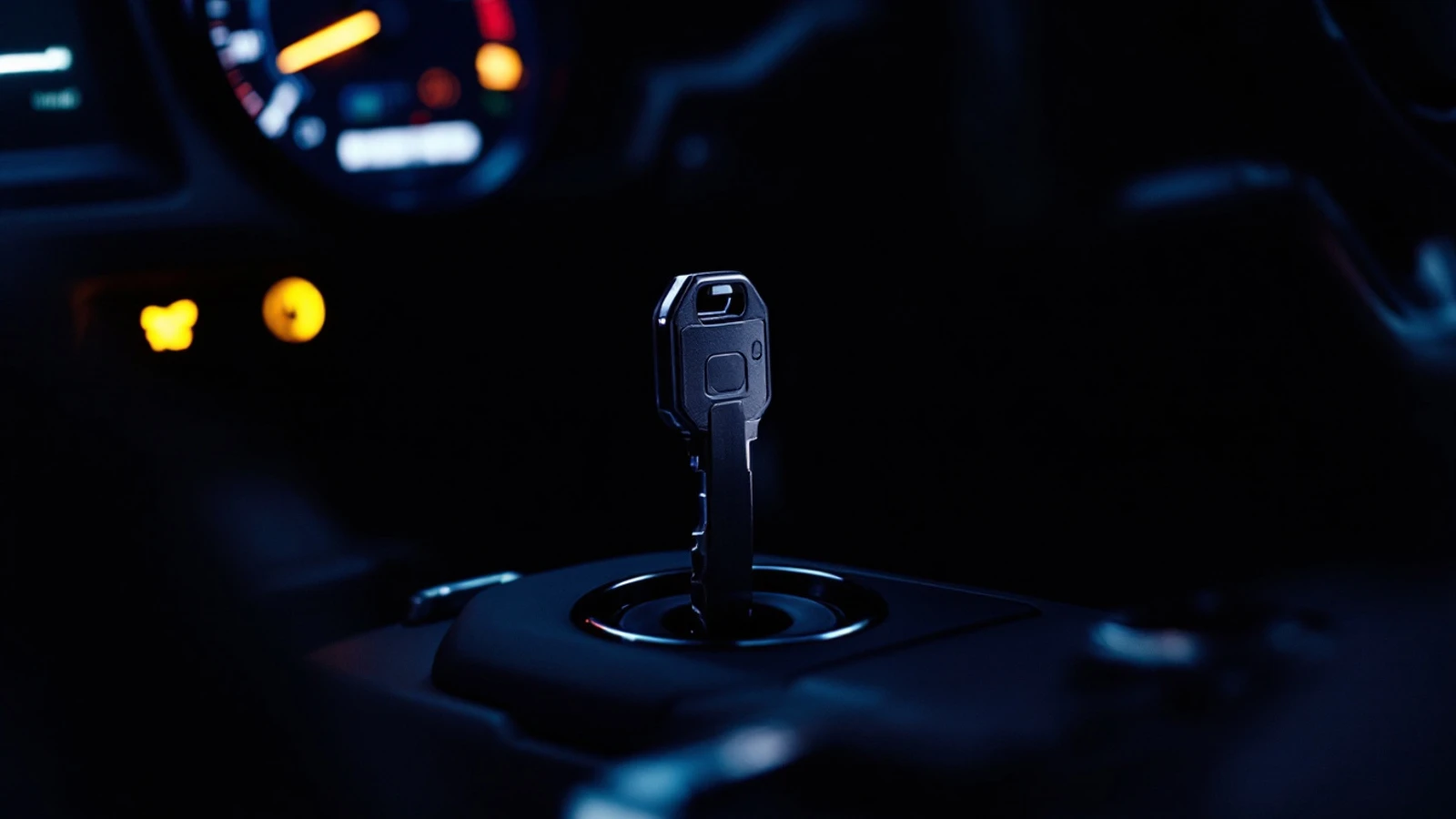
You had a key cut. It opens the driver's door, the trunk pops, everything mechanical works exactly as it should. You slide it into the ignition or press the button, and the engine will not start.
That combination is not random, and it narrows the problem down hard. A key that works the lock but not the engine has a correct mechanical cut and an unenrolled chip. In the overwhelming majority of cases, the fix is a programming step that was never completed, not a new key.
This guide walks the diagnosis in the order a technician would, tells you what each outcome costs, and flags the two cases where the key is not the culprit at all.
Why one key does two unrelated jobs
Modern car keys are two products fused into one object.
The mechanical half is the cut metal blade. It is shaped to your door and ignition lock, and it is a purely physical match. Nothing electronic is involved. This is why a key can open the door and go no further.
The electronic half is a transponder chip, either embedded in the plastic head of a bladed key or built into a proximity fob. When you attempt to start, the vehicle's immobilizer challenges that chip. If the chip does not answer with a credential the vehicle already trusts, the immobilizer withholds fuel or spark. The starter may crank; the engine will not run.
Those two halves are produced in two separate steps. Cutting is mechanical work. Enrollment is a diagnostic procedure performed with a tool connected to the vehicle. A key can be perfectly cut and completely unenrolled, and that is precisely what you are holding.
If you are not certain which type of key your vehicle uses, transponder versus smart key covers the identification.
The five-minute diagnosis, in order
Work through these in sequence. Each one eliminates a branch.
Step 1: Confirm the door test
Does the new key unlock the driver's door manually, blade in the lock, and does it turn freely in the ignition without binding?
If yes, the cut is correct and you can stop worrying about the blade. If the key sticks, binds, or has to be jiggled, note that. It points somewhere else, covered in step 5.
Step 2: Watch the security indicator
Turn the ignition to run, or press start without your foot on the brake, and watch the dashboard for a small icon of a car with a key or a padlock.
- Flashes rapidly, or stays lit, during a start attempt. The immobilizer is actively refusing. This is the expected fingerprint of an unenrolled chip.
- Illuminates briefly at key-on and then goes out. The vehicle recognized a valid key. Your no-start is something else, and you should look at battery, starter or fuel before spending anything on keys.
Step 3: Test the old key, if one exists
If any previously working key remains, try it.
- Old key starts the car, new key does not. Confirmed. The vehicle is fine, the immobilizer is fine, and the new key is unenrolled. This is the cleanest, cheapest diagnosis on this page.
- Neither key starts the car. The problem has moved to the vehicle side. Skip to step 5.
Step 4: Check the cranking behavior
- Engine cranks strongly but never catches. Classic immobilizer refusal. The starter has power; the engine is being denied fuel or spark.
- Nothing happens, no crank, dashboard dim. That is a battery or starting-circuit issue, not a key issue. A discharged vehicle battery produces a no-start that has nothing to do with programming.
Step 5: Rule out the two vehicle-side causes
Two failures mimic an unenrolled key closely enough to fool people into buying a second one they did not need.
A failed immobilizer antenna ring. A coil sits around the ignition lock and reads the chip. If the coil fails, no key can be read, including one that worked yesterday. The tell is that every key fails, not just the new one.
A worn ignition cylinder. If the key turns but the cylinder no longer rotates through to the start position properly, or it sticks and binds, the mechanical assembly is worn. Cutting a fresh key can mask this briefly. Replacing the chip does nothing at all for it. On-site rekeying or cylinder replacement runs $175 to $385 depending on the model.
What each outcome costs
Once the diagnosis lands, here is the realistic range for each path. Figures are as of September 2026 and reflect the ranges published on our service pages.
| Diagnosis | What is done | Typical cost |
|---|---|---|
| Correct key, never enrolled | Programming only, tool connected to vehicle | $60 – $150 |
| Existing remote-only fob needs re-pairing | Remote re-program | $25 – $60 |
| Original key intact, new blade needed | Chip transferred to a new cut blank, no pairing | $80 – $140 |
| Wrong or unusable key supplied | Correct transponder key cut and programmed, 1996 – 2010 | $180 – $260 |
| Wrong or unusable key supplied | Correct transponder key cut and programmed, 2011 – 2018 | $200 – $300 |
| Flip or switchblade transponder | Cut and programmed | $220 – $320 |
| Ignition cylinder worn | On-site rekey or cylinder replacement | $175 – $385 |
| Fob battery dead (proximity vehicles) | Coin cell replaced | $3 part, under $135 with a visit |
The spread across that table is the reason diagnosis matters. The gap between the best outcome and the worst is roughly five-fold, and it turns entirely on which branch you are actually on.
Note the row most people miss: chip transfer. If your original key still exists and only the blade is damaged or worn, a technician can move the already-enrolled chip into a freshly cut blank and skip immobilizer pairing completely. At $80 to $140 it is dramatically cheaper than a new programmed key, and it is only available while the original chip survives.
The same logic runs in reverse when a key has been re-housed. On older remote-head keys the transponder chip sits loose in a pocket of the plastic case rather than on the circuit board. If someone moves the board into a new shell and leaves that chip behind in the old one, the result is exactly the symptom this guide is about: the buttons lock and unlock, and the engine will not start. Before paying for programming after a shell swap, check whether the chip made the move. Our guide to a key fob that is falling apart covers what should transfer and what should not.
Why the key was not programmed in the first place
Understanding how you ended up here helps you avoid a repeat, and there are only a handful of routes to this symptom.
A hardware store or kiosk cut the key. Blade duplication is a mechanical service and widely available. Chip enrollment is a diagnostic service requiring a tool connected to your specific vehicle, and most places that cut keys do not offer it. The key you received is exactly what was sold: a correctly cut blade.
The key was ordered online and no one programmed it. Common, and covered in the next section.
Programming was attempted and failed silently. An inexpensive consumer kit ran, appeared to complete, and did not enroll. The vehicle never accepted the credential.
The key was cut from a code rather than from your lock. This produces a working blade on most vehicles but says nothing about the chip, which still needs enrolling separately.
A spare was cut long ago and never finished. Worth checking a drawer before buying anything. A key cut years ago and never programmed will behave exactly like a new one.
None of these are unusual, and none of them mean anything is wrong with your vehicle. They all describe the same gap: half the job was done.
What the technician will actually do
If the diagnosis lands on unenrolled chip, the visit is short and the sequence is predictable.
Verify ownership. Registration or title plus photo identification. On any job touching an immobilizer this is a baseline expectation rather than an inconvenience — per NASTF's Secure Data Release Model, documented ownership verification is standard practice before a key is enrolled to a vehicle.
Read the vehicle. The tool connects, typically at the diagnostic port, and identifies the immobilizer system and what it will accept.
Confirm the chip in your key is compatible. This is where an unusable online blank gets caught, and it happens in minutes rather than after an hour of failed attempts.
Enroll the key. On most vehicles this is a short procedure with one working key present. With no working key it becomes a longer one, and on many makes a timed sequence that cannot be accelerated.
Test everything before leaving. Engine start, lock, unlock, panic, and on a proximity vehicle passive entry and push-button start. Watch this happen. A key that has not been demonstrated is not a finished job.
The online-key scenario, specifically
A large share of "unlocks but will not start" calls begin with a key bought online, so it deserves its own section.
Three things go wrong with online blanks, and they cost different amounts to resolve.
Wrong chip generation. Manufacturers changed chip families mid-model-run, sometimes without changing the physical key shape. A blank that fits your lock perfectly can carry a chip your immobilizer does not speak. The key is unusable; a correct one has to be sourced.
Previously paired fob. A used fob that was enrolled to another vehicle may be locked to it. On some systems it can be reset, on others it cannot. This is not something you can determine by looking at it.
Counterfeit or defective chip. A tool attempts the write, the chip does not accept it. Not recoverable.
In all three cases the technician spends real diagnostic time establishing which one you have, and that time is billable whether or not the key turns out to be usable. It is not a penalty for buying online. It is the work of finding out. We cover the practicalities in customer-supplied key fobs: what to expect, including what to check before you order.
When to stop testing and call someone
Call a qualified automotive locksmith when any of these are true:
- The old key starts the car and the new one does not. Programming is the fix, and it needs a tool.
- No key starts the car and the security indicator behaves abnormally. The vehicle side needs diagnosis.
- The key binds or sticks in the cylinder. That is mechanical wear, and it will get worse.
- You have no working key at all. This changes the procedure and the price, and the technician needs to know before dispatch.
Two things worth saying up front on the call: whether a working key still exists, and where the key came from if it was not cut by the person you are calling. Both change what the technician packs, and a visit that arrives with the wrong plan becomes two visits.
Our transponder key programming and key fob programming pages describe what each procedure involves, and the make pages list published ranges by manufacturer. Once you do have a working key, what to do after you get a new car key covers testing it properly before the technician leaves.
You can start a request on the get help page.
Cost ranges are as of September 2026 and reflect the published ranges on the CarKeyNation service pages. Immobilizer credentialing standards referenced from NASTF's Secure Data Release Model.
Frequently asked questions
Why does my new key unlock the doors but not start the engine?
Because a car key does two independent jobs. The cut metal blade works the mechanical lock, and a chip inside the head answers the vehicle's immobilizer before the engine will run. A key that opens the door proves the blade was cut correctly. An engine that will not start on that same key almost always means the chip was never enrolled, or was enrolled to a different vehicle.
Can I program the chip myself?
On a small number of older vehicles there is an owner procedure, usually requiring two working keys already present, which is exactly what you do not have in this situation. On most vehicles from the mid-2000s onward, enrollment requires a diagnostic tool connected to the vehicle and, on many makes, a licensed credential to use it. The inexpensive programming kits sold online work on a handful of models and frequently fail to pair remote functions correctly.
How much does it cost to just program a key I already have?
Programming-only, where the physical key is correct and only the enrollment is missing, typically runs $60 to $150 depending on the system. Re-pairing an existing remote-only fob is cheaper still, roughly $25 to $60. Those are the least expensive outcomes here, which is why it is worth diagnosing before buying another key.
Is a flashing security light on the dash proof the key is the problem?
It is strong evidence but not proof. A flashing or steadily lit immobilizer indicator during cranking means the vehicle is refusing to authorize fuel or spark because it did not recognize a valid key. That is the expected symptom of an unenrolled chip. It can also appear when the immobilizer antenna ring around the ignition has failed, in which case a correctly programmed key still will not start the car.
I bought the key online. Does that change anything?
It changes what can go wrong and who fixes it. An online blank can be the wrong chip generation for your vehicle, can be a used fob still locked to a previous car, or can be a counterfeit that a tool will not write to. A technician can usually tell within minutes which of those you have, but the diagnosis time is real work whether or not the key ends up being usable.
Could it be something other than the key?
Yes. A worn ignition cylinder can turn without completing the start circuit, a failed immobilizer antenna ring can prevent any key being read, and a dead vehicle battery can produce a no-crank that has nothing to do with keys at all. The door test in this guide separates the key-side causes from the vehicle-side ones before anyone spends money.
If the chip cannot be enrolled, what happens next?
The technician moves to a key that can be. Where the original key is intact, transferring the existing chip into a correctly cut new blank runs roughly $80 to $140 and skips immobilizer pairing entirely. Where a fresh key and full enrollment are needed, a standard transponder key cut and programmed runs $180 to $300 on most vehicles depending on model year.