Buying Your Own Key Fob Online: The Real Math Before You Order
A blank fob online looks like an easy saving against a locksmith's all-in price. Here is what the saving actually comes to once programming labour is added, the four ways it goes wrong, and when supplying your own hardware genuinely makes sense.
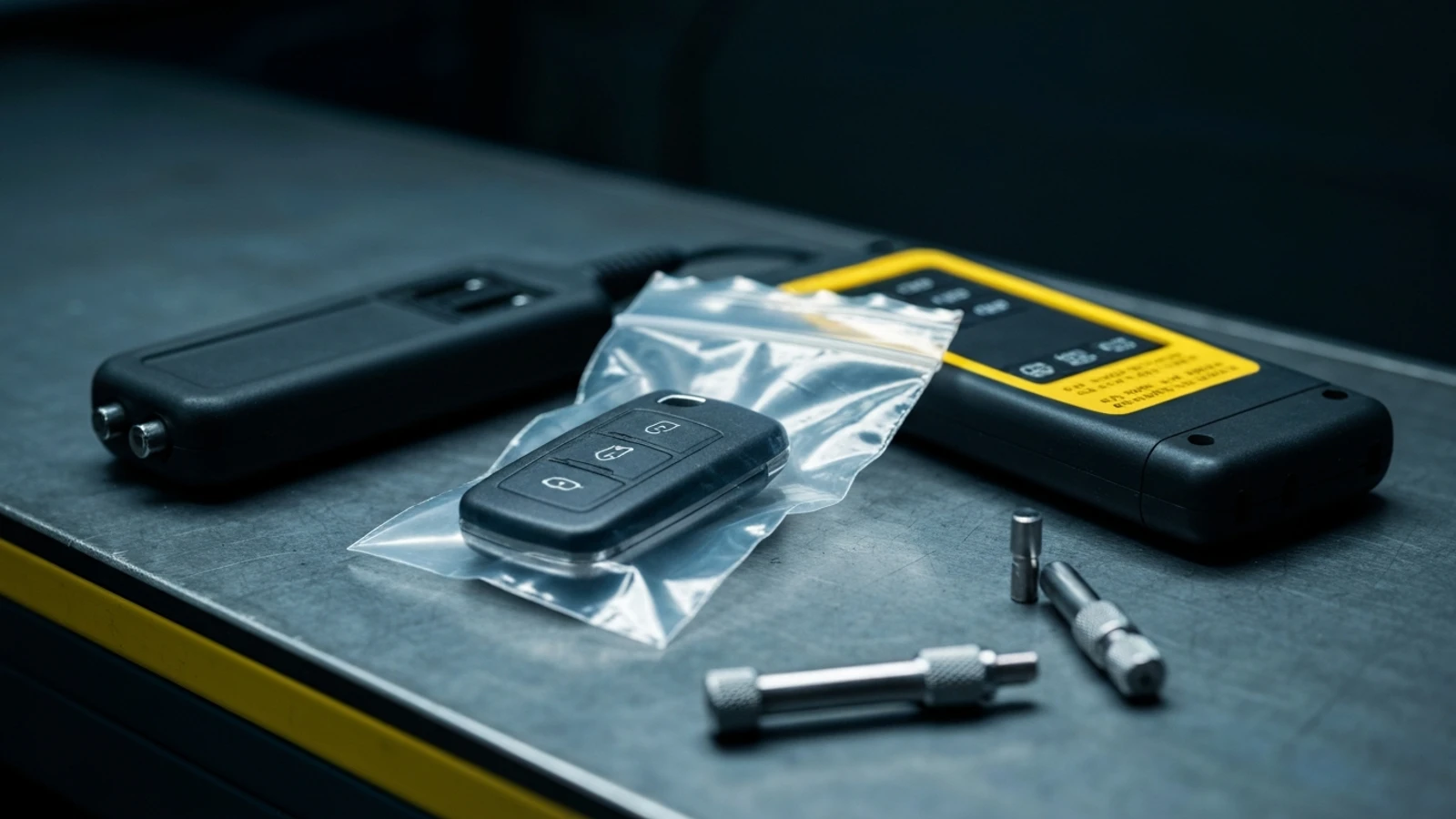
The logic is hard to argue with at first glance. A locksmith quotes $280 to $475 for a mainstream smart key. A search turns up the same-looking fob online for a fraction of that. Buy the part, pay someone to program it, keep the difference.
Sometimes that works. Often it produces a smaller saving than expected, and occasionally it produces a fob that will never pair to your car and a programming bill anyway. This guide lays out the actual arithmetic and the four failure modes, so the decision is made on numbers rather than on the gap between two headline prices.
All figures are as of August 2026 and reflect the ranges published across our service pages.
What you are actually comparing
The single most common error is comparing a part price to an all-in service price. They are not the same thing and never were.
An all-in locksmith quote covers three things: the fob itself, the emergency blade cut, and the programming labour. Buying a fob online replaces exactly one of those three. The other two still have to happen, at the vehicle, performed by someone with an immobilizer programmer.
| What you are buying | Online blank | Locksmith all-in |
|---|---|---|
| The fob hardware | Yes | Yes |
| Emergency blade cut to your locks | No | Yes |
| Immobilizer / BCM programming | No | Yes |
| Correct part verified for your VIN | Your responsibility | Theirs |
| Warranty if it fails | Seller's return policy at best | The job is warranted |
| Who absorbs a wrong-part failure | You | Them |
That last row is where the real money sits. If the shop supplies the fob and it turns out to be wrong, that is their problem to solve. If you supplied it, you have paid the labour and still have no key.
The arithmetic by key type
The saving is not uniform. It scales with how much of the total is hardware, and that varies enormously.
Basic transponder keys. A basic transponder blank costs $5 to $25 wholesale. The full job runs $180 to $260. Almost the entire price is labour and expertise, so there is essentially nothing to save by supplying the blank — and every failure mode still applies. This is the clearest "don't bother" case on the page.
Remote-only fobs. Reprogramming an existing fob runs $25 to $60; a new remote with programming runs $50 to $120. These are inexpensive, well-documented, and frequently non-immobilizer, which makes them the most forgiving category by a distance. If you are going to supply your own hardware anywhere, this is where it makes sense.
Mainstream smart keys. A smart fob blank costs $80 to $400 wholesale across the market, and the job runs $280 to $475. Here the hardware is a meaningful share, so a genuine saving exists — alongside the highest realistic failure rate, because these fobs have frequency and chip variations across trims and model years.
Luxury European smart keys. These run $450 to $850 through a locksmith, and quality independent supply is thin. This is the category where a suspiciously cheap listing most often indicates something other than a bargain.
The four ways it goes wrong
Each of these presents to you identically — a fob that simply will not pair — which is why they are worth knowing in advance rather than diagnosing afterwards.
Wrong frequency. Vehicles use different radio frequencies across markets and sometimes across trims of the same model. A fob on the wrong frequency is physically incapable of communicating with your car, and no programmer resolves it.
Wrong chip family. Immobilizer chips changed generation frequently. A model that used one architecture in 2011 may have moved to another by 2015. The fob case can be identical while the internals are not, and listings routinely describe fitment by year range too loosely.
Already paired. Some fobs arrive having previously been married to another vehicle. Depending on the system, that is either a reset the technician can perform or a permanent condition that makes the fob scrap. You cannot tell which from the listing.
Counterfeit internals. A correct-looking case containing components that do not meet the specification. These sometimes pair and then fail weeks later, which is the worst outcome of the four because it happens after everyone has gone home.
The question of warranty
This is the part most drivers do not think about until it matters.
When a locksmith supplies the fob, the whole job is theirs. If the key stops working next month, they sourced it, they fitted it, they resolve it. That is a real service with real value, and it is part of what the all-in price buys.
When you supply the fob, the technician can only warrant their labour — the programming was performed correctly. Whether the part continues to function is between you and a seller who may be in another country. Most shops are explicit about this, and the ones that are not should be asked directly.
There is a secondary consequence worth noting: if you later need an additional key, a shop that did not source the original may be reluctant to build on top of an unknown part. That is not obstruction; it is the same warranty logic extended.
Aftermarket is not the same thing
These two ideas get merged constantly and they are unrelated.
Aftermarket describes manufacture — a fob made by someone other than the vehicle manufacturer. Quality aftermarket hardware is entirely legitimate, widely used by professional shops, and often the reason a locksmith beats a dealer on price at all.
Customer-supplied describes purchase — who bought it and from where.
A locksmith fitting a quality aftermarket fob they sourced themselves gives you a lower price and a warranted job, because they control the supply chain and know which parts perform. That is the option most drivers are actually looking for when they start searching for cheap fobs online, and it is worth asking for by name.
Where it genuinely makes sense
Not never. The honest cases:
- Remote-only fobs on older vehicles, where hardware is cheap and pairing is simple.
- Vehicles where you already know the exact part number, ideally from a previous successful replacement on the same car.
- Spare keys, never emergencies. If the fob turns out to be wrong, you have lost time and a labour fee, not your ability to drive. Attempting this while stranded is how a bad afternoon gets longer.
- When the shop has confirmed in advance that they will program customer parts and has told you the exact specification required.
That last condition converts most of the risk into a manageable purchase. A shop that will name the part number and frequency has effectively done the hard part for you.
The hidden line: what a failed attempt actually costs
The saving calculation usually stops at "fob price versus all-in price." It should include a third number: what happens in the case where the part is wrong.
That scenario is not exotic. A technician arrives, connects the programmer, and the fob will not pair. What you have spent at that point:
- The programming labour, which was performed regardless.
- Any travel or drive-out charge for your address, covered in drive-out and mileage fees.
- The fob itself, pending a return that may or may not succeed with an overseas seller.
- The original problem, still unsolved, now with a second appointment to arrange.
Weigh that against the saving, multiplied by how confident you are in the part. If the expected saving is modest and the failure cost is roughly the price of the whole job, the arithmetic only works when you are genuinely certain of the specification.
This is also the reason to never attempt it in an emergency. A wrong part on a spare-key job costs you an afternoon. A wrong part while stranded costs you the day and you still need the original service. Our comparison of same-day versus scheduled appointments covers why urgency removes exactly the options that make this workable.
What "compatible" means in a listing
Listings describe fitment in ways that sound more precise than they are, and the vocabulary is worth decoding.
"Fits 2014–2019 [model]." A range spanning a mid-generation security change. The case fits every year in that span; the internals may only suit part of it.
"OEM equivalent." A claim about quality, not about compatibility. It says nothing about frequency or chip family.
"Unlocked" or "virgin." Means the fob has not been paired to a vehicle — genuinely useful, and the property you actually want. It does not confirm it is the right part for yours.
"Programmed to your VIN." Pre-flashing, not completion. On some vehicles it shortens the on-site step; on none does it remove the need for a technician at the car.
"Requires professional programming." The most honest phrasing on the list, and worth reading as a statement of fact rather than a disclaimer.
The single specification that resolves most of this is the part number and radio frequency your VIN requires. A locksmith can tell you both. Ordering against a year range instead is where the four failure modes come from.
The option most people are actually looking for
Step back from the mechanics for a moment, because the underlying goal is usually not "supply my own fob." It is "do not pay dealer prices."
Those are different problems with different solutions. A qualified mobile locksmith fitting a quality aftermarket fob they sourced themselves already sits 50 to 60 percent below dealership pricing on most vehicles — with the part verified against your VIN, the job warranted end to end, and no risk transferred to you. That is most of the saving people go hunting online for, available without the failure modes.
Ask for it by name: "Can you quote me with a quality aftermarket fob rather than OEM?" On mainstream platforms the answer is usually yes and the difference is real. On premium European vehicles the aftermarket supply is thinner, which is part of why those keys sit high on the ladder in push-to-start key costs.
Before you order anything
Four questions, one phone call:
- What is your all-in price with your fob? The number to beat.
- What is labour-only with mine? The real comparison, and often closer than expected.
- Do you warranty a customer-supplied part? Usually no — get it said out loud.
- What exact part number and frequency does my VIN require? Without this, you are guessing.
Then compare the two totals honestly, with the risk of a wrong part priced in rather than assumed away.
The summary
On a basic transponder, supplying your own blank saves almost nothing. On a remote-only fob, it is a reasonable and low-risk move. On a mainstream smart key it can save real money and carries real risk, and the deciding factor is whether you can confirm the exact part before ordering. On a luxury European key, the cheap listing is usually cheap for a reason.
If the goal is simply to pay less than a dealer, there is a lower-risk route to the same outcome: a qualified mobile locksmith fitting a quality aftermarket fob, warranted end to end, already sits 50 to 60 percent below dealer pricing on most vehicles. Our dealer versus mobile locksmith comparison covers where that gap comes from.
Want an all-in quote with the part sourced and warranted? Request a specialist and we will match you to a vetted local technician for your exact vehicle. Published ranges by brand are at vehicle makes, and smart key replacement covers proximity systems in detail.
Frequently asked questions
Will a locksmith program a fob I bought myself?
Most will attempt it, and most will not warranty it. That distinction is the whole issue. The technician's labour is charged whether or not your fob turns out to be programmable, so a blank with the wrong frequency or an incompatible chip costs you the programming fee and leaves you without a working key.
How much do I actually save?
Less than the fob's price, because programming labour is a separate cost that does not go away. Against a mainstream smart key at $280 to $475 all-in, supplying your own hardware typically saves a modest fraction once you pay for the on-site work — and you absorb the entire risk that the part is wrong. On a basic transponder, where the blank costs $5 to $25 wholesale, there is essentially nothing to save.
What are the most common failures?
Four recur constantly. Wrong radio frequency for your market or trim. Wrong immobilizer chip family for your exact model year. A fob already paired to another vehicle, which on some systems cannot be reset. And counterfeit internals in a case that looks correct externally. All four present identically to you — a fob that simply will not pair.
Does 'programmed to your VIN' in the listing mean it will work?
It means less than it sounds. Some sellers pre-flash certain data before shipping, which can shorten the on-site step on some vehicles. It does not complete the job, because pairing is a physical procedure performed at the car. A listing implying you will receive a ready-to-use key is describing something that does not exist for immobilizer-equipped vehicles.
Is aftermarket the same as buying online?
No, and conflating them causes bad decisions. Aftermarket describes who manufactured the fob; customer-supplied describes who purchased it. A locksmith can supply a quality aftermarket fob and warranty the whole job, because they control the sourcing. The risk in this article comes from the supply chain, not from the fob being non-OEM.
When does supplying my own fob genuinely make sense?
Mainly on older vehicles with cheap, well-documented remotes, and on remote-only fobs where no immobilizer pairing is involved. Reprogramming an existing or simple replacement remote runs $25 to $60, and the hardware is inexpensive and forgiving. The case weakens sharply as the vehicle gets newer and the fob gets more complex.
What should I ask a locksmith before ordering anything?
Ask what the all-in price is with their fob, what the labour-only price is with yours, and whether they warranty a customer-supplied part. Ask for the exact part number and frequency your vehicle requires. If they will not name a part number, that is a signal — and if they will, you have what you need to compare honestly.