Drive-Out and Mileage Fees: What the Travel Line Actually Covers
The travel charge is the most misunderstood line on a mobile locksmith invoice — and the one most often added at the end rather than quoted up front. Here is what it pays for, when it is legitimate, and how to get it disclosed before dispatch.
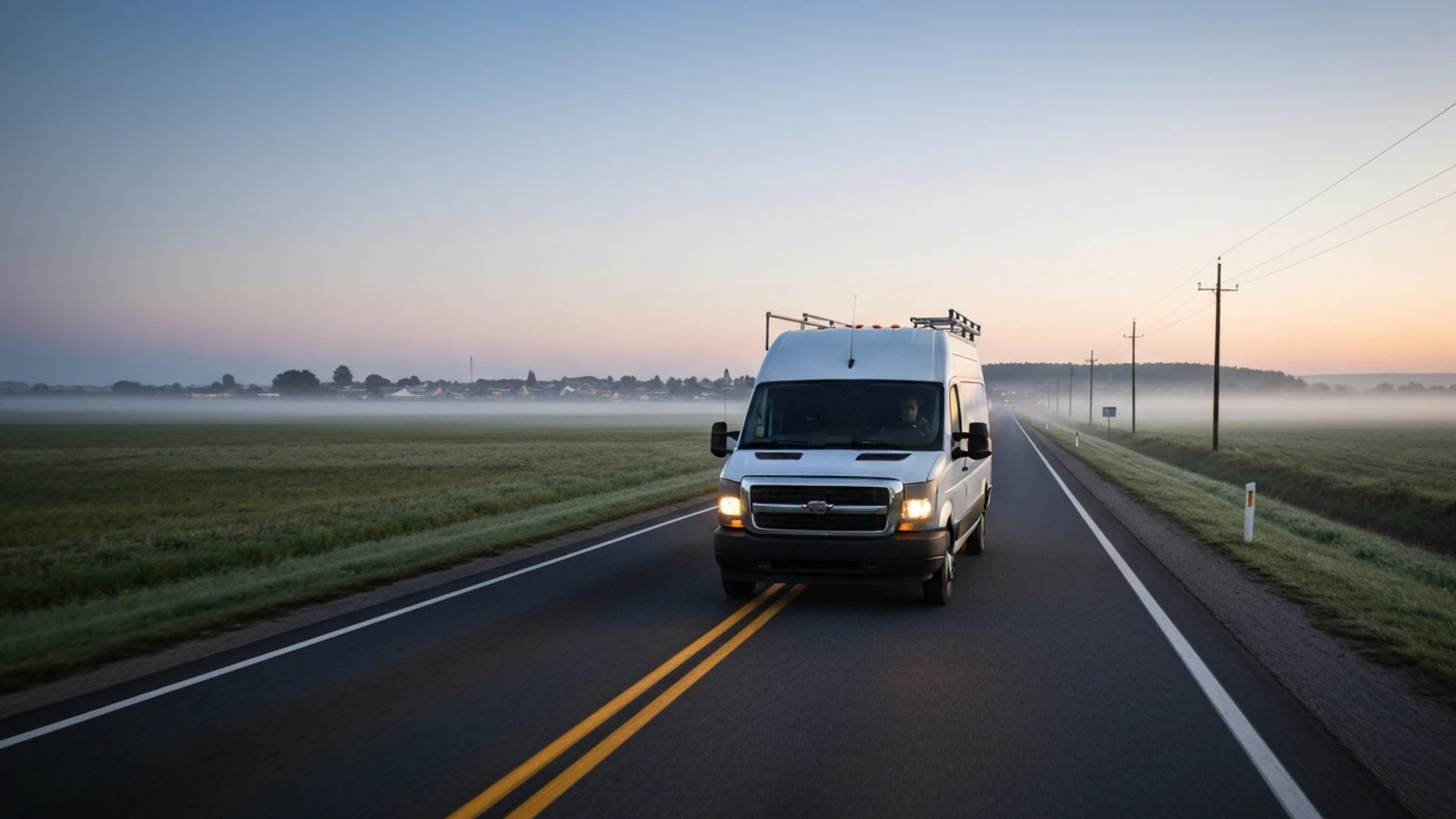
Of every line on a mobile locksmith invoice, the travel charge generates the most complaints — and not usually because it is unreasonable. It generates complaints because it frequently arrives late, appearing after the technician is already at the car and the driver has stopped comparison-shopping.
The charge itself is normally legitimate. Its timing often is not. This guide explains what the line actually pays for, when you should expect one, and the single question that removes the surprise entirely.
Figures below are as of August 2026 and reflect the ranges published across our service pages.
Why mobile work has a travel component at all
A storefront locksmith has one overhead structure: premises, equipment, staff. Every customer walks into the same building, so travel is not a variable.
A mobile technician inverts that. The workshop is the van, and the van has to reach you before any billable work starts. On a job twelve minutes away, that overhead is small and gets absorbed into the service price — which is why most published mobile pricing is genuinely all-in inside a normal service radius.
On a job fifty minutes out, the arithmetic changes. That is an hour and a half of round-trip driving during which nothing is earned, plus fuel and vehicle wear, attached to a job that might itself take forty minutes. Absorbing that into a flat price would mean charging every nearby customer for the distant ones.
So beyond a certain radius it becomes a stated line. That is the honest version. The dishonest version is the same charge, undisclosed, applied on arrival.
What normally is and is not included
| Situation | Travel line expected? | What you should hear before dispatch |
|---|---|---|
| Address inside the shop's normal radius | No | The all-in price, full stop |
| Outlying suburb or rural address | Yes | A specific dollar figure, agreed in advance |
| After-hours or overnight callout | Sometimes | Any premium stated separately from travel |
| Second visit for the same job | No | Return trips on incomplete work are the shop's cost |
| Job cannot be completed on arrival | Policy-dependent | Ask what applies before you book |
| You drive to a storefront | No | No travel component exists |
The fourth row matters more than it looks. If a technician has to come back because the first visit did not finish the job, that return trip is a consequence of the shop's own work. A second travel charge for it is not a distance charge — it is charging you twice for one job.
The one question that settles it
Ask this before anyone is dispatched:
"Is that number all-in for my address, including any drive-out or mileage charge?"
The phrasing matters. "Is that the total?" invites a yes that quietly excludes travel. Naming the address and naming the charge closes both gaps.
A shop that operates transparently will answer immediately and specifically — a figure, or a clear "no travel charge to you." A shop that answers with a range, or defers until the technician sees the vehicle, has told you something useful about how the rest of the invoice will behave.
This is the same discipline that protects you on the main service price. A quote given without establishing your key type is not a quote; a quote given without establishing your address is incomplete in the same way.
How travel interacts with the rest of your price
It helps to see where the line sits relative to everything else. Published mobile ranges are:
| Service | Mobile locksmith |
|---|---|
| Vehicle lockout, no key needed | $50 – $150 |
| Spare basic transponder key | $140 – $220 |
| Lost basic transponder, all keys gone | $220 – $320 |
| Spare smart proximity key, mainstream | $240 – $400 |
| Lost smart proximity, all keys gone | $320 – $475 |
| Spare luxury European smart key | $420 – $750 |
| Lost luxury European, all keys gone | $550 – $1,200 |
Against those numbers, a travel line on a distant address is a real but secondary cost. The variables that move your total far more are your key type and whether a working key still exists — the all-keys-lost surcharge alone runs $100 to $250, which on most jobs exceeds any reasonable travel charge.
Which is worth keeping in proportion. Drivers sometimes negotiate hard on a travel line while accepting a service price that is several hundred dollars above the published range for their vehicle. The travel charge is the visible line; it is rarely the expensive one.
Rural and outlying addresses
If you live outside a metro core, expect a travel line and treat it as normal rather than as evidence of being taken advantage of.
The economics are unavoidable. A technician covering a wide territory drives further per job, and there are fewer jobs within reach on any given day. What you should insist on is that the charge is stated before dispatch, not that it does not exist.
One practical note: response times outside metro cores are longer, and any shop promising a suspiciously fast arrival to a genuinely remote address is either mistaken about where you are or telling you what you want to hear. Confirm the address and the estimated arrival window in the same conversation as the price.
Our state and city pages list where our vetted specialists operate — Texas, California, Florida, Ohio, Georgia and ten more, each linking through to metro-level coverage.
The storefront alternative
There is one clean way to remove the travel line entirely: drive to the locksmith instead.
This works only if the vehicle starts, which means it applies to planned spares and not to emergencies. But for a spare key it is a genuinely cheaper route — no travel component, and often a shorter wait than a mobile slot.
It is also the cheapest version of key replacement in every other respect, because a spare made while your current key works avoids the all-keys-lost surcharge. Two savings, one decision, available only in advance.
Why the charge exists at all: the empty half of the trip
There is an asymmetry in mobile service that explains the line better than any pricing theory.
A technician driving to you is working. A technician driving back is not, and cannot be — nobody is at the other end of that journey. So every mobile job carries a return leg that produces nothing, and on a distant call that dead half can exceed the billable time at the vehicle.
Consider the shape of a genuinely remote job. Fifty minutes out, forty-five minutes of work, fifty minutes back. That is roughly two and a half hours of a technician's day for forty-five minutes of billable labour. Absorbing that into a flat rate means every nearby customer subsidises it.
This is also why travel charges do not scale with the value of your vehicle. Distance is distance. A quote that expresses the travel line as a percentage of the job rather than as a figure has stopped describing the cost it is supposedly recovering.
How to reduce or remove it
Four practical levers, in descending order of usefulness.
Drive to them. A locksmith storefront has no travel component at all. This only exists as an option if the car starts — which is one more reason a spare key made in advance saves money in more ways than the obvious one.
Ask about coverage before assuming. Some shops maintain technicians positioned across a wide area rather than dispatching from one point. If you are on the edge of one territory you may be well inside another. It is worth asking two shops rather than accepting the first travel figure as the market rate.
Combine the visit. If you need a spare key made and you were going to need one anyway, having both done on a single visit spreads one travel charge across two pieces of work. On an outlying address that is a genuine saving.
Book normal hours. Travel and after-hours premiums are separate lines, and they compound. A distant address at 11 p.m. is the most expensive version of any job on this page.
What the charge should never be doing
Three things worth naming, because a travel line is a convenient place to hide them.
It should not be recovering an unrealistically low headline price. If the service figure sits well below every published range and the travel line is unusually large, those two facts are related.
It should not be appearing on a return visit caused by incomplete work. Per ALOA service standards, the job should be completed in a single visit with every function verified before the technician leaves. If a second trip is needed because the first one did not finish, that trip is the shop's cost.
It should not be undefined at the point of dispatch. Every other line on the invoice is knowable in advance from your VIN and your key type. So is this one, from your address.
Warning signs on the travel line
A few patterns are worth recognising, because they tend to travel together:
- A headline price well below every published range, quoted without asking your key type or your address. The gap gets recovered somewhere, and travel is a convenient place.
- "We'll sort that out when we get there." Any charge that cannot be named in advance is a charge designed not to be compared.
- A "diagnostic fee" on a key job. The diagnosis is which key does this car take, and it is answerable from the VIN over the phone.
- Travel quoted as a percentage rather than a figure. Distance does not scale with the value of your vehicle.
None of these are proof of bad faith on their own. Together they describe a quote that is not really a quote.
Before you agree
Four things, in one phone call:
- Confirm your key type and whether any working key exists.
- Give your address and ask specifically about a drive-out or mileage charge.
- Have your VIN ready so the shop can quote the service accurately.
- Ask what happens if the job cannot be completed on arrival.
Do those four and the travel line stops being a surprise and becomes what it should have been all along: a disclosed, comparable number you agreed to before anyone got in a van.
Want a quote with the travel line stated up front? Request a specialist and we will match you to a vetted local technician for your exact vehicle and address. You can also read how the matching process works.
Frequently asked questions
What is a drive-out fee actually paying for?
The technician's travel time and vehicle cost to reach you, on a job where the workshop is the van. Unlike a storefront, a mobile technician earns nothing during the drive, and fuel and vehicle wear are real costs on a long call. On short in-metro runs that overhead is absorbed into the service price. Beyond a certain radius it becomes a stated line instead.
Should there be a travel charge at all if I am inside the city?
Usually not as a separate line. Most mobile shops build a normal service radius into their published pricing, and within that radius the quoted all-in figure is the whole figure. A travel charge appearing on an ordinary in-metro address is worth questioning before you agree to it.
How much should a legitimate drive-out charge be?
It varies by distance and there is no single published rate, which is exactly why it must be quoted specifically before dispatch rather than described vaguely. What makes a charge legitimate is not its size but its timing: a stated dollar figure agreed before anyone drives is legitimate, and a number that first appears when the technician is standing at your car is not.
Is a service call fee the same as a drive-out fee?
Not always, and the overlap causes real confusion. Some shops use 'service call' to mean the travel charge. Others use it to mean a minimum callout that applies whether or not work proceeds. Ask which one you are being quoted, and specifically ask whether it is credited against the job if you go ahead.
Do I pay travel if the technician cannot complete the job?
This is the question to settle in advance, because practice varies. A shop that arrives and discovers your vehicle is one of the restricted models requiring a dealer has still made the trip. A reasonable policy states clearly what happens in that case, and a good shop reduces the odds by asking for your VIN before dispatch — which usually surfaces that problem over the phone instead.
Does a travel charge mean the shop is overcharging?
No — an undisclosed one does. A transparent travel line on a genuinely distant address is honest pricing. What should concern you is a headline price that looks unusually low, quoted without a key type or an address check, which is the classic shape of a number built to grow once someone arrives.
Can I avoid the travel charge entirely?
Sometimes, if your car still drives. A locksmith storefront visit has no travel line at all, which makes it a genuinely cheaper route for a planned spare key. That option disappears the moment the vehicle cannot be started, which is why a spare made in advance saves money in more ways than one.