Drove Off Without the Key Fob: What Happens and How to Get Home
Your push-to-start car is running and the dash says the key is not in the vehicle. What the car will and will not do, why you should not switch it off yet, and what each way out costs.
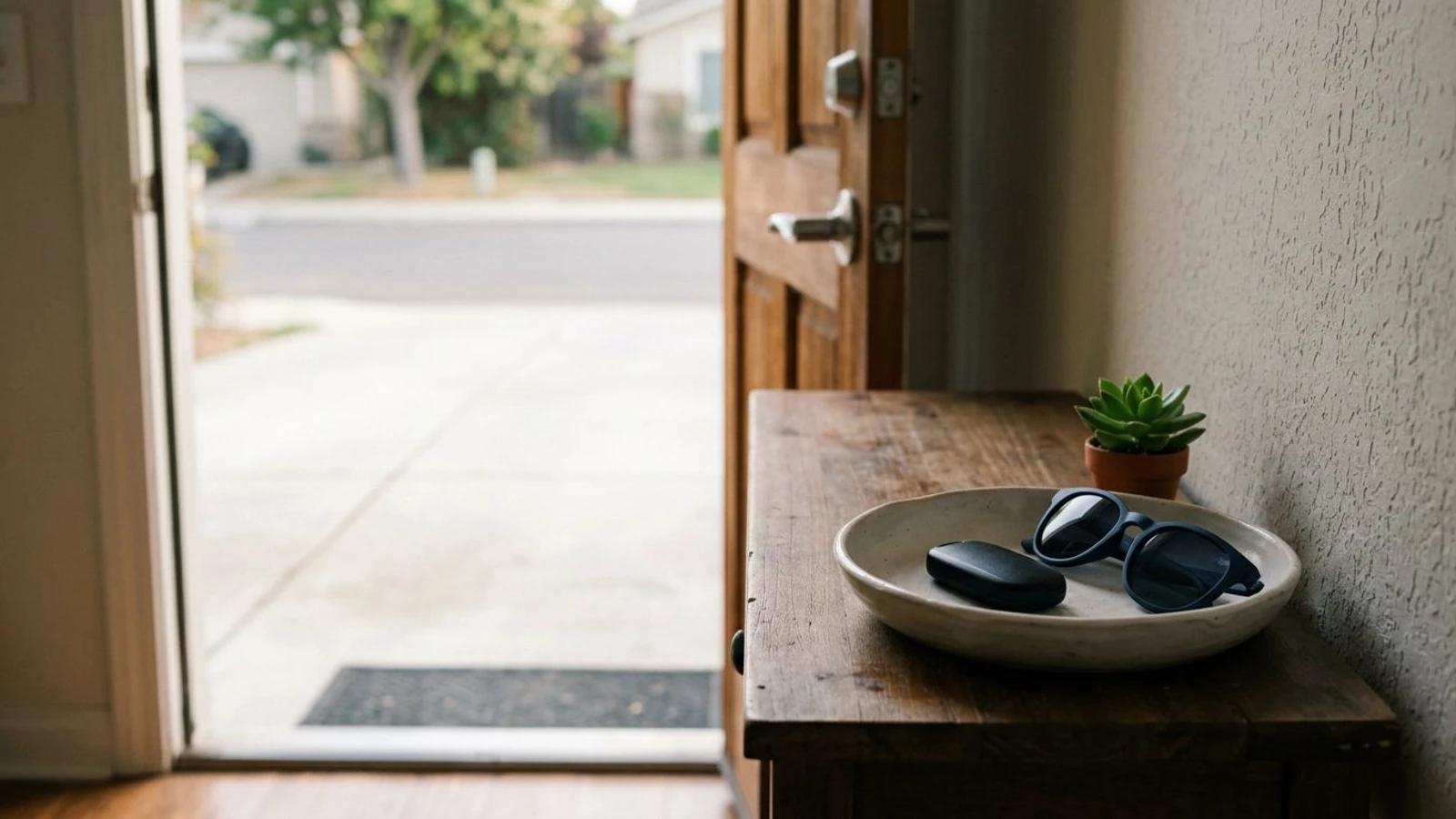
If you drive off without the key fob, a push-to-start car will almost always keep running, show a warning that the key is not in the vehicle, and refuse to restart once you switch it off. So the first rule is simple: do not switch the engine off until the car is somewhere it can stay, or until the fob is back inside it. As of October 2026, the fixes range from free (someone brings you the key) to $280 to $475 for a new smart key made on the spot.
It happens more easily than it sounds. One person starts the car and gets out with the fob in a pocket while another drives away. A fob is handed over at the curb and goes back into the house in someone's bag. The fob is on the roof, or in a jacket that got left at the restaurant. The car was started with the fob nearby and has no way of stopping you leaving. This guide explains what the car does, what to do in each situation and what each way out costs.
What the car actually does
A proximity key system has two jobs. At start-up, it confirms that a registered fob is inside the cabin before it lets the engine run. After that, it keeps listening, but it does not depend on the fob to keep going.
If the fob leaves, most cars respond with a dash message such as Key not in vehicle, Key not detected or Key has left the vehicle, often with a chime that repeats when a door closes. What they do not do is cut the engine. A car that stalled the instant it lost contact with a fob would shut down in traffic every time a fob battery died, and no manufacturer wants that.
The exact behaviour, including how loud the warning is and when it repeats, varies by make and model. Your owner manual is the authority for your car. But the planning assumption is the same everywhere: the engine will run until you stop it, and then it will not start again without a key.
That is the trap. The car gives you a quiet warning at the start of the journey and the consequence at the end of it.
What to do, by situation
| Where you are | What to do | What it costs |
|---|---|---|
| Just pulled away, fob is at the house | Turn round with the engine running and collect it | Nothing |
| Far from the fob, engine still running | Drive to a safe place the car can stay; have the fob or a spare brought to you before switching off | Nothing, or a courier or ride fare |
| Engine off, fob is nearby but its battery may be flat | Try the backup start position | Nothing |
| Engine off, fob is hours away, a spare exists | Have the spare brought, or use a phone digital key if set up | Travel or shipping |
| Engine off, no fob can reach you | New key programmed where the car sits | $280 – $475 mainstream; $450 – $850 luxury European |
| Car locked, you only need something inside | Lockout visit | $50 – $150 |
| Dealer route for a new key | Tow, then key | Dealer price plus a $75 – $200 tow |
The prices are the bands published on our smart key replacement and automotive locksmith pages.
If you notice while the engine is still running
This is the good version of the problem, and the whole aim is to keep it that way.
Do not switch off. Not at a red light with stop-start, which the car manages itself, but deliberately, with the button. Leave it running.
If the fob is close, go back for it. Ten minutes of driving in the wrong direction is cheaper than every other option on this page.
If the fob is far away, decide where the car should end up. Home, your workplace, or a friend's driveway are all better than a highway rest stop or a paid parking lot. Once you switch off, the car stays where it is until a key arrives.
Think before you stop for fuel. Most fuel stations and owner manuals tell you to switch the engine off while refuelling. If you are low on fuel and far from the key, that is a real constraint: plan your stopping point around it rather than discovering it at the pump.
Do not leave the car running unattended. A running car with no key inside can be driven away by anyone, and in many places leaving a vehicle idling unattended is also against the law.
Call ahead for the key. While you are still driving to your safe place, hands-free, get whoever has the fob moving toward you. The two journeys can happen at the same time.
If you have already switched off
Work through these in order. The first three cost nothing.
1. Make sure the fob is really gone
Check your pockets, every bag in the car, the seats, the trunk and the roof. A surprising number of "left behind" fobs are in the car, shielded by a phone, a laptop or a metal flask in the same bag. If the car showed no warning during the drive, the fob probably is in the vehicle and something else is wrong.
2. Try the backup start
Every push-to-start car has a way to start with a fob whose battery is dead: holding the fob against the start button, against a marked spot on the steering column, or in a designated slot or tray. If the fob is present but flat, this starts the car. Our guide to key not detected on a push-to-start car lists the usual positions and the checks to run if it fails.
If the fob has been getting weaker for weeks, the battery is the likelier story than a missing key. Our guide to a key fob that only works up close explains that pattern.
3. Use what the car already offers
Many newer vehicles support a phone-based digital key or a manufacturer app that can unlock and, on some models, start the car. If you set that up when you bought the car, now is when it pays off. If you did not, it usually cannot be set up without a working key present, so it will not rescue you today.
Some connected-services subscriptions can unlock a car remotely. Unlocking is not starting. It gets you a bag from the back seat, not home.
4. Get the fob or a spare to you
If a spare exists anywhere, this is normally the cheapest real fix. A family member driving it over, a courier, or an overnight parcel all cost less than a new key. If the car is somewhere safe and legal to leave, waiting a day for a parcel is a reasonable choice.
5. Have a key made where the car sits
If no key can reach you in a useful time, a mobile specialist can program a new one on site. As of October 2026, a smart proximity key runs $280 to $475 on mainstream brands and $450 to $850 on BMW, Mercedes and Audi.
Ask one specific question when you call: does the all-keys-lost surcharge apply? From the car's point of view, no working key is present, even though one exists at home. Programming a key into a car with no working key in it is the longer procedure, and our lost car keys page lists that surcharge at $100 to $250. Our guide to what the all-keys-lost surcharge covers explains why the job is different.
There is one upside. When you get home you will have two working keys, the original and the new one, and a second key is something most owners should have anyway.
Mobile specialist or dealer?
For this particular problem the difference is mostly about the tow.
| Mobile specialist | Dealership | |
|---|---|---|
| Comes to the car | Yes | No, the car is towed in |
| Smart key, mainstream brand | $280 – $475 | $450 – $750 |
| Smart key, BMW / Mercedes / Audi | $450 – $850 | $700 – $1,300 |
| Tow | Not needed | $75 – $200 before work begins |
| Time on site | 45 – 90 minutes | Depends on the service queue |
A dealer is still the right call if the vehicle is one of the few that are dealer-only, if it is under a warranty or plan that covers keys, or if it is already close to one. Our comparison of who can actually program a car key sets out the options, and our guide to same-day versus scheduled appointments explains what urgency does to the price.
The likely causes, so you can rule them out
Not every "key not in vehicle" message means the key is not in the vehicle.
The fob really was left behind. The warning appeared at or just after setting off, usually as a door closed. This is the case the rest of this guide is about.
The fob battery is weak. The warning comes and goes, often worse in cold weather, and the fob has been losing range. A new coin cell fixes it. Our guide to car key problems in cold weather covers why a marginal cell fails on a cold morning.
Something is blocking the signal. A fob in a bag with a phone, a laptop or a metal container, or inside a signal-blocking pouch, can drop out. Move it to the cup holder and see whether the warning clears.
The car's own antenna is at fault. If the warning appears with the fob in plain view, with a fresh battery, and with a second fob as well, the fault is on the vehicle side. That is a diagnostic visit, not a new key. Our guide to a smart key that will not unlock the door handle describes the related door-side fault.
When to call a professional
- The engine is off, the car will not restart, and no fob or spare can reach you in the time you have.
- The backup start position does not work with a fob you are sure is present.
- The warning appears even with the fob beside the start button and a fresh battery in it.
- You are locked out and need something from inside the car.
If the car is still running and the fob is reachable, you do not need anyone. You need to not switch off.
Stopping it from happening again
- Keep the spare fob somewhere different from the main one. A spare on the same hook gets left behind with it.
- Set up the phone key or app if your car supports one, while you have a working key to authorise it.
- Do not hand the fob through the window of a running car. Switch off, or keep the fob in the car.
- Take the chime seriously. It is the only warning you get, and it comes at the one moment the fix is free.
- Add a second key if you only have one. A spare made with a working key present is the cheap version of this job.
Getting help where the car is
Tell whoever you call the year, make and model, that it is push-to-start, that the working fob exists but is not with the car, and where the car is parked. That last detail matters: a specialist needs to know whether the car is in a parking lot with restricted hours or at the roadside. We match drivers with vetted automotive specialists across 15 states, including California, Florida, New York and North Carolina. Start at get help, or read how it works first.
Frequently asked questions
What happens if you drive off without the key fob?
On most push-to-start cars the engine keeps running. The car shows a warning such as key not in vehicle or key not detected and usually sounds a chime, but it does not shut the engine off while you are driving, because cutting power in traffic would be dangerous. The problem arrives when you switch off: without the fob, the car will not restart.
Will the car turn off by itself if the key fob is not inside?
Generally no, not while it is being driven. Manufacturers design proximity systems to check for the key at start-up and to warn rather than stall if it leaves afterward. Behaviour varies by model, so treat the owner manual as the authority, but you should assume the engine will keep running until you switch it off.
How far can you drive without the key fob?
As far as the fuel or charge lasts, on most vehicles. There is typically no distance limit, only the warning. That is exactly why it catches people out: the car drives normally for an hour and then cannot be restarted in a parking lot far from the key.
What should I do if I notice while I am still driving?
Do not switch the engine off. If you are close to where the fob is, turn round and go back with the engine running. If you are far away, drive to somewhere safe where the car can stay, and arrange for the fob or a spare to be brought to you before you switch off. If you must stop for fuel, check whether your car allows refuelling with the engine running; many stations and manuals advise against it.
I already switched off and the car will not restart. What now?
First check the fob really is missing: look in bags, coat pockets and the trunk. Then try the backup start position in case the fob is present with a flat battery. If the fob is genuinely somewhere else, your options are to have it or a spare brought to you, to use a phone-based digital key if your car has one set up, or to have a specialist program a new key where the car sits.
How much does it cost if I need a new key made on the spot?
As of October 2026, a smart proximity key through a mobile specialist runs $280 to $475 on mainstream brands and $450 to $850 on BMW, Mercedes and Audi, per our service pages. If the original fob still exists and is simply at home, the new key is being added to a car that has no working key present, so ask whether the all-keys-lost surcharge of $100 to $250 applies.
Can the car be unlocked if the fob is at home and I locked it?
Yes. A lockout visit, where the car is opened without making a key, runs $50 to $150 through a mobile specialist. That gets you into the car but does not start it. It is only useful if what you need is something inside, such as a bag or a spare key.
How do I stop this happening again?
Keep the spare fob somewhere other than the usual key hook, set up the manufacturer's phone key if your car supports it, do not leave the car running while someone carries the fob away, and treat the key not in vehicle chime as a reason to stop and check rather than a nuisance to ignore.