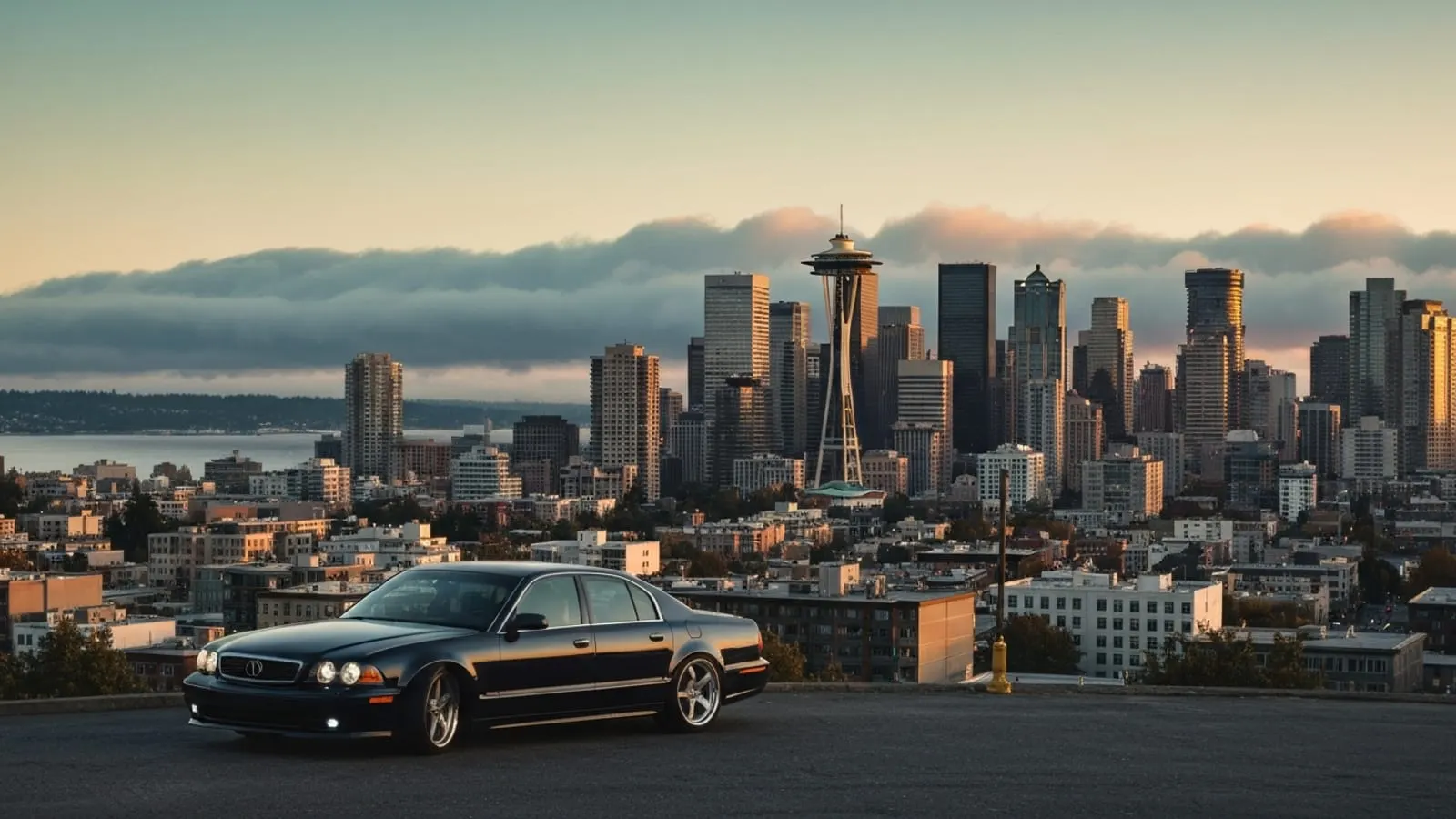
Lost Car Keys in Seattle? Get a Vetted Local Specialist
From Capitol Hill to Ballard and out to South Lake Union and Boeing Field, CarKeyNation matches Seattle drivers to vetted mobile automotive key specialists who carry the right tools for your make — including the Tesla and Rivian density the Puget Sound is known for.
Car key emergencies in Seattle
Seattle is Washington's largest city with an estimated 749,256 residents per the U.S. Census Bureau ACS 2020 decennial count, and the seat of King County's broader 2.3 million-person metro footprint. The city itself fits inside a narrow north-south corridor wedged between Elliott Bay and Lake Washington, but the practical service area for any Seattle-based mobile automotive locksmith extends from Shoreline in the north through Renton and SeaTac in the south, and from West Seattle across the I-5 / I-405 corridor out to the Eastside suburbs of Bellevue, Redmond, and Kirkland. CarKeyNation routing accounts for the bridge bottlenecks (I-90 floating bridge, SR 520, West Seattle Bridge) and the freeway congestion that defines Seattle drive-times during commute hours.
Seattle's anchor institutions shape the call mix in a way that distinguishes it from any other Puget Sound metro. The downtown Amazon and South Lake Union tech corridor drives a dense corporate-fleet population that skews young, EV-heavy, and disproportionately Tesla-Model 3/Model Y per the registration data the Washington Department of Licensing publishes for vehicle title and registration counts. Boeing Field (King County International Airport) and the adjacent Georgetown / South Park industrial belt drive a fleet-truck and aviation-support workforce. The University District (UW) and Capitol Hill drive a young commuter-import population. Ballard's maritime industries and the working waterfront drive a separate truck-and-utility-vehicle population. Each of those subpopulations has different typical key-failure patterns, and our routing assigns the partner whose tooling matches.
Per the NICB Hot Spots Report, Washington consistently ranks in the top tier of U.S. states for total vehicle thefts, with the Seattle-Tacoma-Bellevue metro carrying the majority of that volume in absolute terms. Per-capita theft exposure in Seattle proper sits well above the national median, and a meaningful share of Seattle calls we route are all-keys-lost post-theft jobs where the recovered vehicle still has a missing or duplicated key and needs an immobilizer reset before it is safe to use again.
The most common Seattle scenarios we route are: lost or damaged smart key for a Tesla Model 3 or Model Y (frequently a key-card re-pair plus phone-key reset rather than a fob program); proximity smart-key all-keys-lost on a 2018+ Honda, Toyota, or Subaru (Subaru over-indexes hard in Seattle versus national averages); BMW comfort-access key for the Capitol Hill / Madison Park / Mercer Island affluent corridors; Audi advanced-key for the same corridors; Ford F-150 / Super Duty PATS programming for the working-fleet population in Georgetown, SoDo, and Ballard; and dead-fob diagnoses (more on this in the climate section below) where the existing key simply needs a battery and re-sync, not a full replacement program.
Seattle neighborhoods we cover
Seattle is a neighborhood-dense city, and partner dispatch in Seattle is more granular than in any other Washington metro. CarKeyNation partners cover the full 98101-98199 ZIP range within Seattle proper, plus the inner-ring suburbs in King and southern Snohomish counties.
- Downtown / Pioneer Square / Belltown (98101, 98104, 98121)
- South Lake Union / Cascade / Eastlake (98109, 98102)
- Capitol Hill / First Hill / Madison Park (98102, 98112, 98104)
- University District / Wallingford / Fremont (98103, 98105)
- Ballard / Crown Hill / Phinney Ridge (98107, 98117, 98103)
- Queen Anne / Magnolia / Interbay (98109, 98119, 98199)
- Beacon Hill / Mount Baker / Columbia City (98108, 98144, 98118)
- West Seattle / Alki / Admiral / Delridge (98116, 98126, 98106)
- Rainier Valley / Hillman City / Rainier Beach (98118)
- Georgetown / SoDo / Industrial District (98108, 98134)
- Northgate / Lake City / Maple Leaf / Greenwood (98115, 98125, 98133)
Beyond Seattle proper, the network covers Shoreline and Lake Forest Park to the north, Burien and Tukwila to the south, Mercer Island across the I-90 floating bridge, and the inner Eastside (Bellevue, Kirkland, Redmond, Bothell) when bridge traffic permits. Partners based on the Eastside have their own dedicated coverage in those metros; this Seattle page is for partners whose primary service area is Seattle city proper.
Boeing Field (BFI) and the Georgetown / South Park industrial corridor have specific dispatch nuance: secured airside parking requires badge access, and partners cannot promise turnaround inside the secure perimeter without prior coordination with the airport authority or the relevant tenant company. The same applies for the Port of Seattle Terminal 5 and Terminal 18 working waterfront — secured-gate access is a confirmation question we ask up-front so the customer knows whether the vehicle must be moved to an off-port parking area before the partner arrives.
What it costs in Seattle
Seattle automotive key pricing in 2026 sits at the higher end of the national range, reflecting the Seattle-Tacoma-Bellevue metro's top-decile BLS-tracked labor-cost base per BLS OEWS metro data for skilled trades. The tech-corridor density also means a heavier proportion of premium-OEM jobs (Tesla, Audi, BMW, Mercedes, Porsche) where the tooling and parts costs are themselves above the U.S. median.
Typical CarKeyNation specialist ranges in Seattle (mobile, on-site, including programming):
- Basic transponder spare (2005-2015 Camry/Civic/Outback/Forester): $140-$215
- Smart Key spare with working master present (2018+ Toyota/Honda/Subaru): $215-$345
- Smart Key all-keys-lost (2018+ Toyota/Honda/Subaru): $285-$465
- Tesla Model 3 / Y key card re-pair and phone-key reset: $145-$255
- Tesla Model S / X (older) key fob program: $245-$425
- BMW comfort access all-keys-lost (2007+): $395-$795
- Mercedes-Benz FBS3/FBS4: $295-$945
- Audi advanced key (2010+): $385-$745
- Porsche Macan / Cayenne / Taycan proximity: $425-$795
- Ford F-150 / Super Duty PATS programming: $185-$385
- GM Hitag2 / PASS-Lock relearn (Silverado/Sierra/Tahoe): $235-$415
- Subaru rolling-code programming (Outback/Forester/Crosstrek): $215-$385
- Rivian R1T / R1S key card or fob program: $295-$525
- Hyundai/Kia 2011-2021 immobilizer reset post-theft recovery: $255-$425
- Ignition cylinder rekey or replacement: $185-$385
- Dead-fob battery replacement + re-sync: $35-$85
Dealer pricing in Seattle for the same jobs runs 50-130% higher per the OEMs' own owner portals, plus the tow if the car is not drivable. Major Seattle-area Tesla service centers, BMW Seattle, Mercedes-Benz of Seattle, Audi Seattle, and the Toyota / Honda / Subaru dealerships across the metro publish menu rates that show the structural gap. Per the FTC Consumer Alert on locksmith scams, any starting-at-$19 or starting-at-$29 ad is a near-certain bait-and-switch — and Seattle sees its share, particularly aimed at downtown and South Lake Union searchers who are time-pressured.
Tesla pricing deserves a specific note: the most common Tesla call we route in Seattle is a customer who lost both key cards or whose phone-key access broke after a software update. In most cases the fix is an on-site key-card re-pair plus phone-key reset that runs $145-$255. Owners often default to driving to a Tesla service center and waiting weeks, but a mobile specialist can handle the same procedure in 30-45 minutes in your South Lake Union office garage.
How to avoid Seattle locksmith scams (Washington has no state license — but RCW 19.355 helps)
Washington has no state-level occupational license for locksmiths. There is no WA equivalent of California's Bureau of Security & Investigative Services (BSIS) LCO license, no equivalent of Texas's DPS Private Security Bureau registration, no equivalent of North Carolina's NC Locksmith Licensing Board. The state has, however, addressed the locksmith-scam problem head-on through Chapter 19.355 RCW (Locksmith Services), which targets the specific abusive-advertising patterns the FTC has flagged nationally. This makes Washington materially better than the average no-license state — but Seattle consumers still carry meaningful vetting burden.
What RCW 19.355 specifically requires of any locksmith doing business in Washington (Seattle included):
- Conspicuous display of either a WA business license number issued by the state or a local government, or the state unified business identifier (UBI) number on all advertising and the business website.
- Prohibition on listing a local Seattle phone number while forwarding calls outside the local calling area without conspicuously disclosing the actual call-center locality and state.
- Prohibition on using a business name that misrepresents the geographic location without disclosing the actual locality and state of operation.
Violations are actionable under Chapter 19.86 RCW (the WA Consumer Protection Act), which gives the Washington Office of the Attorney General Consumer Protection Division and private litigants the ability to pursue injunctions, treble damages, and attorney fees. This is the primary statutory tool Washington consumers have, and it directly attacks the out-of-state call-center bait-and-switch pattern that dominates national locksmith fraud.
What to verify in Seattle in the absence of a state occupational license:
- WA UBI / business license number — displayed in advertising per RCW 19.355. Verify the UBI is active and the business is in good standing via WA DOR Business Licensing Service.
- Washington Secretary of State business registration — confirm the company is an active WA corporation, LLC, or registered foreign entity.
- Washington Department of Labor & Industries (L&I) contractor / business status — verify the business is current with workers' comp and unemployment insurance.
- City of Seattle business license — required for any business operating within Seattle city limits. The City of Seattle business license tax certificate is a separate filing from the state UBI.
- ALOA membership — verify on aloa.org.
- NASTF VSP credential — required for modern OEM-restricted programming (Mercedes FBS3/FBS4, BMW CAS4+/FEM, Tesla restricted procedures, Land Rover, FCA Security Gateway). Verify on nastf.org.
- BBB rating — the BBB Serving the Northwest + Pacific covers Seattle. Check the operator's accreditation status and complaint history.
- Certificate of Insurance and bond — request the COI from the commercial liability carrier directly.
Seattle-specific red flags we hear from customers who called us after a bad experience:
- Unbranded van responding from a Google ad with a 206 number that turns out to be a call-center forwarding service in another state — exactly the pattern RCW 19.355 is designed to attack.
- Quotes that triple on arrival, with the technician claiming high-security chips that most locksmiths cannot handle.
- Drilling pushed as the only option on a Toyota, Honda, or Subaru whose ignition is, in reality, pickable by any competent locksmith.
- Refusal to display a WA UBI or business license number in writing — a direct RCW 19.355 violation.
- Cash-only with no receipt and no Washington entity name on paperwork — leaves you no recourse with credit-card chargeback rights, the WA AG complaint process, or BBB.
CarKeyNation-dispatched partners in Seattle provide a written estimate before any work begins, display the WA UBI on the printed or emailed invoice, and provide a 90-day workmanship warranty on programming.
Most common vehicles we service in Seattle
Seattle's fleet skews EV-heavy by national standards (the Puget Sound metro is one of the top-three Tesla and Rivian per-capita registration regions in the country per Washington Department of Licensing registration data), with a strong Subaru over-index that has no parallel in any other major U.S. metro, and a German-luxury share concentrated in Capitol Hill, Madison Park, Mercer Island, and the Eastside spillover.
- Tesla Model 3, Model Y, Model S, Model X (very high per-capita share)
- Subaru Outback, Forester, Crosstrek, Ascent, WRX (strong over-index)
- Toyota Camry, RAV4, Highlander, Tacoma, Tundra, Prius, 4Runner
- Honda Civic, Accord, CR-V, Pilot, Odyssey
- Ford F-150, F-250, Super Duty, Ranger, Bronco (Georgetown / SoDo / Ballard fleet)
- Chevrolet Silverado, Tahoe, Suburban, Equinox, Bolt
- BMW 3-Series, X3, X5, 5-Series (Capitol Hill / Madison Park / Eastside spillover)
- Mercedes-Benz C-Class, E-Class, GLC, GLE
- Audi A4, Q5, Q7, e-tron
- Porsche Macan, Cayenne, Taycan
- Rivian R1T, R1S (rising share, especially South Lake Union / tech corridor)
- Hyundai Elantra, Sonata, Tucson, Santa Fe (2011-2021 may need immobilizer reset post-theft)
- Kia Forte, Optima, Sorento, Telluride, EV6 (same 2011-2021 considerations)
- Volkswagen Golf, Jetta, ID.4, Atlas (modest over-index versus national average)
If your vehicle is on this list, Seattle CarKeyNation partners can almost certainly complete the work on-site without towing. For lower-volume makes (Genesis, Polestar, Lucid, certain Maybach trims, Lotus, Aston Martin) we may need to confirm the partner's tooling matches before dispatch. Tesla service deserves a specific call-out: Tesla restricts certain programming procedures to NASTF VSP-credentialed technicians, and we route Tesla jobs to partners who hold an active VSP credential.
When we'll get to you in Seattle
Seattle drive-times are dominated by three structural bottlenecks: the I-5 spine through downtown, the I-90 and SR 520 bridges across Lake Washington to the Eastside, and the West Seattle Bridge. Per WSDOT Traffic & Travel Data, Seattle ranks consistently among the top-10 most congested U.S. metros for peak-period delay, and any honest ETA must account for the asymmetric direction of peak flow (southbound I-5 in the morning, northbound I-5 in the evening, the bridges in both directions during commute windows).
- Downtown / Pioneer Square / Belltown: 20-40 min
- South Lake Union / Capitol Hill / First Hill: 20-40 min
- Queen Anne / Magnolia: 25-45 min
- Ballard / Fremont / Wallingford: 25-50 min
- University District / Roosevelt / Northgate: 30-55 min
- Beacon Hill / Mount Baker / Columbia City: 25-50 min
- West Seattle (via bridge): 30-60 min (West Seattle Bridge state-dependent)
- Rainier Valley / Rainier Beach: 30-55 min
- Georgetown / SoDo / South Park: 25-45 min
- Shoreline / Lake Forest Park (north county): 35-65 min
- Burien / Tukwila / SeaTac (south county): 35-65 min
- Mercer Island (via I-90 bridge): 30-55 min
Off-peak (after 9pm and before 7am, weekends outside event windows) drive times compress 20-35%. Per AAA Roadside Assistance benchmarks, honest ETA disclosure consistently correlates with both customer satisfaction and lower partner-side overbooking. Seahawks home games, major Kraken / Mariners events, and Sea-Tac Airport arrival peaks all create localized drive-time inflation; we surface live drive-time before you commit.
Pacific Northwest climate — what it does to key fobs and ignition cylinders
Seattle's climate is a meaningful factor in automotive-key work that drivers in drier metros do not face as often. The Washington Department of Ecology Climate & Water data documents Seattle's consistent winter humidity and the marine-air corrosion exposure that comes with proximity to Puget Sound. The combined effect of constant ambient moisture from October through May and chloride-bearing marine air is gradual corrosion of the brass and copper components inside transponder fobs, and accelerated wear on door-lock cylinders that customers use as the fallback access path when the fob is dead.
The practical consequence: many of the calls we route in Seattle are not lost-key jobs at all — they are dead-fob jobs or stuck-cylinder jobs where the customer needs a battery installed and the fob re-paired, or the door cylinder cleaned and re-keyed, before any full replacement program is justified. Most CarKeyNation Seattle partners handle dead-fob battery replacement and re-sync for $35-$85, which is the cheapest and fastest job we route. The first diagnostic any competent Seattle automotive locksmith performs is whether the existing fob is actually dead or merely battery-depleted before committing to a full replacement program.
Capitol Hill's older multifamily housing stock (where many residents park on-street in salt-air-adjacent zones) and Ballard's working-waterfront proximity both see noticeably more fob-PCB-corrosion and door-cylinder-wear work per capita than partners working primarily in the drier Eastside metros. We flag these climate-correlated diagnoses upfront so customers do not pay for a full key program when a $35 battery swap restores function.
Seattle automotive key insight
“Vehicle thefts continue to climb in metro areas where opportunistic offenders target unsecured vehicles and exploit electronic key vulnerabilities. Owners of late-model vehicles with smart-key systems should treat the fob as a high-value credential — store it away from the front door, and if it's lost, contact a credentialed automotive locksmith or dealer immediately to reprogram or invalidate the original.”
— David Glawe, President & CEO, National Insurance Crime Bureau (NICB)
NICB's framing applies with full force in Seattle because the Puget Sound metro's combination of high per-capita vehicle theft volume, dense tech-corridor parking (where relay attacks are a documented threat), and the EV-heavy fleet (where the smart key is the only viable entry method) means a single lost or compromised key has higher operational impact here than in most U.S. metros. Confirming a partner is on the NASTF VSP Registry is the strongest technical-competency signal Seattle consumers have for any all-keys-lost or modern OEM-restricted work, and the Washington Office of the Attorney General Consumer Protection Division complaint path provides actual recourse when an operator violates RCW 19.355.
How CarKeyNation verifies every Seattle specialist
The single most consequential difference between calling a vetted network and calling the first paid ad on a search-result page is the verification trail behind the technician who actually arrives at your door. The U.S. Federal Trade Commission has published consumer guidance on locksmith scams documenting a recurring pattern of harm: a low advertised price ($19, $29, $49) that turns into a $300-$900 on-arrival quote from an unlicensed contractor with no business address and no warranty. Every step of the CarKeyNation verification flow for Seattle is designed to filter those operators out of the dispatch pool before the customer ever sees them.
Business registration and bonding. Every Seattlepartner must hold a verifiable business registration in Washington, a current general-liability insurance certificate naming CarKeyNation as an additional insured, and a surety bond covering the work scope. We hold a current Certificate of Insurance on file for every active partner and re-verify annually. A locksmith with no bond and no insurance is, in practical terms, leaving the consumer with no recourse if something goes wrong during the programming — which is why we will not route to one.
ALOA credentialing. The Associated Locksmiths of America operates the national trade association and publishes a member directory. Our Seattle specialist pool prioritizes ALOA members in good standing, particularly those holding the Master Automotive Locksmith credential. ALOA membership is a baseline indicator of training, continuing education, and a written code-of-ethics commitment to providing written estimates and not engaging in bait-and-switch pricing on arrival.
NASTF VSP registration for restricted-access work. The National Automotive Service Task Force runs the Vehicle Security Professional registry, which is the manufacturer- recognized credential for accessing the Secure Data Release Model. For any Seattle job involving a restricted-access programming step (Stellantis Security Gateway vehicles, certain BMW and Mercedes procedures, late-model FCA / Jeep / Ram), the assigned specialist must be VSP-registered. VSP registration requires a background check, fingerprint submission, and ongoing renewal — it is not a paperwork credential, and it filters out the operators who simply could not pass the background check.
Tool and license inventory verification. Beyond the credentialing, we verify that each Seattle specialist actually carries the tools needed for the work — current Autel IM608 license, Smart Pro license, VVDI Key Tool Plus license, or the OEM-equivalent tool family for the makes and years they are authorized to work on. A specialist with valid credentials but expired tool licenses cannot reliably complete a job, so we track the tool side of the verification separately and refresh it as new license cycles begin.
Written estimate and 90-day workmanship warranty. Every CarKeyNation-dispatched Seattle job ends with a written, itemized receipt showing the make, model, year, VIN, key type, chip family, programming step, and total price. The work carries a 90-day workmanship warranty from the assigned specialist. If a key fails within that window for any reason traceable to the original programming, our admin team coordinates the rework at no charge to the customer. That is the practical accountability layer that does not exist when a customer calls a random ad.
Common diagnostic mistakes to avoid before calling for a Seattle key
Before assuming you need a full key replacement in Seattle, there are four quick diagnostic checks any vehicle owner can do that occasionally save the cost of a service call entirely. Our intake operators run through these with every customer, but the underlying logic is worth knowing in advance so the conversation moves faster.
1. Try a fresh fob battery first. Proximity Smart Keys use a CR2032 or CR2025 coin cell that lasts roughly two to four years under normal use. A failing battery often presents as a key that works intermittently — sometimes it unlocks the door, sometimes it doesn't — which customers frequently interpret as a failing key when the actual fix is a four-dollar battery. Pop the fob open with a small flathead screwdriver, swap the cell, and try again. If the symptoms resolve, you have saved a service call entirely.
2. Confirm the immobilizer light behavior. Most modern vehicles display an immobilizer or key icon on the dashboard for a few seconds during ignition cycle. If the icon stays solid or blinks rapidly when you try to start the car, the issue is in the chip-recognition handshake — which is the locksmith's domain. If the icon goes out normally but the car still refuses to crank, the issue is more likely electrical (battery, starter, ignition switch wear) than key-related, and a different specialist may be the right call.
3. Check that the fob is not soaked or recently washed. Water intrusion into a proximity fob (left in pants pockets through a wash cycle, or dropped in a Seattle pool) damages the internal circuitry and the symptoms can take days to fully appear. If your fob got wet recently, that is almost certainly the root cause, and a replacement is the right path — but knowing that going in helps the on-arrival specialist quote the correct replacement fob hardware without diagnostic delay.
4. Try the physical valet key blade. Most modern proximity fobs contain a mechanical valet blade that unlocks the driver door manually. If your fob has stopped working entirely, the valet blade still gets you into the vehicle, where many modern vehicles allow a backup-start procedure (holding the dead fob against a specific point on the steering column or push-button start area). The owner's manual documents the backup procedure for your specific make and year. If the backup works, the issue is fob battery or fob transmission rather than immobilizer pairing — cheaper fix, faster turnaround.
None of these four checks replace a professional diagnosis when the situation calls for one, but they sort out the scenarios where a $4 battery or a 30-second valet-key check solves the problem before a $200-$400 service call is necessary. CarKeyNation's intake operators will walk you through them on the phone before dispatching a specialist in Seattle.
After-hours, weekend, and holiday service in Seattle
Car key emergencies do not respect business hours, and a realistic conversation about Seattle mobile-locksmith availability outside of weekday daytime hours is one of the most useful things we can offer at intake. The honest answer is that after-hours service in Seattle exists, but the partner pool with capacity at 11pm on a Saturday is a fraction of the pool with capacity at 11am on a Tuesday — and pricing reflects that supply curve.
Weekday evenings (6pm-10pm). A meaningful share of the Seattle partner network maintains evening capacity Monday through Thursday. Response times typically run 15-30 minutes longer than the off-peak benchmark we quote for the same neighborhood during business hours, primarily because there are fewer specialists actively on the road and the closest available partner may be farther away. Pricing in this window is usually within $25-$50 of the daytime flat-rate for the same job — most partners do not charge a formal after-hours premium until later in the evening.
Late nights (10pm-6am). The Seattle late- night pool is small. We can usually route a partner to a genuine emergency (a parent locked out with a child inside the vehicle, a driver stranded in an unsafe location) but the realistic ETA is typically 60-120 minutes from dispatch, and an after-hours premium of $75-$185 applies to most programming work. For a non-urgent spare-key job, we strongly recommend waiting until morning — both the cost and the partner-availability math improve dramatically.
Weekends. Saturday daytime in Seattle sees full network coverage, often matched or close to weekday daytime availability. Saturday evening drops to the weekday- evening profile. Sunday is the tightest day of the week in most metros — many Seattle specialists treat Sunday as a family or rest day and only the after-hours-rotation partners are reachable. Sunday pricing typically includes a 15-25% premium over weekday rates for the same job.
Holidays. Major U.S. holidays (Thanksgiving, Christmas Day, New Year's Day, Independence Day) operate on the late-night model regardless of clock time — small partner pool, longer ETAs, and a $100-$250 holiday premium on programming work. For non-urgent jobs, we recommend rescheduling to the next non-holiday business day; the savings are real and the wait is usually under 24 hours. Per AAA Roadside Assistance benchmarks, major holidays are also the peak lockout volume days of the year nationally — partner pools are stretched in every metro, not just Seattle.
Our intake conversation accounts for time-of-day from the first question. The realistic ETA we quote is always anchored to the partner pool actually available in your specific window, not the optimistic best-case business-hours estimate.
Frequently asked questions
How fast can a locksmith reach me in Seattle?
Off-peak, most Seattle addresses land in 20-50 minutes. Peak windows (7-9am and 4-7pm weekdays) push those ranges 30-60% higher, especially for routes that require the I-5 spine or the I-90/SR 520 bridges. Our dispatch shows live WSDOT-informed drive-time before you commit so the ETA is honest.
Is the locksmith licensed in Washington?
Washington has no state-level occupational license for locksmiths, but RCW 19.355 requires every operating WA locksmith to display a WA UBI or business license number on advertising. CarKeyNation routes only to Seattle partners who: hold an active WA UBI and Secretary of State entity registration, carry a verifiable Certificate of Insurance, hold ALOA and NASTF VSP credentials where applicable, maintain a current City of Seattle business license, and have a documented BBB record. We re-verify annually.
I lost both Tesla key cards and my phone-key broke after a software update. Do I have to drive to the Tesla service center?
Usually no. Most Tesla Model 3 and Model Y key-card and phone-key issues are solvable on-site by a NASTF VSP-credentialed automotive specialist in 30-45 minutes. The most common Seattle Tesla call we route is a customer who tried to schedule a Tesla service appointment, was given a multi-week wait, and only then called us. We can typically be in your South Lake Union or Capitol Hill garage same-day.
My fob worked yesterday and today it does nothing. Is it dead, broken, or do I need a full key program?
Most likely a dead battery, especially in Seattle's humid climate where fob PCB life is shorter than the national average. The first diagnostic any competent Seattle automotive locksmith should perform is a battery test before committing to a full replacement program. CarKeyNation partners charge $35-$85 for battery replacement and re-sync if that resolves it; we only quote a full program after confirming the battery and re-sync did not fix it.
Sources
- NICB 2023 Hot Spots Report (auto theft rankings by state + metro)
- BLS OEWS Locksmiths & Safe Repairers (49-9094)
- AAA Roadside Assistance Service Data
- U.S. Census Bureau American Community Survey (ACS) 5-year metro estimates
- Revised Code of Washington — Chapter 19.355 RCW (Locksmith Services — Prohibited Practices, Required Disclosures)
- Revised Code of Washington — Chapter 19.86 RCW (Consumer Protection Act / Unfair Business Practices)
- Washington State Office of the Attorney General — Consumer Protection Division
- Washington Secretary of State — Corporations & Charities Division (business search)
- Washington Department of Revenue / Business Licensing Service (BLS) — UBI Number Lookup
- Washington Department of Labor & Industries — Verify a Contractor, Tradesperson, or Business
- Washington Department of Licensing — Vehicle Title & Registration
- Washington State Department of Transportation (WSDOT) — Traffic & Travel Data
- ALOA (Associated Locksmiths of America) Service Standards
- NASTF (National Automotive Service Task Force) VSP Registry
- FTC Consumer Alert — How to Find a Reliable Locksmith
- Better Business Bureau — Serving the Northwest + Pacific (Washington, Oregon, Western Idaho, Alaska)
Ready to get rolling again?
Request a local specialist now — vetted, accountable, and matched to your vehicle.