Chevrolet Silverado & Tahoe Key Types by Year
Which key your Silverado, Tahoe or Suburban actually takes, generation by generation — including the years where the key has no chip at all and costs a fraction of what owners expect.
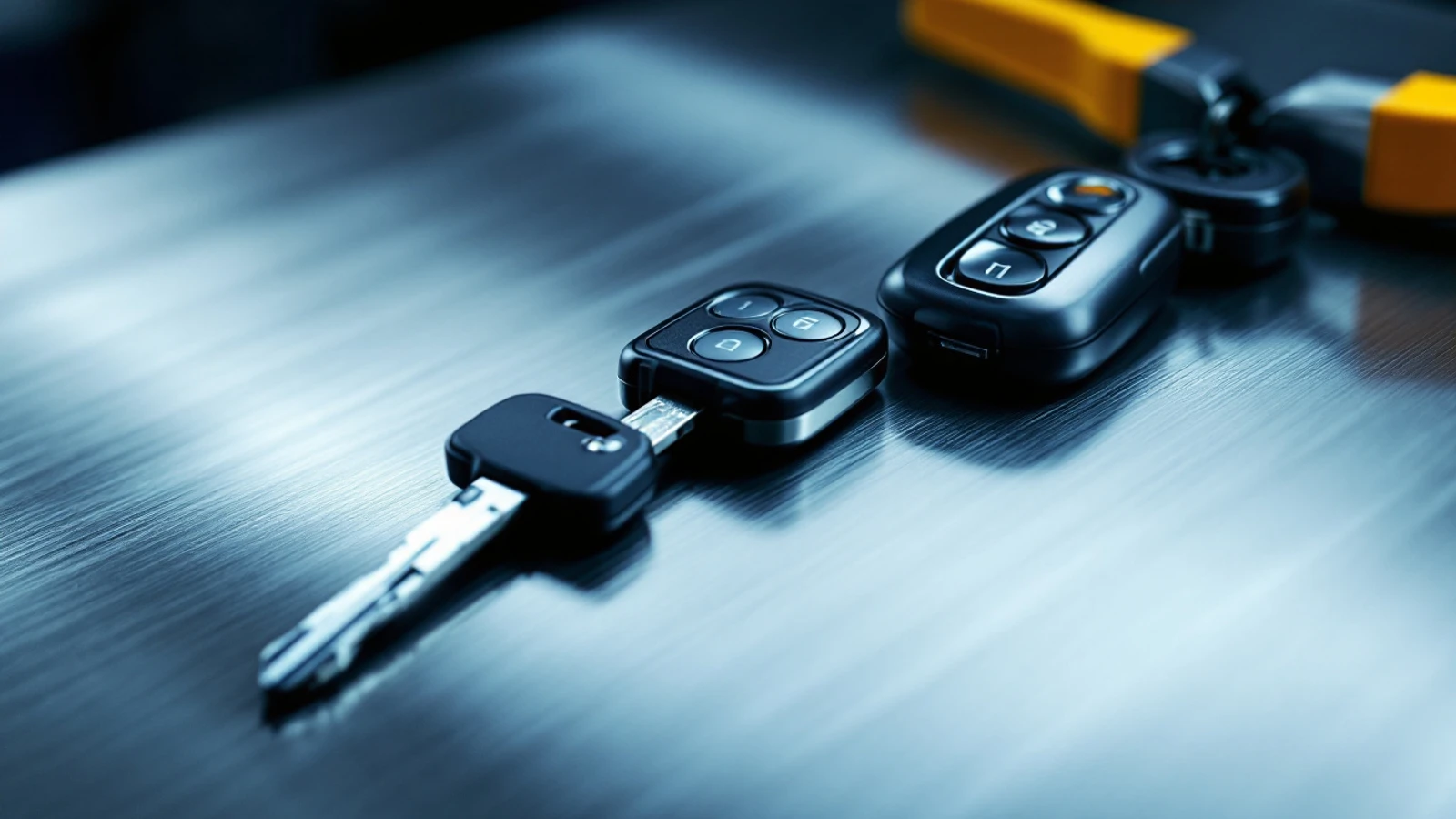
Chevrolet has four key generations on the road at once, and the Silverado and Tahoe span all four. That is why quotes on these two nameplates vary more than on almost anything else, and why the model year matters more than the badge.
This guide lays out which key each generation takes, what the giveaway is from the driver's seat, and roughly what each one costs. If you want the full pricing picture rather than the year-by-year breakdown, that lives in our Chevrolet key replacement cost guide.
All figures are stated as of September 2026 and drawn from the ranges published on our Chevrolet make page and our service pages. They are all-in — blank, cut, programming and the visit.
The four generations at a glance
| Era | Silverado | Tahoe / Suburban | Key type | Spare, all-in |
|---|---|---|---|---|
| PassLock | ~1999 – 2006 | ~2000 – 2006 | Plain mechanical blade, no chip | under $135 |
| PK3+ transponder | ~2007 – 2009 | ~2007 – 2009 | Transponder in a moulded head | $140 – $220 |
| GMLAN transponder | ~2010 – 2014 | ~2010 – 2014 | Transponder, GM-wide chip family | $140 – $220 |
| HITAG-AES proximity | 2019 onward | 2021 onward | Push-button proximity fob | $240 – $400 |
The changeover years overlap at the edges, and the K2XX trucks in the middle — Silverado 2014 to 2018, Tahoe 2015 to 2020 — straddle the transponder and proximity eras depending on trim. That middle block is where the VIN stops being a convenience and becomes the only reliable answer.
Roughly 1999–2006 Silverado, 2000–2006 Tahoe: the cheap years
This is the part worth knowing before you call anyone, because owners routinely brace for a $300 quote on a truck whose key costs under $135.
The GMT800 platform used PassLock. The anti-theft sensing does not live in the key — it lives in the ignition lock cylinder, which reads a resistance value as the cylinder rotates. The key is a plain mechanical blade with no electronics in it whatsoever.
Most of these trucks came with a separate rubber-button keyless-entry remote on the keyring, which is a genuinely independent device. The remote does doors. The blade does the engine. They can fail separately and be replaced separately.
The giveaway: a thin, flat, double-sided metal blade with a small plastic bow, and a separate fob on the ring. If your "key" is two objects, you are almost certainly here.
What it costs: cutting a blade is under $135. A replacement remote programmed runs $50 to $120. Even doing both is cheaper than one key on any later generation.
The PassLock catch: while the key is cheap, the security system is not free of trouble. PassLock is the generation most associated with a security light that comes on and a truck that cranks without starting, which is usually the cylinder's sensor rather than anything to do with your key. If that is your symptom, the fix is cylinder work, and our car ignition repair cost guide covers what that runs — $220 to $450 on site.
Roughly 2007–2013: the transponder years
The GMT900 generation moved the security into the key itself.
Early in this run, Chevrolet used the PK3+ transponder — a genuine chip in a moulded plastic key head, the thing most people picture when they hear "chip key." From roughly 2010, GM standardised on a GM-wide transponder family shared across Chevrolet, GMC, Buick and Cadillac, so a Silverado, a Sierra and a Yukon of the same vintage behave nearly identically at the immobilizer.
The giveaway: one object rather than two. The blade and the plastic head are a single piece, the head is chunky enough that it clearly contains something, and the keyless-entry buttons may be on a separate fob or integrated depending on trim and year.
What it costs: $140 to $220 for a spare, $220 to $320 with every key lost.
Worth knowing: these are now old enough that blade wear is a live issue. A 2011 Silverado on its original key has had fifteen years of leverage from a loaded keyring. If your everyday key has become notchy while a drawer spare works fine, that is wear rather than an electronic fault — a pattern we walk through in one key works, the other doesn't.
Roughly 2014–2020: the split years
The K2XX generation — Silverado 2014 to 2018, Tahoe and Suburban 2015 to 2020 — is where the year alone genuinely stops answering the question.
Base and work trims continued with a bladed transponder key. Upper trims — the LTZ and High Country end of the range, and most Tahoe LT and above — moved to keyless open and push-button start with a proximity fob. Both were sold new in the same model year, from the same dealership, on the same nameplate.
The giveaway is the only one that matters here: do you insert a key and turn it, or do you keep the fob in your pocket and press a button? That single fact places you on the right half of the price table with complete reliability, regardless of what the year suggests. If you want to be sure what you are holding, transponder versus smart key walks the identification in about thirty seconds.
What it costs: $140 to $220 for a bladed spare, $240 to $400 for a proximity spare. Nearly double, for two trucks a trim level apart.
2019 onward Silverado, 2021 onward Tahoe: proximity throughout
The T1XX generation runs HITAG-AES proximity — true rolling-code encryption and a fob you never take out of your pocket — across most of the range. Early in the Silverado's T1XX run, base work-truck trims retained a bladed transponder key, so the very bottom of the range is worth confirming rather than assuming.
This generation introduces the one real tooling requirement in the Chevrolet lineup: the GM SPS programming step. A technician needs a tool carrying a current license to complete it. One who has it does the job in your driveway; one who does not cannot, at any price.
That is a constraint on the shop, not on your vehicle — and it is exactly the distinction that decides whether "your truck is dealer only" is a fact about the truck or a fact about whoever told you. We take that apart in who can actually program a car key.
What it costs: $240 to $400 for a spare, $320 to $475 with every key lost.
The 2023-and-newer exception: the refreshed Silverado, Tahoe and Suburban can carry an OnStar-paired stolen-vehicle slowdown flag. When that flag is active, only OnStar clears it. It is genuinely rare, and it is one of the very few situations in this lineup where no independent route exists. If your truck has ever been reported stolen and recovered, say so at intake.
The badge-engineered twins follow the same schedule
General Motors builds these vehicles in families, and the key architecture travels with the platform rather than with the nameplate on the tailgate. That is useful, because it means this guide covers considerably more vehicles than its title suggests.
| If you own | It follows | Same key generation |
|---|---|---|
| GMC Sierra | Silverado | Yes, year for year |
| GMC Yukon / Yukon XL | Tahoe / Suburban | Yes, year for year |
| Cadillac Escalade | Tahoe / Suburban | Same platform, upper trims proximity earlier |
| Chevrolet Avalanche | Silverado of its year | Yes, through 2013 |
| Silverado 2500 / 3500 HD | Light-duty Silverado | Yes, with changeovers landing a year or so later |
The one caveat is Escalade. It sits on the same platform but carried higher-specification equipment earlier in each generation, so a given model year is more likely to be proximity than the Tahoe beside it — and it is priced as a luxury vehicle rather than a mainstream one, which puts it in a higher band than anything in the table at the top of this guide.
If you own a GMT800 truck, do this before you need to
Owners of the cheap-key generation are in an unusually good position and mostly do not realise it.
A spare mechanical blade for a 1999-to-2006 Silverado or a 2000-to-2006 Tahoe costs under $135 to cut, takes minutes, requires no diagnostic tool, no relearn window and no tool licence, and can be done by any competent automotive locksmith in the country. There is no cheaper insurance against a bad morning anywhere on this site.
Compare that to the position you are in without one. Lose the last blade on a GMT800 and you are not paying for programming — there is none — but you are paying for a technician to originate a key from the lock or the code, on a vehicle that cannot be driven to them. That is a call-out, an immobile truck, and a wait, all to solve a problem a $135 spare in a kitchen drawer would have made invisible.
The same arithmetic applies with more force further up the table. A proximity spare at $240 to $400 today against $320 to $475 with every key gone, plus a vehicle stranded wherever it happens to be. Every row of this guide is cheaper before the fact than after it, and the gap widens as the generations get newer.
Two things that are not key faults
Worth ruling out before you pay for a key on either of these nameplates, because both are common on high-mileage trucks and neither is fixed by a new key.
The PassLock security light on the older trucks. On the GMT800 generation the anti-theft sensing lives in the ignition lock cylinder, so as that cylinder wears the sensor output drifts. The result is a security telltale and a truck that cranks without starting, or starts and dies. The key is not involved — it has no chip to fail. Cutting a new blade changes nothing, and the fix is cylinder work.
A worn cylinder on any bladed generation. Distinct from the above and not limited to PassLock trucks. Fifteen years of a loaded keyring wears both the blade and the wafers it rides on. The symptom is a key that works sometimes, where jiggling or reinserting changes the behaviour. If a drawer spare works perfectly while the everyday key does not, that is wear rather than electronics.
The year boundaries are soft — the VIN is not
Every year range in this guide carries a "roughly" for a reason. Chevrolet ran the Silverado 1500 Classic alongside the new GMT900 body. Heavy-duty trucks changed generation a year or so behind the light-duty line. Trim decided the key type outright through the entire middle block.
The result is that two vehicles both honestly described as "a 2014 Silverado" can need different keys at different prices, and neither owner is wrong about what they drive.
The VIN resolves all of it in one string — generation, immobilizer family, key type — which is why it is the single most useful thing you can read out over the phone on a GM truck. We set out exactly what it changes, and what it does not, in what the VIN changes about your quote.
How this compares to the Ford side
If you are cross-shopping, or you keep a mixed fleet, the shape is similar and the details are not. Ford's F-150 and Expedition run their own generation ladder with their own boundary years and their own tooling quirks, laid out in Ford F-150 and Expedition key types by year.
The one structural difference worth naming: Chevrolet's cheap era is genuinely cheap, because PassLock put the security in the cylinder instead of the key. There is no equivalent window on the Ford side where the key has no electronics at all. If you own a GMT800 truck, you own the least expensive key in either lineup.
Before you pay for a key, rule these out
Three failures look like a dead key from the driver's seat and cost very different money.
A dead fob battery, on any proximity truck. CR2025 or CR2032, roughly two to four years, and the discharge is gradual — range shrinks before the fob dies, so it still works pressed to the door handle. A few dollars of parts.
A worn ignition cylinder, on any bladed truck with high mileage. The symptom is a key that works sometimes, where jiggling changes the behaviour. Replacing the key changes nothing; the cylinder is the fault.
A corrupted key registry after a battery swap or a jump start. Trucks built since roughly 2010 store pairing data in a module, and a clumsy disconnect can corrupt it. A previously fine key gets rejected for no visible reason, and the fix is a module rewrite rather than a new key.
Getting a number for your truck
Three things let a specialist quote a Silverado, Tahoe or Suburban accurately without seeing it.
The VIN. It settles generation, key family and trim in one step.
Blade or button. Whether you turn a key or press a start button — the answer that splits the price table in half.
How many working keys you still have. One and zero are different jobs at different prices, and the gap is larger than most owners expect.
Answer those three and the quote you are given is the quote the technician arrives with. On a nameplate spanning four key generations and twenty-five model years, that precision is worth the thirty seconds it takes.
Frequently asked questions
What key does my Chevrolet Silverado take?
It depends on the generation. Roughly 1999 to 2006 trucks use a plain mechanical key with no chip, paired with a separate keyless-entry remote. Roughly 2007 to 2013 use a transponder key with the chip in the head. Roughly 2014 to 2018 use a transponder key with proximity available on upper trims. From 2019 the T1XX generation is proximity on most trims, with base work trims keeping a bladed transponder key for part of the run. The VIN settles it in one step.
Is it true that some Silverado and Tahoe keys have no chip?
Yes, and it is the most useful thing in this guide. The GMT800 generation — Silverado from roughly 1999 to 2006 and Tahoe from roughly 2000 to 2006 — used PassLock, where the anti-theft sensing lives in the ignition lock cylinder rather than in a chip in the key. The key itself is a plain mechanical blade. Cutting one costs under $135 because there is nothing to program.
Why did my Tahoe quote come back so much higher than my neighbour's?
Because Tahoe spans four key generations across the vehicles still on the road, and the nameplate alone tells a shop almost nothing. A 2004 Tahoe takes a plain mechanical key. A 2023 Tahoe High Country takes a HITAG-AES proximity fob and, with every key lost, sits at the top of the price table. Same badge, different decade, genuinely different job.
Do the heavy-duty 2500 and 3500 trucks follow a different schedule?
Broadly no. The heavy-duty Silverados follow their light-duty counterpart's key generation for the corresponding year, with the generation changeovers landing a year or so later on the HD line. They are not a separate pricing case, though the model year boundary is worth confirming from the VIN rather than assuming.
Does the Suburban follow the Tahoe?
Yes. Tahoe and Suburban share a platform and share key architecture generation for generation, so anything in this guide that applies to a Tahoe of a given year applies to the Suburban of the same year. The same is broadly true of the GMC Yukon and Yukon XL, which are the same vehicles under a different badge.
Can a locksmith program a Silverado or Tahoe proximity key?
Yes. Chevrolet carries no NASTF Vehicle Security Professional restriction and no per-VIN PIN purchase requirement. What 2015-and-newer proximity vehicles do require is the GM SPS programming step, which needs a technician running a tool with a current license. That is a tooling question on their side, not a lock on your vehicle — which is why a shop saying your truck is dealer-only usually means that shop is not equipped for it.
What is the OnStar flag I have read about on newer trucks?
On the 2023-and-newer Silverado, Tahoe and Suburban refresh, an OnStar-paired stolen-vehicle slowdown flag can be set. If that flag is active, only OnStar can clear it — no locksmith and no aftermarket tool works around it. It is rare, but if your vehicle has ever been reported stolen and recovered, mention it at intake so nobody wastes a trip.
How do I find out which generation my truck is without the VIN?
Two questions get you most of the way. Do you insert a key and turn it, or press a button to start? And if you turn a key, is the head a thin plain blade with a separate remote on the ring, or a single moulded plastic head? Thin blade plus separate remote usually means the no-chip PassLock era. A moulded head usually means a transponder. Push-button means proximity.