BMW Key Replacement Cost (2026)
What a BMW key actually costs in 2026, why the module generation under your dash matters more than the badge on the boot, and when a lost BMW key becomes a half-day bench job.
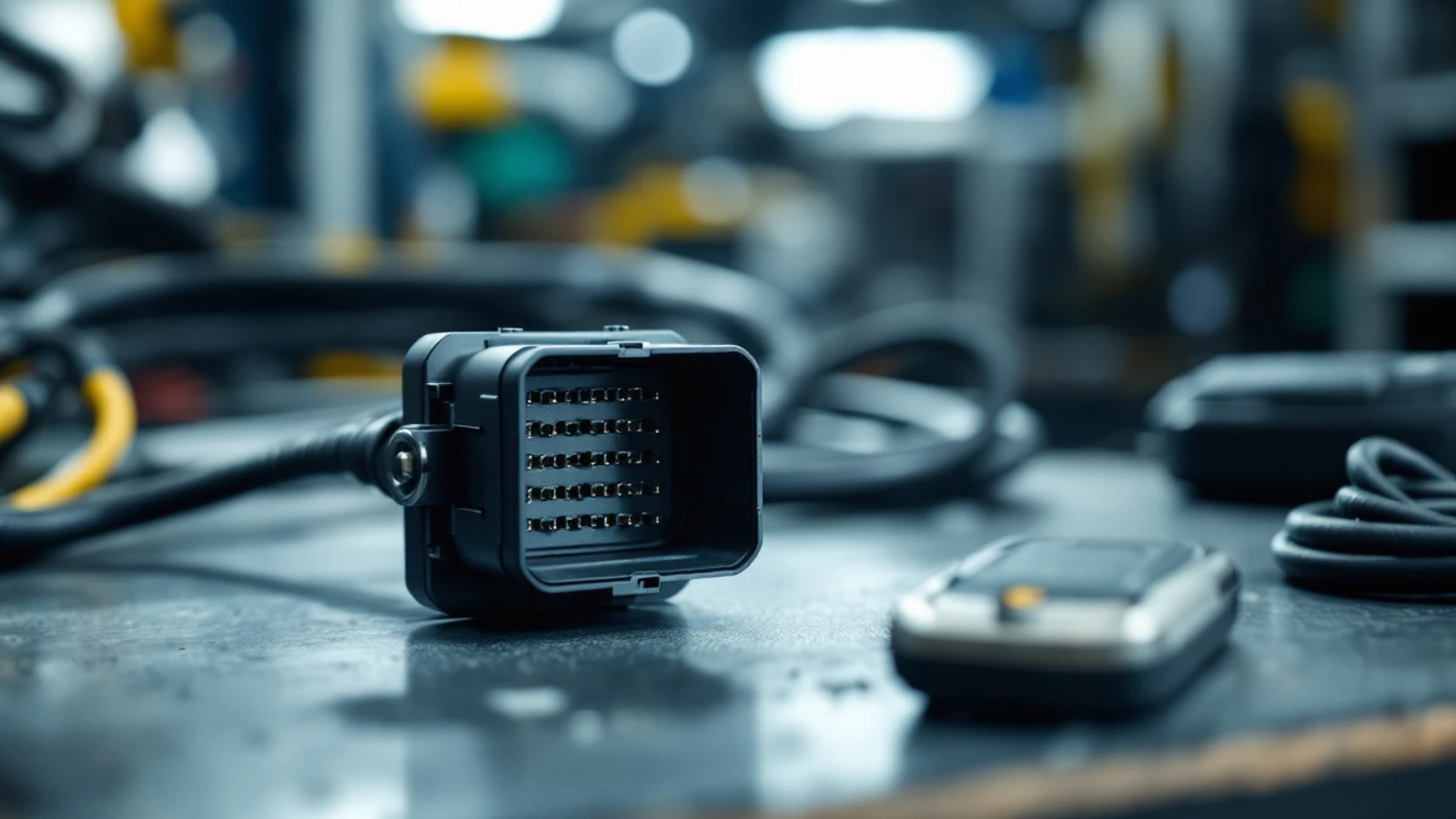
As of September 2026, a BMW key replacement runs $390 to $850 all-in through a mobile automotive locksmith. Older EWS and CAS cars fall below that band, starting around $290. A current FEM or BDC car with every key lost sits at the top of it. BMW is the most expensive mainstream make in this series, and the reason is worth understanding before you get a quote, because it is not the key.
On a Toyota, replacing a lost key is a conversation through the diagnostic port. On a modern BMW, it is frequently a case of removing a control module from the car, reading and rewriting its encrypted memory on a bench, and putting it back. That is a different category of work, and the price reflects the work rather than the badge.
What a BMW key costs in 2026
These are the ranges published on our BMW make page, quoted as total on-site prices.
| Module generation | Typical years | Spare, working key present | All keys lost |
|---|---|---|---|
| EWS-3 / EWS-4 | ~1995 – 2007 | $290 – $385 | $345 – $460 |
| CAS3 / CAS3+ | ~2002 – 2010 | $355 – $465 | $475 – $615 |
| CAS4 / CAS4+ | F-series, 2010 onward | $390 – $510 | $565 – $745 |
| FEM / BDC | F and G platforms, 2014 onward | $440 – $580 | $625 – $850 |
| iDrive 8 generation BDC | recent G platform | $650 – $850 | $650 – $850 |
| BMW dealer, FEM / BDC all keys lost | comparison | — | $1,100 – $1,650, plus tow |
The dealer row is there deliberately. On most makes in this series the mobile-versus-dealer gap is meaningful but not dramatic. On a BMW with every key lost it is the difference between a large bill and a very large one, and the dealer figure still assumes you have solved the problem of moving a car that cannot start.
The generation matters more than the model
This is the single most important thing to understand about BMW key pricing, and it is the thing most owners get wrong when they go looking for a number.
A 3 Series is not a price. Across the cars still on the road, the 3 Series alone spans four module generations: E46 cars on EWS-3 and EWS-4, E90 cars on CAS2 and CAS3, F30 cars on CAS4 and CAS4+, and G20 cars on FEM and BDC. Those are four different jobs with four different price bands and four different appointment lengths. Searching for what a 3 Series key costs, without the year, returns numbers that are all technically true and mostly not about your car.
The same is true right across the range. The 5 Series runs E60 CAS2 and CAS3, F10 CAS4 and CAS4+, G30 FEM and BDC, and the 2024-onward G60 on iDrive 8. The X3 runs E83 EWS-4, F25 CAS4, G01 FEM and BDC, and the 2025-onward G45 on iDrive 8. The X5 runs E70 CAS3 and CAS3+, F15 CAS4+, and G05 FEM and BDC.
So the first question a competent BMW specialist asks is never the model. It is the year, and often the chassis code, because that is what tells them which of the six generations they are about to work on and what equipment to put in the van.
Why all-keys-lost is the expensive branch
On every make, losing every key costs more than adding a spare. On BMW the size of that gap is unusual, and the reason is specific.
From the CAS4+ generation onward the module memory is encrypted. From the FEM and BDC generation onward, BMW also locks the immobilizer to the engine control unit with an Individual Serial Number written at the factory, usually shortened to ISN. Adding a key when the car already trusts one is a manageable procedure. Adding a key when the car trusts nothing means the specialist has to read that serial number out of the engine module, work with the encrypted memory in the immobilizer module, and match the two.
In practice that usually means the module comes out of the car. Bench time alone is 90 to 150 minutes, and it needs equipment built for the job: AutoHex II, the Xhorse VVDI BIM Tool or MiniACDP, or Abrites Commander. It is a recognised specialisation within automotive locksmithing rather than something every mobile tech can do.
Two practical consequences for you. First, book the time. A FEM or BDC all-keys-lost is a half-day window, not a quick visit, and a specialist who promises it in forty minutes has misunderstood the car. Second, expect the specialist pool to be thin. Fewer people carry this equipment, so the one who can genuinely do the work may be further away, which is what drive-out and mileage fees covers.
Where the common BMWs land
- 3 Series, 1995 onward. The widest span in the lineup, from E46 EWS through G20 FEM and BDC. Cheapest and dearest BMW key jobs both live here depending on year.
- 5 Series, 1995 onward. E60 CAS, F10 CAS4 and CAS4+, G30 FEM and BDC, G60 on iDrive 8 from 2024.
- 7 Series, 1995 onward. E65 on CAS1, F01 on CAS4, G11 on FEM and BDC, G70 on iDrive 8 from 2023. The flagship tends to receive each new architecture first, which also means it hits the tool-support lag first.
- X3, 2004 onward. E83 EWS-4, F25 CAS4, G01 FEM and BDC, G45 iDrive 8 from 2025.
- X5, 2000 onward. E70 CAS3 and CAS3+, F15 CAS4+, G05 FEM and BDC.
- X7, 2019 onward. G07, FEM and BDC throughout, so pricing is consistent across the model's life.
- M3 and M5, 2001 onward. Performance variants share the base chassis architecture, so an M3 prices like the 3 Series of its generation rather than as a separate thing.
- i3, i4, iX and i7. The electric range sits in the FEM and BDC family with additional gateway hardening.
The 2025-onward Neue Klasse cars, including the new iX3 and i3 sedan, are currently dealer-only. That is the normal pattern after a clean-sheet architecture, and it resolves as aftermarket tool support catches up.
What actually moves a BMW quote
Whether any working key exists. The largest lever, and on BMW the most expensive one. On a FEM or BDC car it is the difference between $440 to $580 and $625 to $850.
The module generation. Established above, and worth repeating because it is where owners lose money. Get the year right before you ask for a price.
Whether the module has to come out. Bench work is the cost. A specialist who can complete your job through the port will be cheaper than one who has to pull the module, and which of those applies is a function of the car, not of who you hire.
Tool-support lag on the newest cars. When BMW ships a new architecture there is a window before aftermarket equipment supports it. During that window the dealer is the only real option, at dealer prices. This is temporary but it is absolute while it lasts.
What the visit actually looks like
On BMW more than any other make, the length of the appointment tells you whether the person quoting has understood your car.
- Spare, working key present, EWS or CAS: 30 to 50 minutes on site.
- Spare, CAS4+: 45 to 65 minutes.
- Spare, FEM or BDC: 60 to 80 minutes.
- All keys lost, CAS4+ or FEM or BDC: 90 to 150 minutes of bench work, realistically a half-day window.
That last line is the one to plan around. A module-out job is not a visit you schedule between two meetings. The car stays where it is, the module comes out, the work happens on a bench, and the module goes back. Anyone quoting a FEM or BDC all-keys-lost as a forty-minute call has either misidentified the generation or is about to discover the problem in your driveway.
Two practical consequences. Park the car somewhere it can sit for half a day with panels off, which usually means a driveway or a garage rather than a street bay. And be present, or leave someone who can authorise a decision, because bench work occasionally surfaces a second fault and the useful moment to decide about it is while the module is already out.
Reading a BMW quote before you accept it
Three questions separate a specialist from someone who is about to learn on your car.
Which module generation is my vehicle? A specialist answers from the year and chassis code without hesitation. Vagueness here is the single most reliable warning sign on this make.
Will the module need to come out? This is the cost. A straight answer shapes both the price and your afternoon.
What happens if the ISN read fails? On FEM and BDC work this is the step most likely to go sideways, and a shop that does it routinely has a rehearsed answer about what they do next and who absorbs the time. One that has not done it will not.
If the figure you are quoted sits well under the bands in the table above, treat that as information rather than a bargain. On this make, a low number usually means the quoting shop believes it is a simpler generation than it is, and the correction arrives later.
When the dealer is actually the right call
The car is a 2025-onward Neue Klasse. Dealer-only today.
The car is in warranty and the fault is a defect. If a module failed rather than wore out, that is warranty work, and paying a specialist for it is the most expensive possible route.
You need a spare on a car that is already at the dealer. On simple spares the gap narrows enough that convenience can win. On all-keys-lost it never does.
Before you spend BMW money, rule these out
The coin cell. Gradual failure, shrinking range first. On a make where the replacement is measured in hundreds, testing a battery is the best minute you will spend. Our guide to a fob that only works up close covers how to tell range loss from key failure.
A comfort-access aerial or receiver fault rather than a key fault. If both keys stopped behaving at once, suspect the car rather than the keys. Two keys rarely fail on the same morning. One key works and the other does not walks through how to separate the two.
An open recall covering the remedy. Check the VIN against the NHTSA recall database before paying out of pocket.
Getting a BMW quote that holds
Four facts, and the number you are given should be the number you pay.
- Year and model, and the chassis code if you know it. E90, F30 and G20 are not interchangeable and neither are their prices.
- Whether any working key exists. This moves the figure by hundreds on this make.
- Whether the car is a plug-in or full electric, which changes the gateway handling.
- Whether the car currently starts. A car that cannot start and cannot be moved changes the logistics for everyone.
Then ask the specialist one question that separates the equipped from the optimistic: which module generation is my car, and will the module need to come out? Someone who does this work daily answers immediately. Someone who does not will be vague, and vagueness on a BMW is how a $450 quote becomes a $900 invoice.
For the wider picture on what pushes any proximity key toward the top of its band, push-to-start key cost compares mainstream against luxury across makes, and who can actually program a car key sets out the five options and what each is good for. If you are weighing a European car against a mainstream one, the Toyota cost guide is the clearest contrast in this series.
Ready to be matched with a specialist who carries BMW module equipment rather than a general toolkit? Start at get help, or read how it works first.
Frequently asked questions
How much does a BMW key replacement cost in 2026?
As of September 2026, BMW key replacement runs $390 to $850 all-in through a mobile automotive locksmith, which is the band published on our BMW make page. Older EWS and CAS vehicles fall below that band, from $290. A current FEM or BDC car with every key lost sits at the top. BMW is the most expensive mass-market make in this series, and the reason is the module work rather than the key itself.
Why is a BMW key so much more expensive than a Toyota or Honda key?
On most makes, programming a key is a conversation through the diagnostic port that takes half an hour. On a modern BMW with every key lost, the immobilizer module usually has to come out of the car, have its encrypted memory read and rewritten on a bench, and go back in. That is 90 to 150 minutes of skilled work with specialist equipment, and it is the single largest line in a BMW quote.
What is CAS, and what is FEM or BDC?
They are the generations of the module that holds your BMW immobilizer data. EWS ran from roughly 1995 to 2007, CAS from 2002 to 2010, CAS4 and CAS4+ on F-series cars from 2010, and FEM or BDC on the F and G platforms from 2014 onward. The generation, not the model name, sets the price. Two cars wearing the same 3 Series badge ten years apart are completely different jobs.
What is an ISN read and why does it add cost?
From the FEM and BDC generation onward, BMW locks the immobilizer to the engine control unit using an Individual Serial Number set at the factory. To add a key when none is present, that number has to be read from the engine module and matched. It is an extra read, on extra equipment, and it is the reason an all-keys-lost job on a FEM or BDC car is quoted at $625 to $850 rather than the $440 to $580 a spare costs on the same car.
Can a locksmith program a BMW key, or is this dealer work?
A BMW specialist can program every generation through current FEM and BDC using equipment such as AutoHex II, the Xhorse VVDI BIM Tool, MiniACDP, or Abrites Commander. This is genuinely specialist work rather than general locksmithing, so the pool of people who can do it is much smaller than for a mainstream make. The 2025-and-newer Neue Klasse cars are currently dealer-only.
How long does a BMW key job take?
A spare with a working key present runs 30 to 50 minutes on EWS or CAS, 45 to 65 minutes on CAS4+, and 60 to 80 minutes on FEM or BDC. All keys lost on a CAS4+ or FEM or BDC car typically means module-out bench work at 90 to 150 minutes, which is realistically a half-day appointment rather than a quick visit.
Is a mobile specialist still cheaper than the BMW dealer?
On an all-keys-lost FEM or BDC car, yes, and by a wide margin. A specialist is quoted at $625 to $850 against typical dealer pricing of $1,100 to $1,650 for the same work, and the dealer figure does not include getting a car that cannot start onto a flatbed. The gap narrows on simple spares for cars still under warranty, where the dealer is sometimes the sensible call.
My BMW fob stopped working. Do I need a whole new key?
Test the battery first. BMW fobs run a coin cell that fails gradually rather than suddenly, and the first symptom is shrinking range, so the fob still works pressed against the door but no longer wakes the car from across a car park. On a make where the replacement runs into the hundreds, spending a minute on a battery before authorising anything is the highest-value minute in the whole process.