
Jeep Key Services
Wrangler, Grand Cherokee, Cherokee, Compass, Gladiator.
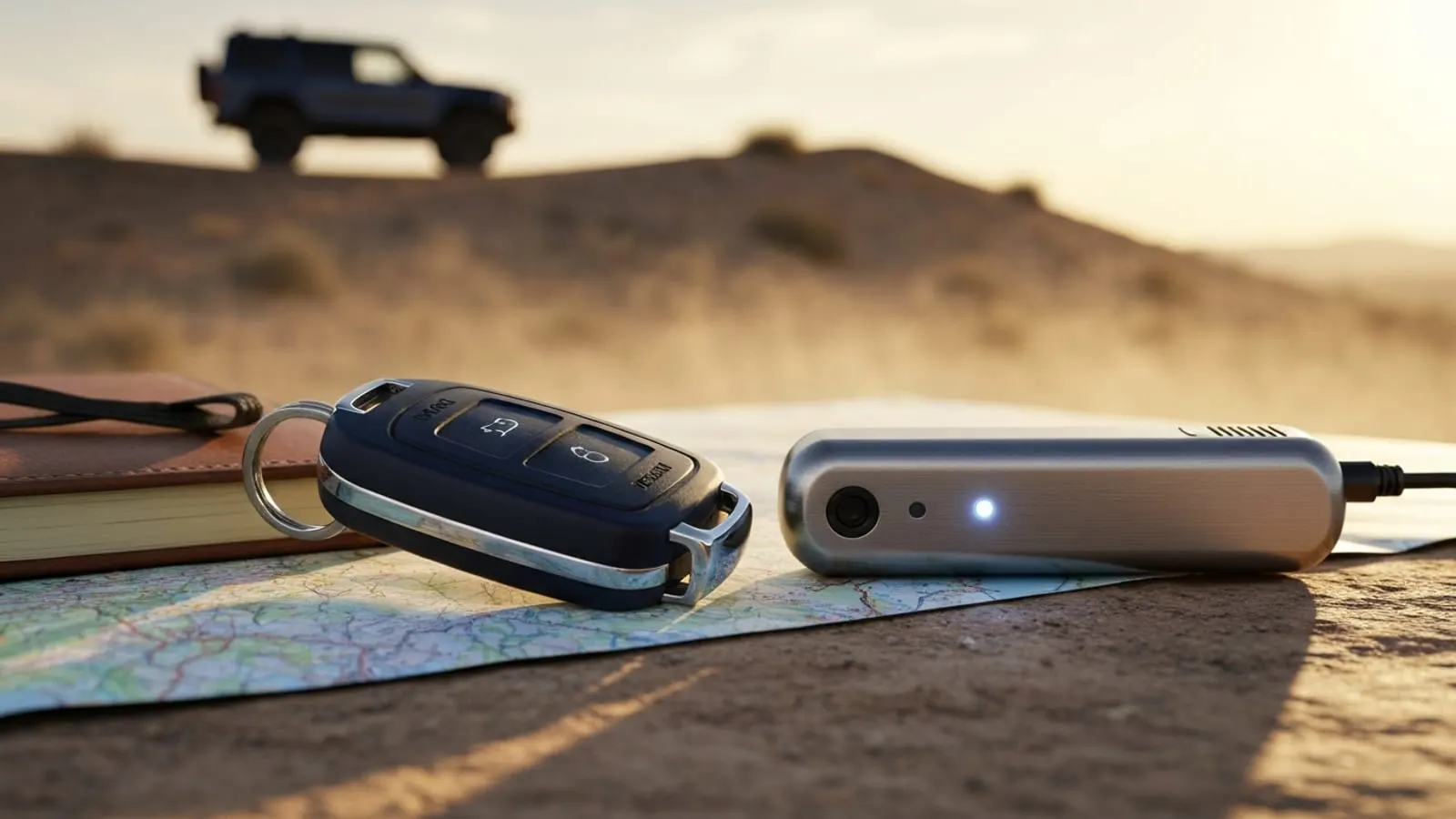
What to expect
Jeep key jobs vary by year and trim — older models often use a basic transponder chip while newer ones run proximity or push-to-start keyless systems.
When you submit a request, we route it only to a partner equipped for your specific Jeep make — not to whichever locksmith answers first.
Typical services
- Lost-keys (no working key)
- Spare key cut + program
- Smart key replacement
- Key fob replacement
- Ignition repair
- Programming only (your blank)
Jeep key replacement at a glance
Jeep is the marquee off-road nameplate under Stellantis, with the Grand Cherokee and Wrangler dominating off-road and lifestyle SUV segments per Cox Automotive sales data. The Jeep fleet uses four generations of immobilizer: Sentry Key (SKIM/SKREEM) with PCF7936 chip (1998-2017), FOBIK wireless ignition node (2008-2017), FOBIK-Push push-button start (2014+), and HITAG-AES SmartKey with Stellantis SGW on 2018+ vehicles.
Typical 2026 pricing runs $175-$450 all-in. A 2014 Wrangler FOBIK spare runs $200-$285; a 2023 Grand Cherokee L SmartKey all-keys-lost runs $340-$450.
The Jeep-specific friction point is the Stellantis SGW on 2018+ vehicles. SGW blocks unauthorized OBD-II access, requiring either: (1) FCA AutoAuth subscription at $75/year; (2) NASTF VSP credential; or (3) SGW module removal.
Why Jeep keys are different
Jeep's history is the most consolidated under Stellantis — all FCA brands share the same key architecture by year. SKIM debuted on 1998 Grand Cherokee with PCF7936. SKREEM in 2004 added remote entry. FOBIK launched 2008 on Grand Cherokee/Commander. FOBIK-Push extended push-button start in 2014. Stellantis documents procedures via MoparRepairConnect and TechAuthority.
The architectural break came in 2018 with Security Gateway Module (SGW) — Stellantis's response to NHTSA pressure following the 2015 Jeep Cherokee remote-hijack demo (Black Hat USA 2015). SGW sits between OBD-II and CAN bus, blocking unauthenticated module access.
Common Jeep models we service
- Wrangler (1997-2026) — JL platform (2018+) HITAG-AES SmartKey + SGW. 4xe PHEV included.
- Grand Cherokee (1995-2026) — WL (2021+) latest SmartKey + SGW. 4xe included.
- Cherokee (2014-2023) — KL discontinued after 2023 MY. FOBIK-Push throughout.
- Compass (2007-2026) — 2nd-gen MP (2017+) HITAG-AES SmartKey + SGW on Limited.
- Gladiator (2020-2026) — Wrangler-based truck; same JL architecture.
- Wagoneer / Grand Wagoneer (2022-2026) — SmartKey with display fob on Series III+.
What Jeep keys cost in 2026
- SKIM/SKREEM transponder, working spare: $175-$245
- FOBIK working spare: $200-$285
- FOBIK-Push all keys lost: $265-$365
- HITAG-AES SmartKey spare (SGW present): $235-$335
- HITAG-AES SmartKey all keys lost (SGW + AutoAuth): $340-$450
Jeep dealer pricing on 2018+ SmartKey all-keys-lost typically runs $475-$685.
How CarKeyNation matches you with a Jeep specialist
- SKIM/SKREEM/FOBIK (pre-2018) — every Jeep-capable partner
- SGW + AutoAuth subscription — partners with active AutoAuth shop account ($75/yr Stellantis program)
- NASTF VSP + SGW bypass cable — partners with NASTF VSP credential
- Bench programming — partners with SGW module removal experience (last-resort)
For 2018+ Jeep all-keys-lost we route exclusively to AutoAuth or NASTF VSP partners — no exceptions.
When the dealer is actually cheaper
1. Active Jeep recall on SGW or immobilizer. Dealer reprograms keys as part of recall work at no charge. NHTSA recall lookup by VIN.
2. Jeep Wave membership. Wrangler 4xe / Grand Cherokee 4xe Jeep Wave concierge — check membership.
3. SGW physically damaged after theft attempt. Dealer-side replace + re-flash.
Per J.D. Power 2024 CSI, Jeep dealer satisfaction at 824 — below industry average.
Jeep programming-difficulty matrix by model year
One of the most useful framings we share with customers calling about Jeep key replacement is the programming-difficulty matrix — a year-by-year read on what a mobile locksmith faces when they roll up. Jeep runs Sentry Key (SKIS), SKIM, Tipm-controlled WIN, and Stellantis Security Gateway (SGW) across its in-service fleet, and the difficulty curve is not linear. Older vehicles can sometimes be harder than newer ones because legacy aftermarket tool coverage gets thin once a chip family ages out of the active support window. Newer vehicles can be harder than expected because firmware-lag windows after major refreshes occasionally outpace third-party tool releases.
Here's how the matrix breaks down for the Jeep fleet as our partner network experiences it in daily field service:
- Pre-1998 (mechanical only): Easy. No transponder, no immobilizer interaction. Cut the blade, hand over the key. The only complexity is sourcing the right uncut blank for older or import-spec Jeep cylinders, and many of our partners maintain Jeep-specific blank libraries for this purpose. These jobs are also the cheapest in the Jeep lineup — typically under $135 all-in.
- First-generation transponder era: Easy to moderate. Mature aftermarket tool coverage (Smart Pro, Autel IM608, MVP Pro, T-Code Pro) handles these chips reliably. The few field surprises come from worn key blades that don't read the chip cleanly on the first program attempt and require a clone-and-retry. Expect 25-45 minutes on-site for a spare with the master present.
- Mid-cycle hardened transponder era: Moderate. These are the years where the immobilizer cipher was upgraded but the access architecture stayed accessible to NASTF-registered locksmiths. Per the NASTF VSP registry, no restricted-access workflow applies on the Jeep's mid-cycle generations — meaning the field-tech experience is straightforward provided the tool license is current. Expect 35-60 minutes for spare, 60-90 for all-keys-lost.
- Modern Smart Key proximity era: Moderate. Almost every Jeep Smart Key job is achievable on-site with an Autel IM608 or Smart Pro carrying a current Jeep license. The added complexity is the BCM-to-key seed-key handshake and the longer all-keys-lost relearn window. ALOA's Master Automotive Locksmith curriculum covers this seed-key workflow in detail, and any partner CarKeyNation routes for proximity work has cleared this module.
- Brand-new platform / lag-window vehicles: Hard. When Jeep ships a clean-sheet platform — new BCM architecture, new gateway, new firmware revision — there is typically a 6 to 18 month window before the aftermarket tools catch up. During that window, the dealer is genuinely the only fast path. CarKeyNation tracks lag-window vehicles at intake and tells you up front when your specific year and trim is dealer-only.
The practical takeaway: when you call CarKeyNation about a Jeep key, the first question our matching engine answers is not "which locksmith is closest?" — it's "which generation does this vehicle belong to, and which of our partners is best calibrated for that generation today?" The matrix above is what drives that routing.
Common Jeep key and immobilizer failure modes
Beyond the lost-key and broken-key scenarios that dominate call volume, our Jeep specialists see a recurring set of failure modes that are easy to misdiagnose as "I need a new key" when the actual fix is different. Sharing these patterns up front saves customers from paying for the wrong service.
Fob battery exhaustion masquerading as a dead key: Jeep proximity Smart Keys use a CR2025 or CR2032 coin cell that lasts roughly 2 to 4 years under normal use. As the cell discharges, the proximity range shrinks gradually — the fob still unlocks when held to the door handle but no longer wakes the car from across the parking lot. Customers often interpret this as a failing key. The fix is a $4 battery, not a $300 replacement fob. Any reputable mobile specialist will check the fob battery as the first diagnostic step before quoting a new key.
Worn ignition cylinder mistaken for a chip fault: On older Jeep vehicles with mechanical ignition cylinders (especially those with 150,000+ miles), the wafers inside the cylinder wear unevenly. The symptom is a key that turns intermittently — sometimes it works, sometimes it doesn't, and removing and reinserting the key changes the behavior. This is a cylinder issue, not a transponder issue. Replacing the chip in the key does nothing; the fix is rekeying or replacing the cylinder, which a mobile specialist can do on-site for $175-$385 depending on the model.
BCM (Body Control Module) firmware corruption after a battery swap or jump start: Jeep vehicles built since roughly 2010 store key-pairing data in a non-volatile section of the BCM. A clumsy battery disconnect (or a jump start with reversed polarity on a low-voltage cell) can occasionally corrupt the key registry. The symptom is a previously-working key suddenly being rejected by the immobilizer with no obvious cause. The fix is a BCM rewrite, not a new key. Our partners check the BCM firmware status before re-cutting a key, because cutting a new key for a corrupted BCM just makes the customer pay for a key they didn't need.
NHTSA-tracked safety recalls that affect keys: Several Jeep recall campaigns over the years have included reprogramming the immobilizer or replacing keys as part of the remedy. If you're paying out-of-pocket for a Jeep key job, the first step every customer should take is the NHTSA Recalls lookup by VIN — if your VIN has an open recall that covers the work, the dealer must perform it at no charge. CarKeyNation specialists will pause a paid job if they discover an active VIN-covered recall at the time of dispatch.
Aftermarket remote-start interference: Jeep vehicles with dealer-added or aftermarket remote-start kits sometimes develop intermittent key-recognition issues if the remote-start module's transponder bypass coil degrades. The symptom looks like a failing key but the actual fault is the bypass coil. A locksmith doing the diagnostic legwork before re-cutting can save the customer the cost of a key they don't need.
The pattern across all of these is that a competent Jeep specialist diagnoses before they quote. Our partners are coached to surface these alternate root causes when the symptoms point to them, even though the customer's first instinct was to call about a key.
DIY versus locksmith versus dealer for Jeep
Customers regularly ask whether they can program a Jeep key themselves with a $40 OBD-II tool from an online retailer. The honest answer depends on which generation of the Jeep fleet they're working on, and the cost-versus-risk math is rarely as favorable as the marketing copy on the tool suggests. Here's the actual three-way breakdown that CarKeyNation specialists give customers who ask.
DIY route — what actually works: Adding a spare proximity fob to certain Jeep vehicles built in roughly the 2003-2010 window can sometimes be done by the owner using a documented sequence-of-events procedure (ignition key cycle pattern). The catch: this only works when a working master key is present, the new key blade is correctly cut (which requires a key-cutting machine the average owner does not have), and the chip in the new key is the correct generation. The tools sold online to "program Jeep keys" frequently program only the first-generation transponders, not the modern HITAG-AES Smart Keys most current Jeep drivers actually own. Real-world success rate for owner-DIY on a 2018+ Jeep Smart Key is effectively zero without a $1,500+ professional tool and a tool license.
Mobile locksmith route — when it wins: For any Jeep vehicle 4+ years old, mobile locksmith is almost always the best price-to-outcome ratio. The specialist arrives at your location, cuts the new blade from a code or impressioning, programs the chip via OBD-II, tests from cold soak, and leaves with you holding a working key — typically 45 to 90 minutes start to finish. Per ALOA's published service standards, the work carries a 90-day workmanship warranty from any ALOA-credentialed shop. The CarKeyNation network operates within those standards as a minimum bar.
Dealer route — when it wins: Three specific scenarios make the dealer the right call. (1) The vehicle is under bumper-to-bumper warranty and the key issue is a defect-coded fault — the dealer handles it at no charge. (2) The vehicle is a brand-new platform in the firmware-lag window before aftermarket tools have caught up — the dealer is the only path. (3) The customer is already at the dealer for scheduled service and wants the key job bundled — the marginal cost of adding a key while the car is on the lift can be lower than a separate locksmith dispatch.
For everyone else with a 2010-2024 Jeep that's out of warranty and out of the new-platform lag window, the math tilts decisively toward the mobile locksmith. Per J.D. Power's 2024 U.S. Customer Service Index, dealer service-write-up time and parts-counter wait time alone often add 40 to 75 minutes to the customer's total elapsed time even after the work begins. A mobile specialist eliminates that overhead because the customer never has to travel and never has to wait in a service lounge.
Our role at CarKeyNation is not to push you toward the locksmith answer when the dealer is right. The intake conversation includes the three dealer-favorable conditions above, and if any apply we'll say so. The goal is the right answer for your specific Jeep and your specific situation, not the most convenient answer for us.
How CarKeyNation verifies your Jeep specialist
The single biggest difference between calling a vetted network and calling a random ad on a search-result page is the verification trail. Per the FTC Consumer Alert on locksmith scams, the most common pattern of customer harm is a low advertised price ($19, $29, $49) that turns into a $300-$800 on-arrival quote from an unlicensed contractor with no business address and no warranty. Every step of the CarKeyNation verification flow is designed to filter those operators out of the Jeep dispatch pool.
State-level licensing where it exists: Five U.S. states currently license locksmiths at the state level — California (BSIS), Texas (DPS PSB), Florida (FDACS), North Carolina, and Tennessee. In those states, every CarKeyNation partner must hold the active state license. We verify the license number against the issuing state's public licensee search at intake and re-verify on a rolling basis. In the 45 states without state-level licensing, the verification falls to industry credentials and bonded business registration.
ALOA credentialing: ALOA, the Associated Locksmiths of America, is the national trade association whose membership directory is publicly searchable. Our Jeep specialist pool prioritizes ALOA members in good standing, particularly those holding the Master Automotive Locksmith (MAL) credential. ALOA membership confirms a baseline of training and a written code-of-ethics commitment to providing written estimates and not engaging in bait-and-switch pricing.
NASTF VSP registration for restricted-access work: The National Automotive Service Task Force operates the Vehicle Security Professional registry, which is the manufacturer-recognized credential for accessing the Secure Data Release Model. For Jeep jobs that involve any restricted-access programming step, the assigned specialist must be VSP-registered. Per the NASTF VSP registry, this registration involves a background check, a fingerprint submission, and ongoing renewal — it is not a paperwork credential.
BLS-confirmed employment in the locksmith trade: The U.S. Bureau of Labor Statistics tracks employment under occupation code 49-9094 (Locksmiths and Safe Repairers). Per BLS Occupational Employment and Wage Statistics, there are roughly 13,000 to 17,000 locksmiths nationally — a small enough trade that bonded, insured, traceable operators stand out clearly from one-off dispatch shells. Our partner intake confirms each specialist has a verifiable trade history, not just an LLC registered last quarter.
Tool and license inventory: Beyond the credentialing, we verify that each Jeep specialist actually carries the tools needed for the work — current Autel IM608 license, Smart Pro license, or the OEM-equivalent tool family for the Jeep generations they're authorized to work on. A specialist with valid credentials but expired tool licenses cannot reliably complete a job, so we track the tool side of the verification separately.
Customer-facing receipt and warranty: Every CarKeyNation-dispatched Jeep job ends with a written, itemized receipt showing the make, model, year, VIN, key type, chip family, programming step, and total price. The work carries a 90-day workmanship warranty from the assigned specialist. If a key fails within that window for any reason traceable to the original programming, our admin team coordinates the rework at no charge to the customer.
This verification stack is the practical answer to the FTC's warning. The price you see at intake is the price the specialist arrives with, and the work is documented and warrantied. No advertised-cheap-then-upcharge tactic, no anonymous van with no plates, no cash-only no-receipt operator.
Jeep key replacement FAQ
How much does a Jeep key replacement cost?
A 2014 Wrangler FOBIK spare runs $200-$285; a 2018+ Wrangler JL HITAG-AES SmartKey spare runs $235-$335. All-keys-lost on SGW vehicles lands $340-$450. Jeep dealer on SGW all-keys-lost runs $475-$685.
Can a locksmith really program a Jeep smart key?
Yes — 2018+ Jeep HITAG-AES SmartKey vehicles can be programmed on-site by AutoAuth-subscribed or NASTF VSP-credentialed locksmiths. We screen for this and only dispatch SGW-capable partners on 2018+ Jeep jobs.
What if I lost ALL my Jeep keys?
All-keys-lost on 2018+ Jeep with SGW is a 60-90 min on-site job for an AutoAuth or NASTF VSP partner. Without SGW access the job will not complete.
How long does Jeep key programming take on-site?
Spare with working master: 25-40 min. SGW vehicles add 5-10 min. All-keys-lost on 2018+ SGW: 60-90 min total.
Industry insight
“SGW is the line in the sand for modern Jeep work. We split partners into 'AutoAuth subscriber' and 'NASTF VSP holder' tiers, and a 2018+ Jeep all-keys-lost goes only to those two tiers. The shops without SGW access can do everything else, but they can't reach the immobilizer on an SGW vehicle, period.”
— NASTF VSP-registered locksmith, FCA/Stellantis specialist, 13 years field experience, Denver metro (anonymized)
Frequently asked questions
Answers to what drivers ask most before requesting a specialist.
Ready to get rolling again?
Request a local specialist now — vetted, accountable, and matched to your vehicle.