Lost Car Keys in Federal Way? Get a Vetted Local Specialist
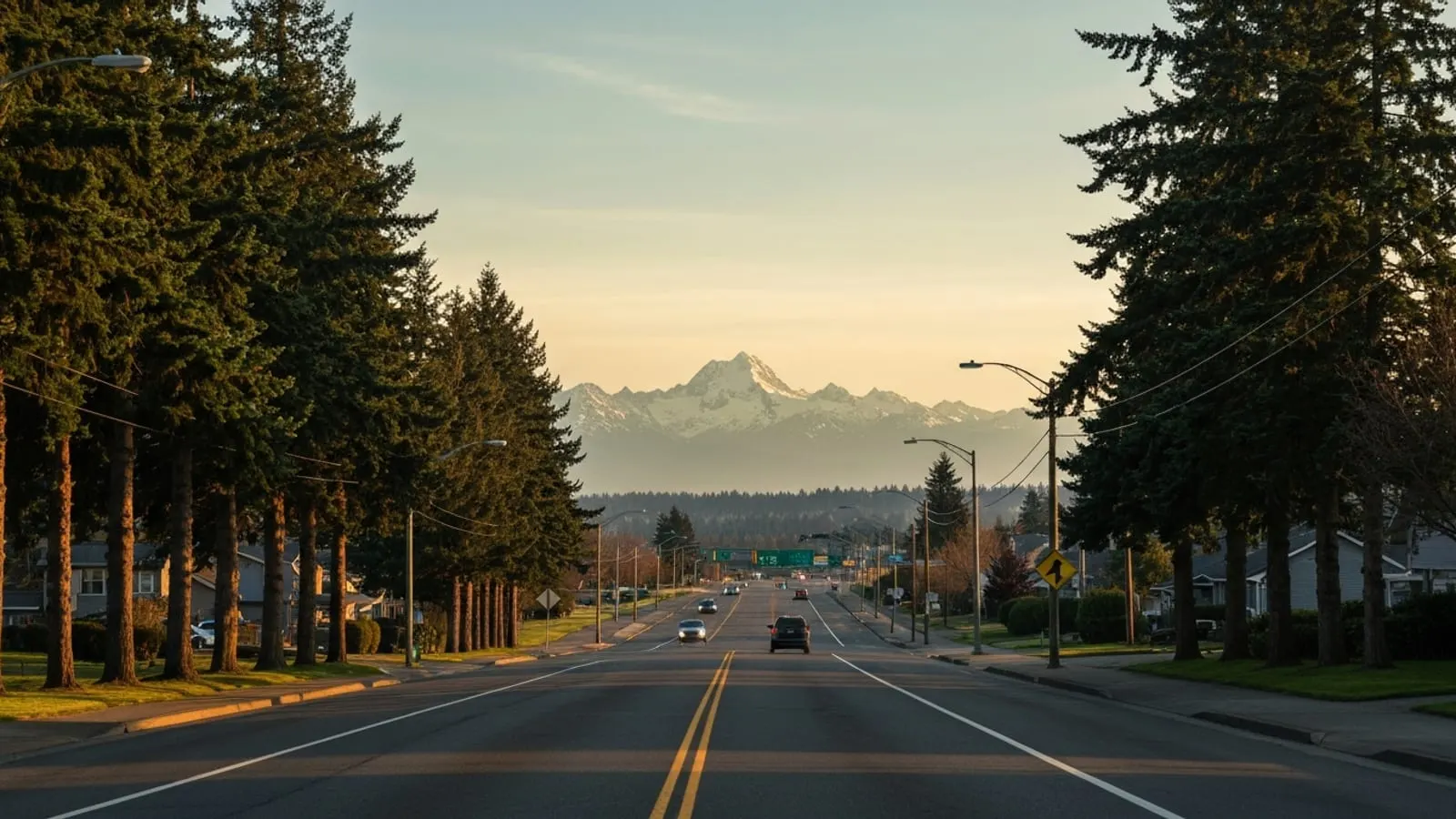
From the Federal Way Transit Center and downtown 320th Street out to the I-5 / SR 18 / SR 99 corridor and south to the Tacoma / Pierce County border, CarKeyNation matches Federal Way drivers to vetted mobile automotive key specialists — built for the SeaTac airport-adjacent residential commuter base and the South King County / North Pierce County crossover fleet.
Car key emergencies in Federal Way
Federal Way is Washington's tenth-largest city with an estimated 101,030 residents per the U.S. Census Bureau ACS 2020 count, anchoring the southwest corner of King County at the Pierce County border. Federal Way sits along the I-5 spine roughly halfway between downtown Seattle and downtown Tacoma, with the SeaTac airport boundary 6 miles north and the Tacoma city line 4 miles south. The practical service footprint for a Federal Way-based mobile automotive locksmith extends from Des Moines and the SeaTac airport edge in the north through Milton, Edgewood, and Fife at the Pierce County boundary to the south, and east through Auburn and the Lake Tapps suburban ring.
Federal Way's identity is fundamentally that of a commuter suburb. The city has no dominant single-employer anchor (no Boeing factory, no Microsoft campus, no military base, no large university). Instead, the population profile is overwhelmingly commuter: residents drive north into Seattle / Bellevue / SeaTac, south into Tacoma / JBLM / the Kent Valley, and to a lesser extent east into Auburn or Renton for work. The city's Weyerhaeuser corporate-park heritage anchored an earlier generation of employment density that has since dispersed; today's largest in-city employers are the school district, the city itself, the regional hospital, and the retail / hospitality belt along the SR 99 / 320th / I-5 commercial corridor.
Per the NICB Hot Spots Report, the Seattle-Tacoma-Bellevue MSA has consistently ranked among the top U.S. metros for total vehicle thefts, and Federal Way's per-capita rate runs noticeably above the metro average. The combination of the I-5 corridor accessibility, the SR 99 / Pacific Highway scrap-yard / auto-lot belt, the Federal Way Transit Center park-and-ride parking, and the older parking-permissive residential neighborhoods (West Campus, Twin Lakes, Lakota, Adelaide) creates predictable opportunity surfaces. Federal Way sees particularly high per-capita Hyundai / Kia 2011-2021 theft volume.
The most common Federal Way scenarios we route are: lost or damaged smart key for a 2018+ Toyota, Honda, Nissan, or Ford F-150; SeaTac airport / Sea-Tac long-term parking issues where a customer returns from a trip to find a lost key or dead fob; Hyundai / Kia 2011-2021 immobilizer reset post-theft recovery (Federal Way is one of the highest-volume metros in WA for this); transit-center park-and-ride lockouts where a commuter returns from Seattle or Tacoma to find a locked-in key; and dead-fob diagnoses from the long outdoor exposure typical of commuter parking.
Federal Way neighborhoods we cover
Federal Way's neighborhoods cluster around the downtown 320th Street commercial belt, the West Campus residential area, the Lakota / Twin Lakes / Adelaide West-side residential corridor, and the East Campus / Mirror Lake / Steel Lake eastern suburbs. CarKeyNation partners cover the full 98003-98023 ZIP range within Federal Way plus the surrounding south King County and north Pierce County footprint.
- Downtown / 320th Street commercial belt / Federal Way Transit Center (98003)
- West Campus / Civic Center area / Federal Way Library (98003, 98023)
- Lakota / Lakota Beach / Dumas Bay (98023)
- Twin Lakes / Adelaide / Bonneville Hill (98023)
- Marine Hills / SR 509 corridor (98023)
- Mirror Lake / Steel Lake / North Lake (98003)
- East Campus / Belmor / Christian Faith Center area (98003)
- Redondo / Redondo Beach / north Federal Way (98003, 98198)
- Star Lake / Kent border (98003)
- Decatur / Stanley Drive / south Federal Way (98003)
- Edgewood border / Milton (98003) — Pierce County edge
Beyond Federal Way proper, the network covers Des Moines and the SeaTac airport boundary to the north, Auburn to the east, Algona and Pacific to the southeast, Milton and Edgewood at the Pierce County boundary, and Fife / Tacoma / Puyallup to the south. Cross-county jobs into Pierce are routine for Federal Way partners thanks to the dense commuter exchange. SeaTac Airport boundary jobs (airport employee lots, hotel parking lots, airport area hospitality parking) are routine; Port of Seattle secured airside parking requires the same tenant-coordination protocol we documented for Seattle.
Federal Way has no large secured-perimeter installation, so partner dispatch is relatively simple. The Federal Way Transit Center park-and-ride is publicly accessible during normal hours and routine; commuter-rail and transit-center late-night dispatch may need lighting / security coordination with the customer.
What it costs in Federal Way
Federal Way automotive key pricing in 2026 sits between Kent and Tacoma — below the Seattle / Bellevue range, modestly above the Spokane / Spokane Valley level — per BLS OEWS metro data for the Seattle-Tacoma-Bellevue MSA. The commuter-suburb fleet pattern means a heavier Toyota / Honda / Subaru / Ford / Hyundai / Kia mix and proportionally less premium-OEM exposure than Bellevue, Mercer Island, or West Bellevue.
Typical CarKeyNation specialist ranges in Federal Way (mobile, on-site, including programming):
- Basic transponder spare (2005-2015 Camry/Civic/Altima/F-150): $125-$200
- Smart Key spare with working master present (2018+ Toyota/Honda/Subaru/Nissan): $185-$320
- Smart Key all-keys-lost (2018+ Toyota/Honda/Subaru): $260-$435
- BMW comfort access all-keys-lost (2007+): $380-$745
- Mercedes-Benz FBS3/FBS4: $280-$895
- Audi advanced key (2010+): $360-$715
- Ford F-150 / Super Duty PATS programming: $170-$360
- GM Hitag2 / PASS-Lock relearn (Silverado/Sierra/Tahoe): $220-$400
- Ram 1500 SKIM programming: $180-$380
- Subaru rolling-code programming (Outback/Forester/Crosstrek): $200-$360
- Tesla Model 3 / Y key card re-pair and phone-key reset: $145-$245
- Hyundai/Kia 2011-2021 immobilizer reset post-theft recovery: $245-$420
- Ignition cylinder rekey or replacement: $175-$370
- Dead-fob battery replacement + re-sync: $30-$80
Dealer pricing in Federal Way for the same jobs runs 45-115% higher per the OEMs' own owner portals, plus the tow if the car is not drivable. Federal Way Toyota, Mullinax Ford of Federal Way, the Auburn-area Honda / Kia / Hyundai dealerships, and the Tacoma-area BMW / Mercedes-Benz stores publish menu rates showing the structural gap. Per the FTC Consumer Alert on locksmith scams, any starting-at-$19 or starting-at-$29 ad is a near-certain bait-and-switch.
How to avoid Federal Way locksmith scams (Washington has no state license — RCW 19.355 + transit + Hyundai/Kia post-theft framing)
Washington's no-state-license status applies in Federal Way exactly as it does in Seattle. The relevant statutory consumer-protection lever is Chapter 19.355 RCW, which requires WA UBI / business license number disclosure on advertising and prohibits the geographic-misrepresentation scam pattern. Federal Way's specific vulnerabilities are two-fold: the heavy commuter-parking population that returns from Seattle / Tacoma airport trips disoriented and time-pressured, and the post-theft Hyundai / Kia 2011-2021 population that may have been targeted by both the original theft and a follow-up scam locksmith.
What to verify in Federal Way in the absence of a state occupational license:
- WA UBI / business license number displayed in advertising per RCW 19.355.
- Washington Secretary of State business registration.
- Washington Department of Labor & Industries (L&I) status.
- City of Federal Way business license — required for any business operating within Federal Way city limits.
- ALOA membership — verify on aloa.org.
- NASTF VSP credential — required for modern OEM-restricted programming.
- BBB rating — BBB Serving the Northwest + Pacific covers Federal Way.
- Certificate of Insurance and bond — request the COI from the commercial liability carrier directly.
Federal Way-specific red flags we hear from customers who called us after a bad experience:
- Unbranded van responding to a SeaTac-airport-return lockout from a Google ad with a 253 number that turns out to be an out-of-state call center — RCW 19.355 violation pattern targeting jet-lagged travelers.
- Quotes that triple on arrival at the airport hotel parking lot, the transit-center park-and-ride, or a residential driveway.
- Drilling pushed on a Hyundai / Kia 2011-2021 vehicle post-theft when an immobilizer reset would restore function for $245-$420.
- Refusal to display a WA UBI or business license number — direct RCW 19.355 violation.
- Cash-only with no receipt — leaves you no recourse with credit-card chargeback or BBB complaint.
CarKeyNation-dispatched partners in Federal Way provide a written estimate before any work begins, display the WA UBI on the printed or emailed invoice, accept card payment, and provide a 90-day workmanship warranty on programming. We handle SeaTac-area returning-traveler dispatch as routine work and have specific protocols for airport-hotel and Federal Way Transit Center park-and-ride scenarios.
Most common vehicles we service in Federal Way
Federal Way's fleet is the most commuter-suburban-typical of any city on the WA list — strong Toyota / Honda / Nissan / Subaru commuter share, healthy Ford / Chevrolet / Ram truck representation for the trades workforce, rising Tesla share concentrated in the West Campus / Twin Lakes / Marine Hills residential corridors, and a meaningful Hyundai / Kia share that drives much of the city's post-theft work volume.
- Toyota Camry, Corolla, RAV4, Highlander, Tacoma, Tundra, Prius, Sienna
- Honda Civic, Accord, CR-V, Pilot, Odyssey, Ridgeline
- Nissan Altima, Sentra, Rogue, Pathfinder, Frontier, Titan
- Subaru Outback, Forester, Crosstrek, Ascent (AWD over-index)
- Ford F-150, F-250, Super Duty, Ranger, Transit, Explorer, Escape
- Chevrolet Silverado, Tahoe, Suburban, Equinox, Traverse
- GMC Sierra, Yukon, Acadia
- Ram 1500, 2500, 3500
- Hyundai Elantra, Sonata, Tucson, Santa Fe (2011-2021 post-theft considerations — Federal Way over-indexes strongly)
- Kia Forte, Optima, Sorento, Telluride, Soul (2011-2021 same considerations)
- Mazda CX-5, CX-9, Mazda3, Mazda6
- Volkswagen Jetta, Tiguan, Atlas
- Jeep Wrangler, Grand Cherokee, Cherokee, Compass
- Tesla Model 3, Model Y (rising share, residential concentration)
- BMW 3-Series, X3, X5 (modest share, Twin Lakes / Marine Hills)
- Mercedes-Benz C-Class, E-Class, GLE
- Audi A4, Q5
If your vehicle is on this list, Federal Way CarKeyNation partners can almost certainly complete the work on-site without towing. For lower-volume makes (Genesis, Polestar, Lucid, Rivian, certain Land Rover and Porsche trims) we may need to confirm the partner's tooling matches before dispatch.
When we'll get to you in Federal Way
Federal Way drive-times are dominated by the I-5 spine and the SR 99 / Pacific Highway corridor. Per WSDOT Traffic & Travel Data, I-5 through Federal Way ranks among the more congested freeway corridors in Washington state during peak windows, with the SeaTac airport peak periods and Tacoma-direction commuter flows both contributing structural delay. Surface arterials (320th, 312th, 348th, SR 509) handle cross-corridor flow.
- Downtown / 320th / Transit Center: 20-40 min
- West Campus / Civic Center: 20-40 min
- Lakota / Lakota Beach / Dumas Bay: 25-45 min
- Twin Lakes / Adelaide / Bonneville Hill: 25-45 min
- Marine Hills / SR 509 corridor: 25-50 min
- Mirror Lake / Steel Lake / North Lake: 25-45 min
- East Campus / Belmor: 25-45 min
- Redondo / north Federal Way: 25-50 min
- Star Lake / Kent border: 30-55 min
- Decatur / south Federal Way: 30-55 min
- Edgewood border / Milton: 30-55 min
- SeaTac Airport area (publicly accessible hotel / employee lots): 30-55 min
- Auburn / Algona / Pacific: 35-65 min
- Fife / Tacoma border: 35-65 min
Off-peak drive times compress 20-35%. Per AAA Roadside Assistance benchmarks, honest ETA disclosure consistently correlates with both customer satisfaction and lower partner-side overbooking. SeaTac airport arrival / departure peaks, Mariners / Seahawks event days, and JBLM PCS-rotation peaks (when north-bound I-5 traffic from Pierce compresses) all create localized drive-time inflation we surface live before you commit.
Federal Way automotive key insight
“Vehicle thefts continue to climb in metro areas where opportunistic offenders target unsecured vehicles and exploit electronic key vulnerabilities. Owners of late-model vehicles with smart-key systems should treat the fob as a high-value credential — store it away from the front door, and if it's lost, contact a credentialed automotive locksmith or dealer immediately to reprogram or invalidate the original.”
— David Glawe, President & CEO, National Insurance Crime Bureau (NICB)
NICB's framing applies with particular force in Federal Way because the city sees one of the highest per-capita Hyundai / Kia 2011-2021 post-theft volumes in Washington state. The documented social-media-theft pattern for those models means post-recovery the vehicle is often still vulnerable — the original key may still work, or the immobilizer may have been bypassed in ways the recovering owner cannot easily inspect. The legitimate fix is an on-site immobilizer reset and invalidation of the missing key, which a NASTF VSP-credentialed Federal Way partner can perform for $245-$420 in most cases. Verifying the operator on the VSP Registry and confirming WA UBI per RCW 19.355 before authorizing any work is the single most protective consumer action available.
How CarKeyNation verifies every Federal Way specialist
The single most consequential difference between calling a vetted network and calling the first paid ad on a search-result page is the verification trail behind the technician who actually arrives at your door. The U.S. Federal Trade Commission has published consumer guidance on locksmith scams documenting a recurring pattern of harm: a low advertised price ($19, $29, $49) that turns into a $300-$900 on-arrival quote from an unlicensed contractor with no business address and no warranty. Every step of the CarKeyNation verification flow for Federal Way is designed to filter those operators out of the dispatch pool before the customer ever sees them.
Business registration and bonding. Every Federal Waypartner must hold a verifiable business registration in Washington, a current general-liability insurance certificate naming CarKeyNation as an additional insured, and a surety bond covering the work scope. We hold a current Certificate of Insurance on file for every active partner and re-verify annually. A locksmith with no bond and no insurance is, in practical terms, leaving the consumer with no recourse if something goes wrong during the programming — which is why we will not route to one.
ALOA credentialing. The Associated Locksmiths of America operates the national trade association and publishes a member directory. Our Federal Way specialist pool prioritizes ALOA members in good standing, particularly those holding the Master Automotive Locksmith credential. ALOA membership is a baseline indicator of training, continuing education, and a written code-of-ethics commitment to providing written estimates and not engaging in bait-and-switch pricing on arrival.
NASTF VSP registration for restricted-access work. The National Automotive Service Task Force runs the Vehicle Security Professional registry, which is the manufacturer- recognized credential for accessing the Secure Data Release Model. For any Federal Way job involving a restricted-access programming step (Stellantis Security Gateway vehicles, certain BMW and Mercedes procedures, late-model FCA / Jeep / Ram), the assigned specialist must be VSP-registered. VSP registration requires a background check, fingerprint submission, and ongoing renewal — it is not a paperwork credential, and it filters out the operators who simply could not pass the background check.
Tool and license inventory verification. Beyond the credentialing, we verify that each Federal Way specialist actually carries the tools needed for the work — current Autel IM608 license, Smart Pro license, VVDI Key Tool Plus license, or the OEM-equivalent tool family for the makes and years they are authorized to work on. A specialist with valid credentials but expired tool licenses cannot reliably complete a job, so we track the tool side of the verification separately and refresh it as new license cycles begin.
Written estimate and 90-day workmanship warranty. Every CarKeyNation-dispatched Federal Way job ends with a written, itemized receipt showing the make, model, year, VIN, key type, chip family, programming step, and total price. The work carries a 90-day workmanship warranty from the assigned specialist. If a key fails within that window for any reason traceable to the original programming, our admin team coordinates the rework at no charge to the customer. That is the practical accountability layer that does not exist when a customer calls a random ad.
Common diagnostic mistakes to avoid before calling for a Federal Way key
Before assuming you need a full key replacement in Federal Way, there are four quick diagnostic checks any vehicle owner can do that occasionally save the cost of a service call entirely. Our intake operators run through these with every customer, but the underlying logic is worth knowing in advance so the conversation moves faster.
1. Try a fresh fob battery first. Proximity Smart Keys use a CR2032 or CR2025 coin cell that lasts roughly two to four years under normal use. A failing battery often presents as a key that works intermittently — sometimes it unlocks the door, sometimes it doesn't — which customers frequently interpret as a failing key when the actual fix is a four-dollar battery. Pop the fob open with a small flathead screwdriver, swap the cell, and try again. If the symptoms resolve, you have saved a service call entirely.
2. Confirm the immobilizer light behavior. Most modern vehicles display an immobilizer or key icon on the dashboard for a few seconds during ignition cycle. If the icon stays solid or blinks rapidly when you try to start the car, the issue is in the chip-recognition handshake — which is the locksmith's domain. If the icon goes out normally but the car still refuses to crank, the issue is more likely electrical (battery, starter, ignition switch wear) than key-related, and a different specialist may be the right call.
3. Check that the fob is not soaked or recently washed. Water intrusion into a proximity fob (left in pants pockets through a wash cycle, or dropped in a Federal Way pool) damages the internal circuitry and the symptoms can take days to fully appear. If your fob got wet recently, that is almost certainly the root cause, and a replacement is the right path — but knowing that going in helps the on-arrival specialist quote the correct replacement fob hardware without diagnostic delay.
4. Try the physical valet key blade. Most modern proximity fobs contain a mechanical valet blade that unlocks the driver door manually. If your fob has stopped working entirely, the valet blade still gets you into the vehicle, where many modern vehicles allow a backup-start procedure (holding the dead fob against a specific point on the steering column or push-button start area). The owner's manual documents the backup procedure for your specific make and year. If the backup works, the issue is fob battery or fob transmission rather than immobilizer pairing — cheaper fix, faster turnaround.
None of these four checks replace a professional diagnosis when the situation calls for one, but they sort out the scenarios where a $4 battery or a 30-second valet-key check solves the problem before a $200-$400 service call is necessary. CarKeyNation's intake operators will walk you through them on the phone before dispatching a specialist in Federal Way.
After-hours, weekend, and holiday service in Federal Way
Car key emergencies do not respect business hours, and a realistic conversation about Federal Way mobile-locksmith availability outside of weekday daytime hours is one of the most useful things we can offer at intake. The honest answer is that after-hours service in Federal Way exists, but the partner pool with capacity at 11pm on a Saturday is a fraction of the pool with capacity at 11am on a Tuesday — and pricing reflects that supply curve.
Weekday evenings (6pm-10pm). A meaningful share of the Federal Way partner network maintains evening capacity Monday through Thursday. Response times typically run 15-30 minutes longer than the off-peak benchmark we quote for the same neighborhood during business hours, primarily because there are fewer specialists actively on the road and the closest available partner may be farther away. Pricing in this window is usually within $25-$50 of the daytime flat-rate for the same job — most partners do not charge a formal after-hours premium until later in the evening.
Late nights (10pm-6am). The Federal Way late- night pool is small. We can usually route a partner to a genuine emergency (a parent locked out with a child inside the vehicle, a driver stranded in an unsafe location) but the realistic ETA is typically 60-120 minutes from dispatch, and an after-hours premium of $75-$185 applies to most programming work. For a non-urgent spare-key job, we strongly recommend waiting until morning — both the cost and the partner-availability math improve dramatically.
Weekends. Saturday daytime in Federal Way sees full network coverage, often matched or close to weekday daytime availability. Saturday evening drops to the weekday- evening profile. Sunday is the tightest day of the week in most metros — many Federal Way specialists treat Sunday as a family or rest day and only the after-hours-rotation partners are reachable. Sunday pricing typically includes a 15-25% premium over weekday rates for the same job.
Holidays. Major U.S. holidays (Thanksgiving, Christmas Day, New Year's Day, Independence Day) operate on the late-night model regardless of clock time — small partner pool, longer ETAs, and a $100-$250 holiday premium on programming work. For non-urgent jobs, we recommend rescheduling to the next non-holiday business day; the savings are real and the wait is usually under 24 hours. Per AAA Roadside Assistance benchmarks, major holidays are also the peak lockout volume days of the year nationally — partner pools are stretched in every metro, not just Federal Way.
Our intake conversation accounts for time-of-day from the first question. The realistic ETA we quote is always anchored to the partner pool actually available in your specific window, not the optimistic best-case business-hours estimate.
Frequently asked questions
How fast can a locksmith reach me in Federal Way?
Off-peak, most Federal Way addresses land in 20-50 minutes. Peak I-5 windows and SeaTac airport peak periods can stretch that 30-60% higher. Our dispatch shows live WSDOT-informed drive-time before you commit so the ETA is honest.
I returned from a SeaTac trip and my key fob is dead in long-term parking — can you reach me at the airport hotel lot?
Yes, that is a routine Federal Way scenario. Publicly accessible airport-hotel and Federal Way Transit Center park-and-ride parking is routine for our partners — we typically arrive in 30-55 minutes and the most common outcome is a $30-$80 battery replacement and re-sync rather than a full replacement program. Port of Seattle secured airside parking requires separate tenant coordination.
My 2015 Kia was stolen and recovered — do I need a new key program?
Probably yes. Hyundai and Kia models from 2011-2021 that shipped without a factory engine immobilizer have been targeted in the documented social-media theft pattern, and Federal Way sees disproportionate volume of this. Post-recovery, the original ignition may still accept the bypass method used to steal the vehicle, which means the thief or anyone else with the technique can re-drive it. A CarKeyNation Federal Way partner can perform the immobilizer reset / invalidation of the missing key on-site for $245-$420 in most cases.
Is the locksmith licensed in Washington?
Washington has no state-level occupational license for locksmiths, but RCW 19.355 requires every operating WA locksmith to display a WA UBI or business license number on advertising. CarKeyNation routes only to Federal Way partners who hold an active WA UBI and Secretary of State entity registration, carry a verifiable Certificate of Insurance, hold ALOA and NASTF VSP credentials where applicable, maintain a current City of Federal Way business license, and have a documented BBB record.
Sources
- NICB 2023 Hot Spots Report (auto theft rankings by state + metro)
- BLS OEWS Locksmiths & Safe Repairers (49-9094)
- AAA Roadside Assistance Service Data
- U.S. Census Bureau American Community Survey (ACS) 5-year metro estimates
- Revised Code of Washington — Chapter 19.355 RCW (Locksmith Services — Prohibited Practices, Required Disclosures)
- Revised Code of Washington — Chapter 19.86 RCW (Consumer Protection Act / Unfair Business Practices)
- Washington State Office of the Attorney General — Consumer Protection Division
- Washington Secretary of State — Corporations & Charities Division (business search)
- Washington Department of Revenue / Business Licensing Service (BLS) — UBI Number Lookup
- Washington Department of Labor & Industries — Verify a Contractor, Tradesperson, or Business
- Washington Department of Licensing — Vehicle Title & Registration
- Washington State Department of Transportation (WSDOT) — Traffic & Travel Data
- ALOA (Associated Locksmiths of America) Service Standards
- NASTF (National Automotive Service Task Force) VSP Registry
- FTC Consumer Alert — How to Find a Reliable Locksmith
- Better Business Bureau — Serving the Northwest + Pacific (Washington, Oregon, Western Idaho, Alaska)
Ready to get rolling again?
Request a local specialist now — vetted, accountable, and matched to your vehicle.